
Polymer Detection method for Immunohistochemistry (IHC)

Polymer Detection method for Immunohistochemistry (IHC)

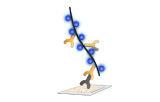
The Polymer Detection method for Immunohistochemistry (IHC) is an innovative and highly sensitive technique widely used in biomedical research and clinical diagnostics to detect specific antigens in tissue samples. This method enhances traditional IHC staining by utilizing a polymer backbone conjugated with multiple enzyme molecules, allowing for superior signal amplification. As a result, it provides clearer, more intense staining with reduced background noise, making it an ideal choice for detecting low-abundance proteins and subtle biological changes in tissue morphology.

What is Polymer Detection in IHC?

Polymer detection systems use secondary antibodies attached to a polymer chain that carries a high density of enzyme molecules such as horseradish peroxidase (HRP) or alkaline phosphatase (AP). This design significantly amplifies the immunohistochemical signal because many enzyme molecules accumulate at the site of the antigen-antibody binding, producing a robust and easily visualized colorimetric reaction. Unlike conventional avidin-biotin complex (ABC) or streptavidin-biotin systems, polymer detection eliminates issues of endogenous biotin interference, ensuring cleaner and more specific staining results.

Advantages of Polymer Detection Systems

  • Increased Sensitivity: The polymer backbone loaded with multiple enzyme molecules allows for stronger signal generation, facilitating the detection of proteins expressed in very low quantities.

  • Improved Specificity: Reduced background staining minimizes nonspecific binding, which can obscure results in other detection methods.

  • Simplified Protocol: Polymer detection often requires fewer incubation steps compared to traditional methods, reducing hands-on time and potential errors.

  • Compatibility: It is well-suited for use with formalin-fixed paraffin-embedded (FFPE) tissues and various antigen retrieval techniques, making it versatile across many research and diagnostic applications.

  • Multiplexing Capabilities: Some polymer detection systems enable multiplex IHC, allowing simultaneous visualization of multiple targets in one tissue section.

Why Choose Polymer-Based Detection for Your IHC Needs?

Researchers and clinicians often prefer polymer detection methods because they combine sensitivity, specificity, and ease of use. These systems are especially valuable when analyzing precious or limited tissue samples, such as biopsies, where maximizing signal clarity is crucial. Polymer detection also supports consistent and reproducible results, a critical factor in both research publications and diagnostic decision-making.

By integrating the polymer detection method in your IHC workflow, you can achieve sharper, more reliable staining outcomes that advance both basic research and clinical pathology insights.

This thorough approach to polymer detection in IHC improves immunohistochemical analysis, ensuring vivid and trustworthy visualization of target proteins, which helps drive discoveries in fields such as cancer research, neuroscience, and infectious disease pathology.




Frequently Asked Questions (FAQ)

Where can I find polymer detection method products on the Quimigen website?

polymer detection method products are available in this section and can be sorted by product families or sub-categories, such as Two-step Polymer-based kits, One-step Polymer-based kits. You can browse the catalogue tree or use the search bar with a product name, catalogue reference, brand or supplier.

What types of products are available in the polymer detection method category?

The polymer detection method category brings together various product references, consumables, reagents, kits, instruments or laboratory solutions, depending on the relevant product family. The Two-step Polymer-based kits, One-step Polymer-based kits sub-categories allow you to find the products that meet your needs more quickly.

How can I quickly find a polymer detection method product?

To find a polymer detection method product, use the search function by name, product code, supplier, brand or sub-category. You can also browse the product families listed on the page to identify an available product code, an alternative or an equivalent product.

Does Quimigen stock several product codes in the polymer detection method category?

Yes, Quimigen distributes several product references in the polymer detection method category, sourced from specialist suppliers. Depending on the product family, references may vary in terms of format, packaging, brand, supplier, technical specifications or availability.

Can I request a quote for polymer detection method products?

Yes, you can request a quote for polymer detection method products from the product page or by contacting Quimigen (info@quimigen.pt). To help us process your enquiry, please provide, where possible, the product name, catalogue reference, required quantity, the supplier or brand you are looking for, and the country of delivery.

How can I find out if a polymer detection method product is available to order?

The availability of a polymer detection method product depends on the product code, supplier, packaging and country of delivery. For up-to-date information, please check the product details page or contact Quimigen with the product code or name of the product you are looking for.

What should I do if I cannot find the polymer detection method product I am looking for?

If the polymer detection method product you are looking for does not appear in the catalogue, please contact Quimigen with the available information: product name, reference number, supplier, brand, format or packaging. The team will be able to search for the reference number within its network of suppliers or suggest an available alternative.

Are all polymer detection method products available under the same terms and conditions?

No. Ordering, delivery, storage and documentation conditions may vary depending on the product type, the supplier and the applicable regulations. Certain product codes may require specific approval, specialised transport, a safety data sheet or additional information prior to ordering.