

pEX-C-GST Bacterial Expression Vector

Referência PS100083
Tamanho : 10ug
Contactar o distribuidor local :
Telefone :
pEX-C-GST Bacterial Expression Vector
SKU
PS100083
pEX-C-GST, bacterial expression vector with C-terminal GST tag, 10ug


| Product Manuals |
| FAQs |
|
Citations
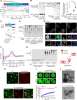
CGG repeat RNA G-quadruplexes interact with FMRpolyG to cause neuronal dysfunction in fragile X-related tremor/ataxia syndrome
Asamitsu, Yabuki, Ikenoshita et al
Sci Adv (2021) 7 (3) DOI: 10.1126/sciadv.abd9440
Asamitsu, Yabuki, Ikenoshita et al
Sci Adv (2021) 7 (3) DOI: 10.1126/sciadv.abd9440
Cited by 104
AI Summary: In this study, OriGene’s pCMV6-Entry-FMR1 plasmid was used to express FMRpolyG protein, enabling the investigation of its interaction with CGG repeat RNA G-quadruplexes and its role in neuronal dysfunction in fragile X-related tremor/ataxia syndrome.
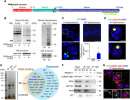
Structural Differences in Translation Initiation between Pathogenic Trypanosomatids and Their Mammalian Hosts
Bochler, Querido, Prilepskaja et al
Cell Rep (2020) 33 (12), 108534 DOI: 10.1016/j.celrep.2020.108534
Bochler, Querido, Prilepskaja et al
Cell Rep (2020) 33 (12), 108534 DOI: 10.1016/j.celrep.2020.108534
Cited by 38
AI Summary: OriGene’s pEX-C-GST plasmid (Cat#PS100083) was used in this study to generate GST fusion proteins for pull-down assays, supporting the investigation of structural differences in translation initiation between trypanosomatids and mammalian hosts.
Snippet: pGL4-CMV Wagner et al., 2014 N/A pFASTBAC1-eIF3k Fraser et al., 2004 N/A pFASTBAC1-eIF3d Fraser et al., 2004 N/A pFASTBAC1-eIF3e Fraser et al., 2004 N/A pEX-C-GST OriGene Cat#PS100083 ------------------------- Oligonucleotides ------------------------- Primers for cloning used in this study, see List of primers (Supplemental Information) This paper N;pEX-C-GST OriGene Cat#PS100083
Showing 1-2 of 2 papers.
Powered by BizGenius
*Delivery time may vary from web posted schedule. Occasional delays may occur due to unforeseen complexities in the preparation of your product. International customers may expect an additional 1-2 weeks in shipping.
Related Products
Você também pode estar interessado nos seguintes produtos:
Referência
Descrição
Cond.
Price Bef. VAT