
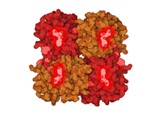
GFP-like fluorescent chromoproteins

GFP-like fluorescent chromoproteins

GFP-like fluorescent chromoproteins (FPs) are a diverse group of proteins derived from various marine organisms, particularly within the Phylum Anthozoa. These proteins have revolutionized the fields of molecular and cellular biology by providing powerful tools for bioimaging and tracking biological processes in live cells and organisms. This article explores the structural characteristics, mechanisms of chromophore formation, and the applications of GFP-like fluorescent chromoproteins in scientific research.

Structural Characteristics

Fluorescent proteins, including GFP and its derivatives, are characterized by their ability to emit light upon excitation. The chromophore, a light-absorbing molecule within the protein, is formed through an autocatalytic process that does not require external cofactors. This intrinsic property allows for the chromophore to form In vivo, making these proteins particularly useful for live-cell imaging.

GFP-like fluorescent proteins exhibit a wide range of colors, including green, yellow, orange, red, and far-red emissions. This spectral diversity is attributed to variations in the chromophore structure and the surrounding amino acid environment. 

Mechanisms of Chromophore Formation

The formation of the chromophore in GFP-like fluorescent proteins involves a series of post-translational modifications. The chromophore typically arises from a sequence of reactions that convert specific amino acids, such as serine, tyrosine, and glycine, into a conjugated structure that can absorb and emit light. Research has identified key residues, particularly at positions 148 and 165 (using GFP numbering), that play critical roles in determining the fluorescent properties of these proteins. Mutations at these positions can significantly alter the quantum yield and emission spectra, allowing for the engineering of proteins with tailored optical characteristics.

Applications in Biotechnology

GFP-like fluorescent proteins have become indispensable tools in molecular and cellular biology. Their applications include:

  • Bioimaging: FPs are widely used for visualizing cellular processes in real-time, allowing researchers to track protein localization, dynamics, and interactions within living cells.
  • Biosensors: Engineered fluorescent proteins can serve as biosensors to detect specific biomolecules or environmental changes, providing insights into cellular responses and signaling pathways.
  • Protein-Protein Interactions: FPs enable the study of protein interactions through techniques such as fluorescence resonance energy transfer (FRET), where energy transfer between two fluorescent proteins indicates proximity and interaction.
  • Transgenic Organisms: Fluorescent proteins are often used to create transgenic organisms that express FPs, facilitating studies in developmental biology and genetics.

Preguntas frecuentes (FAQ)

¿Cómo encontrar rápidamente un producto de la categoría gfp-like fluorescent chromoproteins?

Para encontrar un producto gfp-like fluorescent chromoproteins, utilice la búsqueda por nombre, referencia, proveedor, marca o subcategoría. También puede navegar por las familias de productos que se ofrecen en la página para identificar una referencia disponible, una alternativa o un producto equivalente.

¿Distribuye Quimigen varias referencias en la categoría gfp-like fluorescent chromoproteins?

Sí, Quimigen distribuye varias referencias en la categoría gfp-like fluorescent chromoproteins, procedentes de proveedores especializados. Según la familia de productos, las referencias pueden variar en cuanto a formato, envase, marca, proveedor, características técnicas o disponibilidad.

¿Se puede solicitar un presupuesto para los productos de la categoría gfp-like fluorescent chromoproteins?

Sí, puede solicitar un presupuesto para los productos gfp-like fluorescent chromoproteins desde la página del producto o poniéndose en contacto con Quimigen (info@quimigen.pt). Para facilitar la tramitación de su solicitud, indique, si es posible, el nombre del producto, la referencia de catálogo, la cantidad deseada, el proveedor o la marca que busca, así como el país de entrega.

¿Cómo saber si un producto gfp-like fluorescent chromoproteins está disponible para su pedido?

La disponibilidad de un producto gfp-like fluorescent chromoproteins depende de la referencia, el proveedor, el embalaje y el país de entrega. Para obtener información actualizada, consulta la ficha del producto o ponte en contacto con Quimigen indicando la referencia o el nombre del producto que buscas.

¿Qué hacer si no encuentro el producto gfp-like fluorescent chromoproteins que busco?

Si el producto gfp-like fluorescent chromoproteins que busca no aparece en el catálogo, póngase en contacto con Quimigen indicando la información disponible: nombre del producto, referencia, proveedor, marca, formato o presentación. El equipo podrá buscar la referencia en su red de proveedores u ofrecerle una alternativa disponible.

¿Están todos los productos gfp-like fluorescent chromoproteins disponibles en las mismas condiciones?

No. Las condiciones de pedido, entrega, almacenamiento o documentación pueden variar en función del tipo de producto, el proveedor y la normativa aplicable. Algunas referencias pueden requerir una validación específica, un transporte adaptado, una ficha de seguridad o información adicional antes de realizar el pedido.

Resultados de su búsqueda : 70 Producto encontrado

Refine su búsqueda :

RUO
CE/IVD
NEW
  • Unconjugated 55
  • yeast 52
  • e. coli 12
  • Protein/peptide 70
APLICAR FILTROS
REINICIE


Referencia
Descripción
Cond.
Precio Sin IVA
MBS1380612-0,5mg-B
 0.5mg(Baculovirus) 
MBS1315168-0,5mg-B
 0.5mg(Baculovirus) 
MBS1315168-0,1mg-B
 0.1mg(Baculovirus) 
MBS1315168-0,1mg-M
 0.1mg(Mammalian-Cell) 
MBS1380612-0,05mg-B
 0.05mg(Baculovirus) 
MBS1380612-0,1mg-B
 0.1mg(Baculovirus) 
MBS1380612-0,1mg-M
 0.1mg(Mammalian-Cell) 
    ‹
    ›