

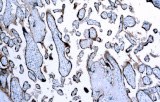
Anti-human chorionic gonadotropin (hCG) antibodies used in immunohistochemistry (IHC) represent important analytical tools for the detection of trophoblastic differentiation and hormone-expressing tumors within genitourinary pathology. In research and diagnostic workflows, antibody-based detection of hCG—particularly β-hCG—supports the histopathological characterization of germ cell tumors, urothelial carcinomas with trophoblastic features, and other malignancies exhibiting ectopic hormone production. Immunohistochemical staining complements serum testing by enabling spatial localization of hCG-expressing cells directly within tissue architecture, improving morphological correlation and biomarker interpretation. Peer-reviewed studies demonstrate that antibody specificity, epitope recognition, and variant detection are critical analytical factors influencing assay performance and interpretation in oncologic settings.
Biological Significance of hCG
Human chorionic gonadotropin is a heterodimeric glycoprotein hormone composed of α- and β-subunits with multiple glycosylation sites that generate diverse isoforms, including free β-hCG and hyperglycosylated variants. These structural features influence antibody binding and detection strategies in both immunoassays and tissue-based diagnostics.
Biologically, hCG functions as a gonadotropic hormone regulating steroidogenesis through receptor-mediated signaling pathways. Aberrant expression is frequently observed in malignant tissues. Tumor-derived hCG has been proposed in some studies to participate in autocrine or paracrine signaling mechanisms that may influence tumor biology; however, the precise functional role and causal mechanisms remain incompletely established and continue to be investigated.
Key biological aspects relevant to IHC interpretation include:
- Ectopic expression in malignancy: Approximately 10–30% of non-germ-cell tumors may produce β-hCG, highlighting its relevance beyond classical trophoblastic disease.
- Isoform heterogeneity: Extensive glycoform variation affects antibody recognition and requires validated clones optimized for pathological tissue analysis.
- Association with aggressive phenotypes: hCG expression has been reported in several studies to correlate with poorly differentiated tumors and adverse pathological features, although prognostic significance varies between tumor types and remains context-dependent.
These biological characteristics make hCG an informative biomarker when combined with morphological assessment in genitourinary pathology workflows.
Diagnostic Utility of hCG in Genitourinary Pathology
In genitourinary oncology, hCG immunostaining is primarily used to identify trophoblastic differentiation in germ cell tumors and to support differential diagnosis in complex urothelial or testicular lesions. Immunohistochemistry enables visualization of hormone-producing syncytiotrophoblastic cells that may be absent or difficult to identify morphologically alone.
Documented diagnostic applications include:
- Testicular germ cell tumors: Positive hCG immunostaining occurs in non-seminomatous tumors and in seminomas containing syncytiotrophoblastic elements, supporting tumor classification and biomarker correlation.
- Urothelial carcinoma: β-hCG expression has been detected in a subset of bladder cancers, with immunohistochemical positivity reported in approximately one-third of analyzed cases in selected studies.
- Trophoblastic differentiation: hCG-positive staining patterns may indicate aggressive or poorly differentiated variants, particularly in urothelial carcinoma with trophoblastic features, although interpretation should be integrated with broader clinicopathologic context.
Because hCG detection is not universally diagnostic outside germ cell tumors, its interpretation requires integration with morphology, clinical findings, and additional immunohistochemical markers.