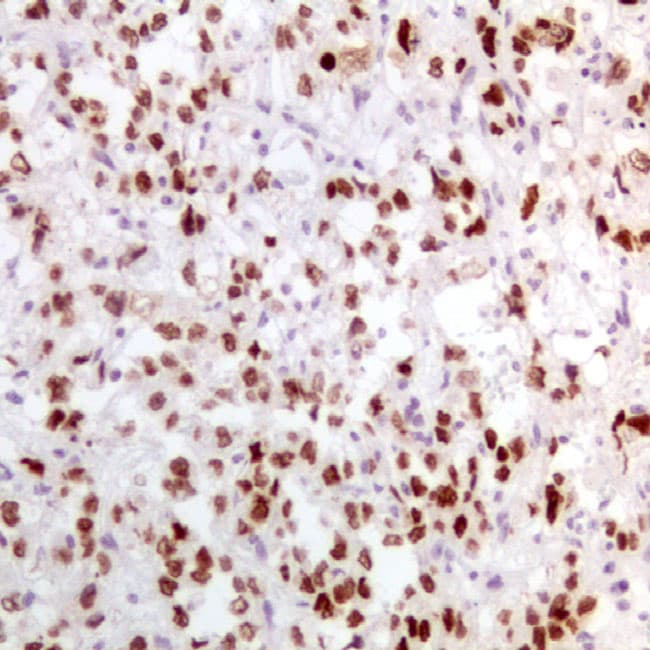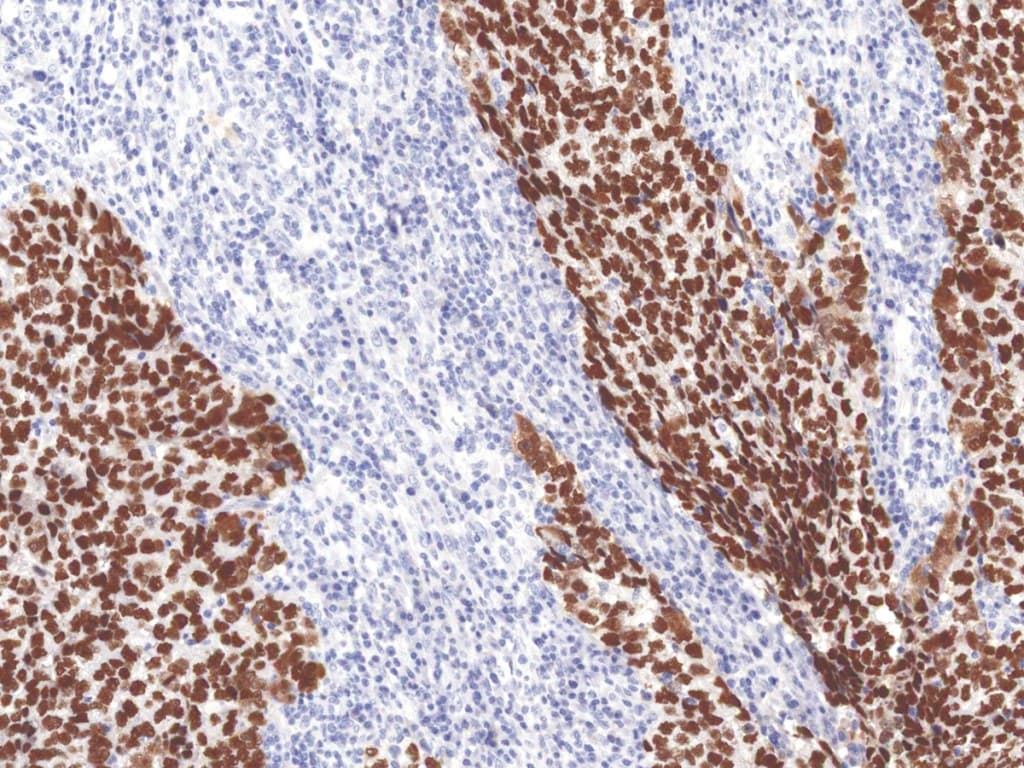

Sal-like protein 4 (SALL4) is a zinc-finger transcription factor linked to embryonic stem-cell pluripotency and early germ cell biology. In routine FFPE immunohistochemistry (IHC), SALL4 shows a nuclear staining pattern and has become a high-value marker for genitourinary pathology, particularly testicular germ cell tumors (GCTs) and their metastases.
Biological significance
SALL4 is strongly expressed in germ cell–related neoplasia and reflects a developmental/pluripotency program reactivated in many GCTs.
Diagnostic utility in genitourinary pathology
- High sensitivity for GCTs: Including yolk sac tumor and metastatic GCT deposits—supporting detection when morphology is limited (small biopsies, necrosis, or post-treatment change).
- Panel logic: SALL4 complements OCT3/4, NANOG, PLAP, AFP, and SOX17/SOX2 (chosen by differential diagnosis) to subtype seminomatous vs non-seminomatous GCTs and confirm germ cell lineage.
- Interpretive pitfall: Large tumor surveys show non–germ cell positivity can occur (e.g., a minority of urothelial and other carcinomas), so specificity is maximized by using SALL4 with morphology and a targeted marker panel.
- Renal tumors: SALL4 expression has been evaluated in renal cell carcinoma subsets; reported positivity is not universal and should not be used in isolation for renal lineage assignment.
Key features of IHC practice
- Nuclear readout in FFPE tissue; compatible with automated clinical IHC workflows in large validation series.
- Best used for “SALL4 IHC”, germ cell tumor marker, testicular cancer IHC, yolk sac tumor, seminoma, metastatic GCT, genitourinary pathology.