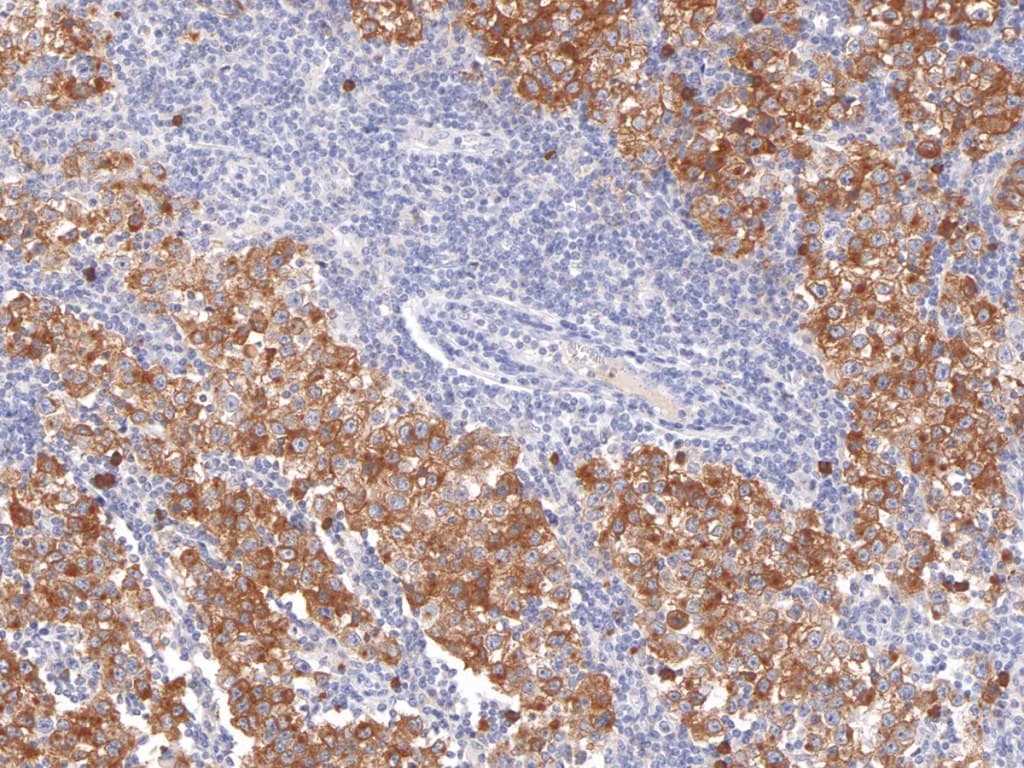

Anti-Podoplanin antibodies (commonly clone D2-40) are widely implemented in CE/IVD-validated immunohistochemistry (IHC) assays used in surgical pathology. Podoplanin is a ~38 kDa type-I transmembrane O-linked sialoglycoprotein expressed predominantly in lymphatic endothelial cells as well as selected normal and neoplastic tissues. Its consistent membranous expression provides diagnostic utility in genitourinary (GU) pathology panels and in the assessment of lymphatic vasculature.
Biological Significance of Podoplanin
- Podoplanin is a membrane-associated mucoprotein linked to lymphatic endothelial differentiation, lymphangiogenesis, and tumor microenvironment signaling.
- It is widely used as a preferential marker of lymphatic endothelium in tissue sections, enabling distinction of lymphatic channels from blood vasculature when interpreted within morphologic context.
- Physiologic expression occurs in fetal germ cells, mesothelial cells, basal epithelial compartments, and subsets of neoplasms, reflecting roles in development and stromal–tumor interactions.
- Published studies report very high analytical specificity for lymphatic identification in IHC applications, although performance characteristics vary by cohort, antibody clone, and protocol.
Diagnostic Utility of Podoplanin in Genitourinary Pathology
- Diffuse membranous staining with D2-40 is highly sensitive for seminoma and serves as a supportive marker within multiparametric germ cell tumor panels rather than a stand-alone discriminator.
- In urinary bladder specimens, podoplanin may highlight lymphatic structures and specialized stromal populations, contributing to morphologic evaluation and research-level prognostic assessment when correlated with histology.
- Stromal or lymphatic podoplanin expression has been investigated as a biomarker associated with tumor progression and lymphangiogenesis across GU malignancies.
- Because of its preferential lymphatic endothelial labeling, podoplanin IHC assists in the detection of lymphovascular invasion and tumor-associated lymphangiogenesis.
Key Features of Anti-Podoplanin CE/IVD Antibodies
- Mouse monoclonal antibodies such as clone D2-40 recognize a ~38 kDa transmembrane antigen and typically produce membranous staining with variable cytoplasmic staining depending on tissue context.
- CE/IVD-labeled antibody systems are validated for analytical specificity and sensitivity within defined diagnostic workflows in surgical pathology laboratories.
- Compatible with formalin-fixed paraffin-embedded (FFPE) tissues and suitable for integration into multiparametric IHC panels.
- Provide reproducible staining performance when used according to manufacturer-validated CE/IVD protocols and laboratory quality standards.