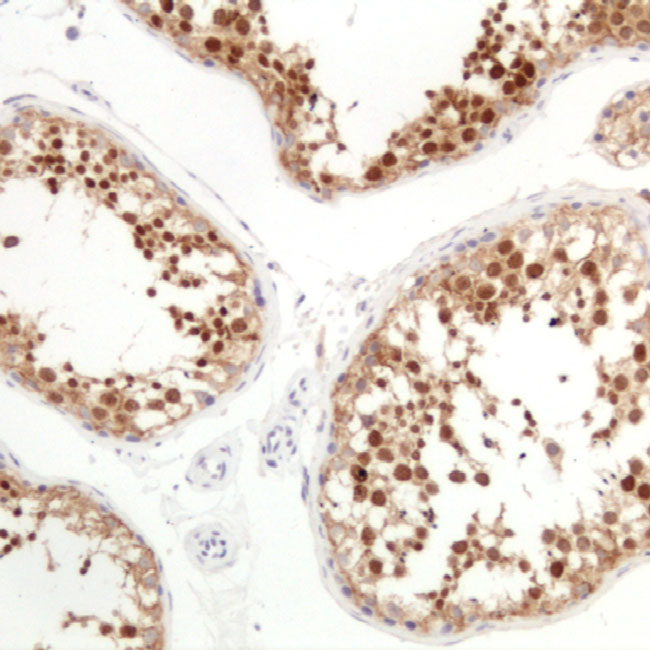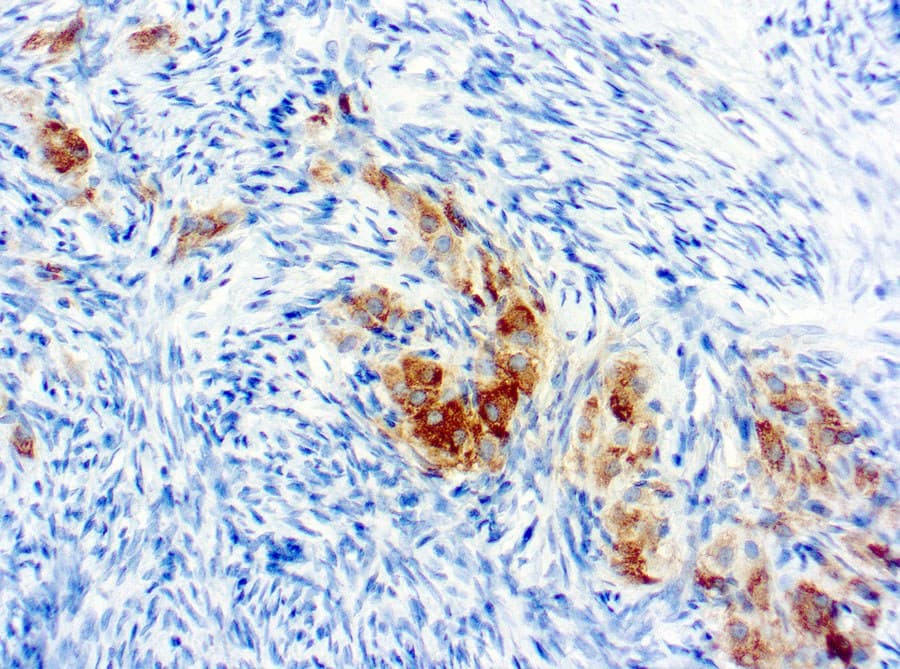

Anti-inhibin alpha antibodies are established immunohistochemistry (IHC) reagents used in diagnostic pathology to support tumor classification, particularly in genitourinary and adrenal pathology. Inhibin alpha (INHA) is a glycoprotein belonging to the transforming-growth-factor-β (TGF-β) superfamily that participates in endocrine signaling and steroidogenic tissue function. Because of its characteristic expression pattern in sex-cord stromal and adrenal cortical cells, INHA serves as a valuable biomarker when interpreted within a multiparametric immunohistochemical panel rather than as a single diagnostic marker.
Biological Significance of Inhibin Alpha
- Inhibin alpha forms part of heterodimeric inhibin hormones that negatively regulate follicle-stimulating hormone (FSH) secretion through endocrine feedback mechanisms.
- Physiological expression is observed in Sertoli cells and Leydig cells of the testis, ovarian granulosa cells, and adrenal cortical tissue, reflecting its association with steroidogenic differentiation.
- Experimental and translational studies suggest potential roles in cellular proliferation and tumor biology; however, these functional mechanisms remain incompletely defined, and current clinical use is primarily expression-based rather than mechanistic.
Diagnostic Utility in Genitourinary and Adrenal Pathology
- INHA immunoreactivity shows high sensitivity in many testicular and ovarian sex-cord stromal tumors, including Sertoli and Leydig cell neoplasms, while most germ cell tumors lack expression.
- Adrenocortical adenomas and carcinomas frequently demonstrate cytoplasmic INHA staining, supporting its use in the differential diagnosis of adrenal and retroperitoneal masses.
- Large-scale immunoprofiling studies demonstrate INHA expression across several additional tumor types; therefore, interpretation should be performed within a panel that may include markers such as SF-1, calretinin, or Melan-A, depending on the clinical context. INHA alone does not establish lineage specificity.
Analytical and Technical Characteristics of Anti-Inhibin Alpha Antibodies
- Monoclonal antibodies targeting inhibin alpha are commonly validated by manufacturers using immunoassays and tissue-based methods; validation parameters and performance characteristics are clone-specific and should be verified in laboratory protocols.
- In diagnostic specimens, optimized protocols typically yield reproducible cytoplasmic staining in steroidogenic cells, consistent with known protein localization.
- CE-IVD–designated reagents are produced under regulatory frameworks intended to support analytical consistency and standardized clinical workflows; however, regulatory status reflects manufacturing and quality requirements rather than inherent biological specificity.