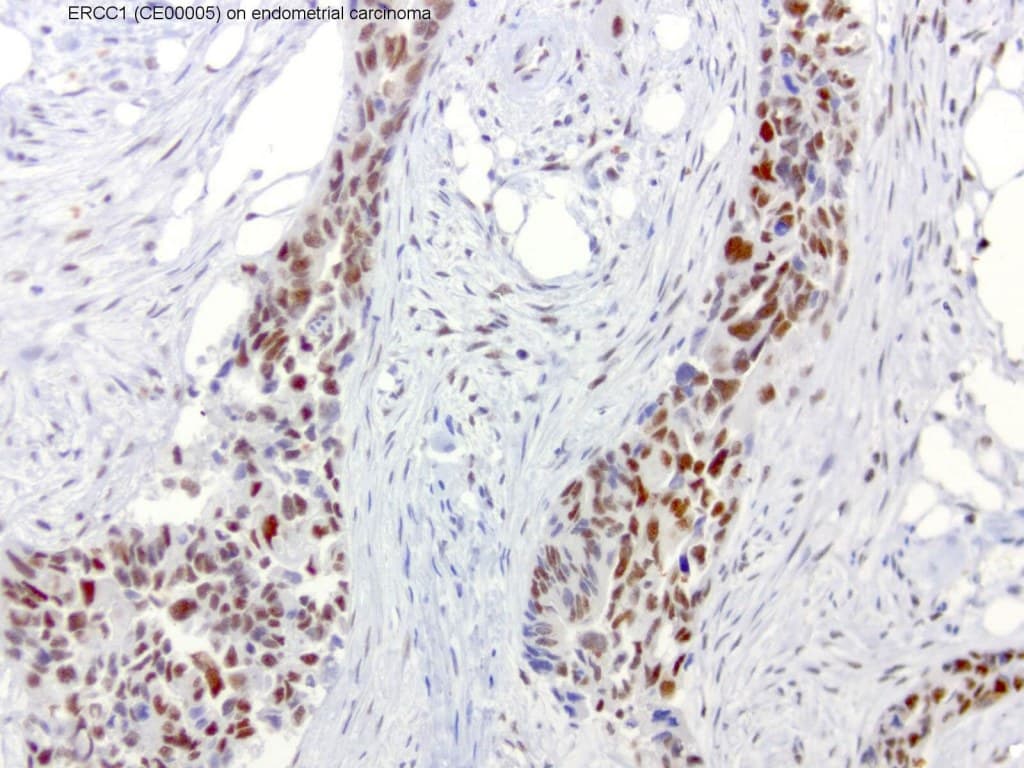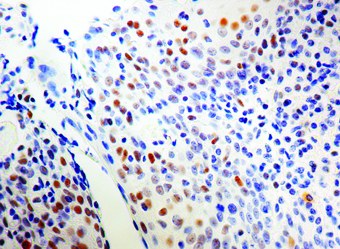

In pulmonary pathology, ERCC1 has been extensively studied in non-small cell lung cancer (NSCLC) as a DNA repair protein involved in the cellular response to platinum-induced DNA damage. Research has evaluated ERCC1 expression in tumor tissues using immunohistochemistry (IHC) and molecular approaches. Reported associations between ERCC1 expression levels and clinical outcomes, including response to platinum-based chemotherapy, have been inconsistent across studies, largely due to differences in assay design, antibody specificity, scoring methodologies, and tumor heterogeneity.
Biological Significance of ERCC1
- Essential component of the nucleotide excision repair (NER) pathway involved in DNA damage repair.
- Forms a functional endonuclease complex with XPF (ERCC1–XPF).
- Participates in the 5’ incision step during repair of bulky DNA lesions.
- Contributes to cellular repair of genotoxic stress, including platinum-induced DNA crosslinks.
- Plays a role in maintaining genomic stability in normal and malignant cells.
Investigational Utility of ERCC1 in Pulmonary Pathology
- Studied in NSCLC in the context of DNA repair capacity and response to platinum-based chemotherapy.
- Evaluated in translational and clinical research using IHC and molecular techniques.
- Reported associations between ERCC1 expression and treatment outcomes have been variable across studies.
- Interpretation is affected by methodological variability, including antibody specificity and lack of full assay standardization.
- Current evidence does not support ERCC1 as a fully standardized or universally validated predictive biomarker in clinical practice.
Key Features of Anti-ERCC1 CE/IVD Antibodies for IHC
- Optimized for detection of ERCC1 protein in formalin-fixed, paraffin-embedded (FFPE) tissue specimens.
- Applicable to pulmonary and pleural samples within standardized histopathology workflows.
- Supports visualization of ERCC1 expression in the context of preserved tissue architecture.
- Intended for use in regulated diagnostic and/or research settings, depending on local regulatory frameworks.
- Designed to support reliable IHC performance when used according to validated laboratory protocols.