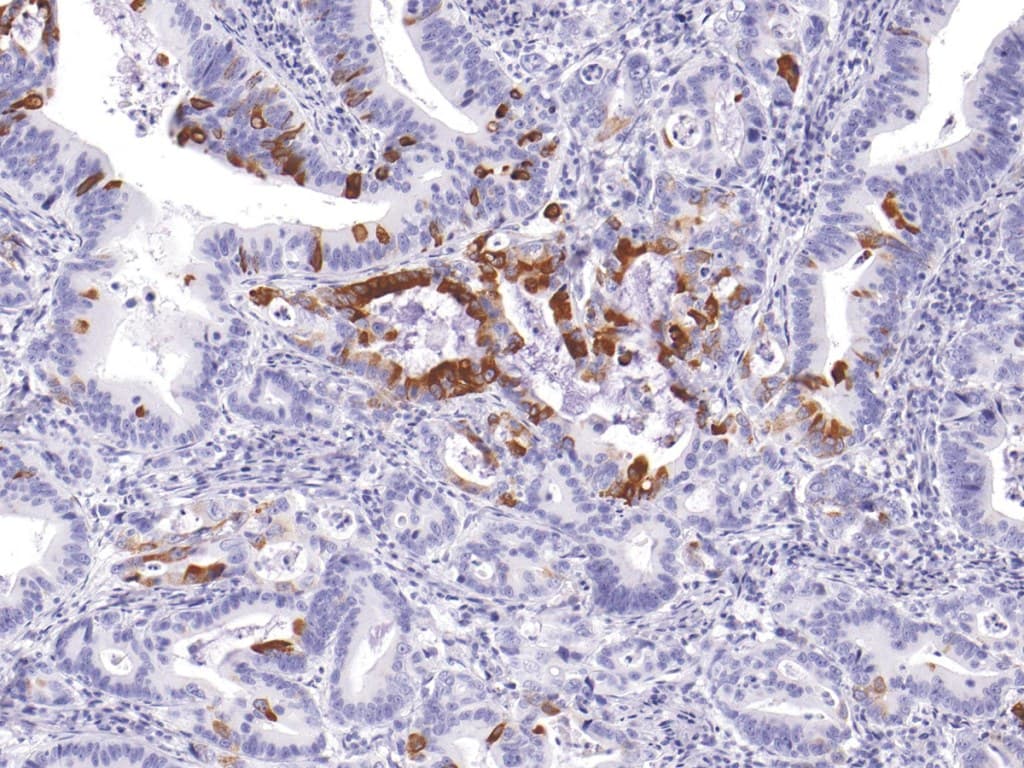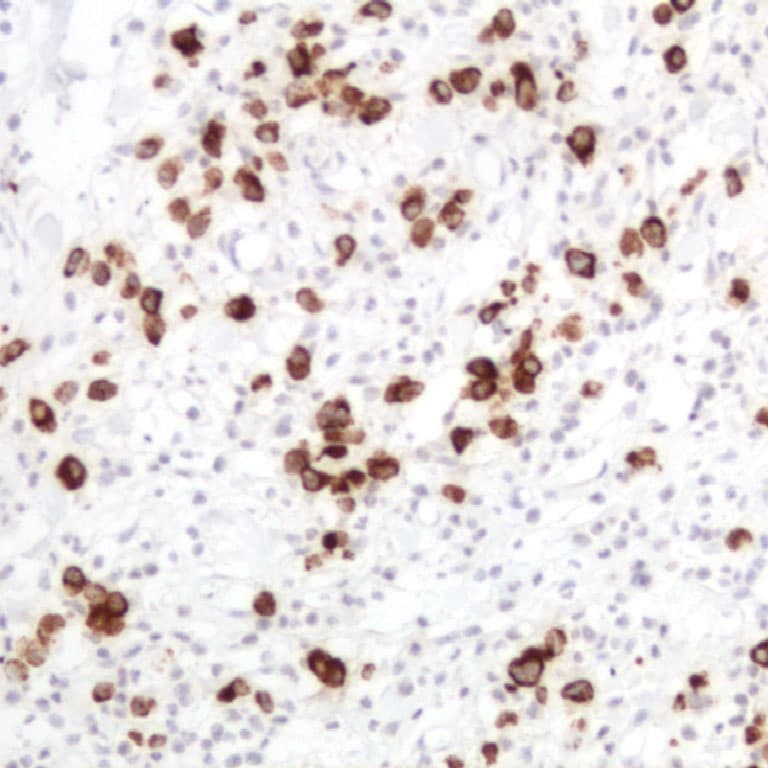

Mucin 5AC (MUC5AC) is a high‑molecular‑weight gel‑forming secreted mucin expressed in specialized mucus‑producing epithelial cells. In normal human tissues, MUC5AC is abundant in the surface foveolar epithelium of the stomach, contributing to the protective mucous layer that defends against mechanical and chemical injury as well as microbial invasion. It is also expressed in the respiratory tract under physiological conditions. In the gastrointestinal (GI) tract, MUC5AC expression is typically absent or very low in the colon. Aberrant upregulation or ectopic expression of MUC5AC occurs in a variety of neoplastic and pre‑neoplastic lesions, making it a valuable target for immunohistochemical (IHC) detection with diagnostic applications in GI pathology.
Biological Significance of Mucin 5AC (MUC5AC)
MUC5AC is encoded by the MUC5AC gene and belongs to the family of secreted gel‑forming mucins, which also includes MUC2 and MUC6. These glycoproteins are extensively O‑glycosylated and form cross‑linked polymers that contribute to the viscoelastic properties of mucus. While physiologically concentrated in gastric epithelium and respiratory secretions, MUC5AC expression is absent in normal colorectal mucosa but may be induced in GI diseases, including sessile serrated lesions (SSLs), adenomas, and adenocarcinomas of the colon and pancreas. Immunohistochemical studies demonstrate that MUC5AC expression reflects differentiation patterns in gastric carcinoma. It is often retained in diffuse-type and early gastric cancers, while expression diminishes in areas of intestinal metaplasia and in some advanced tumors. These features support its utility as a marker of gastric epithelial differentiation in histopathology.
Diagnostic Utility in Gastrointestinal Pathology
MUC5AC IHC aids in distinguishing tumor subtypes and differentiation states in GI biopsies. In the stomach, MUC5AC positivity correlates with gastric phenotypes and helps differentiate gastric carcinoma subtypes based on mucin expression profiles. In the pancreas, MUC5AC is frequently observed in ductal adenocarcinomas and ampullary carcinomas, whereas it is generally absent in normal pancreatic tissue or pancreatitis, supporting its use as a diagnostic marker, though expression may vary among cases. In the lower GI tract, ectopic MUC5AC expression is associated with precursor lesions such as SSLs of the colon. Studies demonstrate that SSLs exhibit significantly higher MUC5AC expression compared to normal mucosa and conventional adenomas, highlighting its role in identifying serrated pathway neoplasia. Across GI cancer diagnostics, MUC5AC complements markers such as CK7, CK20, CDX2, and MUC2, refining tumor classification, subtype identification, and lineage differentiation in complex cases.
Key Features of Anti‑Mucin 5AC (MUC5AC) CE/IVD Antibodies
Anti‑MUC5AC antibodies designed for CE‑marked In Vitro Diagnostic (IVD) use are validated for qualitative immunohistochemistry on formalin‑fixed paraffin‑embedded (FFPE) tissue sections. These antibodies are optimized to detect MUC5AC protein in pathological specimens with high specificity and sensitivity, minimizing cross‑reactivity and enabling reproducible detection of mucin expression in gastric and aberrant GI tissues. Incorporating standardized CE/IVD antibodies into diagnostic panels enhances diagnostic accuracy and reproducibility in research and clinical laboratories.
In practice, CE/IVD MUC5AC antibodies facilitate:
- Accurate detection of gastric differentiation markers in gastric carcinomas
- Identification of aberrant mucin expression in pancreatic and colorectal neoplasms
- Integration into multi‑marker IHC panels for comprehensive GI tumor profiling
When combined with clinical context and other biomarkers, these diagnostic tools support reliable histopathologic classification critical for research, clinical trials, and patient care.