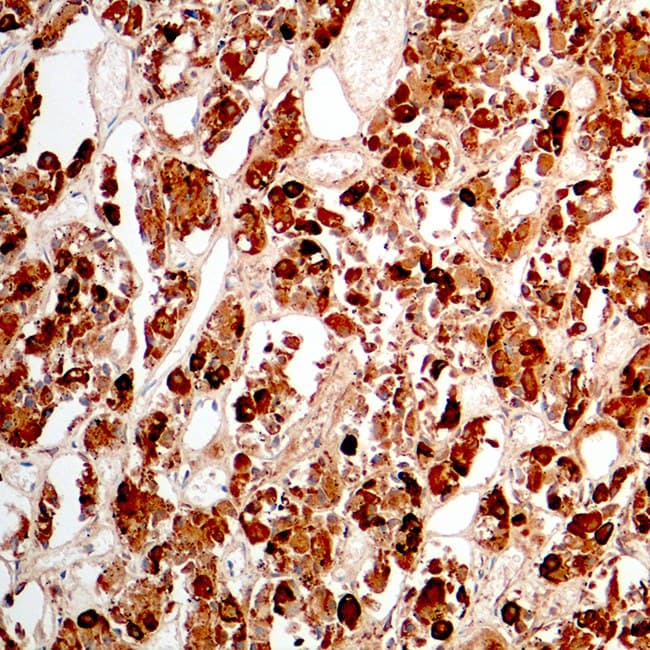

Growth Hormone (GH / hGH) is a peptide hormone produced by somatotroph cells of the anterior pituitary gland. It plays a central role in postnatal growth and systemic metabolic regulation, including protein synthesis, lipid metabolism, and glucose homeostasis, primarily through induction of hepatic insulin-like growth factor 1 (IGF-1), as extensively described in peer-reviewed endocrine literature.
Biological Significance in Neuropathology
- GH expression is a well-established marker of somatotroph lineage differentiation in pituitary neuroendocrine tumors (PitNETs).
- It is used in the immunohistochemical characterization of anterior pituitary hormone–producing tumors.
- GH excess is associated with somatotroph PitNETs, clinically correlated with acromegaly.
- In modern diagnostic frameworks, GH immunoreactivity is interpreted alongside lineage-defining transcription factors (e.g., PIT1) for tumor classification and assignment, as recommended in the WHO Classification of Endocrine and Neuroendocrine Tumors (5th edition).
Diagnostic Utility in Neuropathology (IHC)
- Anti-GH immunohistochemistry is used to identify somatotroph differentiation in formalin-fixed paraffin-embedded (FFPE) pituitary tissue.
- It supports tumor subclassification in combination with transcription factor profiling in current neuropathology practice.
- It contributes to the correlation between morphological findings and endocrine hypersecretion syndromes, including acromegaly.
- It is used as part of multimarker panels in surgical neuropathology workflows for pituitary tumor characterization.
Key Features of Anti-GH CE/IVD Antibodies (IHC Use)
- CE/IVD-labeled reagents are intended for in vitro diagnostic use in regulated laboratory environments under applicable European regulations.
- Validated for immunohistochemistry on formalin-fixed paraffin-embedded (FFPE) human tissue according to manufacturer instructions for use (IFU).
- Designed for analytical specificity toward pituitary GH detection, with performance characteristics defined by validation studies.
- Compatible with manual and automated IHC staining platforms, depending on protocol requirements.
- Optimized for antigen retrieval–dependent staining procedures as specified in IFU.
- Available in monoclonal or polyclonal formats depending on assay requirements.
- Manufactured under quality-controlled processes ensuring lot-to-lot consistency for diagnostic reproducibility.