

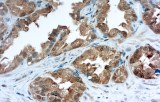
Galectin-3 is a β-galactoside–binding lectin of the chimera-type galectin family encoded by the LGALS3 gene. It is a multifunctional protein involved in cell–cell and cell–matrix interactions, regulation of apoptosis, immune modulation, cellular proliferation, and neoplastic transformation, all of which are processes central to endocrine tumor biology. In thyroid and parathyroid tissues, Galectin-3 expression has been consistently linked to malignant transformation and tumor progression in multiple peer-reviewed studies.
Biologically relevant characteristics documented in the scientific literature include:
-
Dual intracellular and extracellular activity, influencing tumor growth and invasion.
-
Anti-apoptotic function, mediated through interactions with mitochondrial pathways and apoptosis-related proteins.
-
Role in tumor invasiveness and metastatic potential, via modulation of extracellular matrix interactions.
-
Altered expression during malignant transformation of follicular epithelial and parathyroid cells.
Subcellular localization is diagnostically relevant, as cytoplasmic (and, in specific contexts, nuclear) expression patterns are emphasized in published interpretive guidelines for immunohistochemistry.
Diagnostic utility of Galectin-3 in thyroid and parathyroid pathology
Thyroid pathology
Galectin-3 is one of the most extensively studied immunohistochemical markers in thyroid surgical pathology, particularly for the differential diagnosis of follicular-patterned thyroid lesions. Large cohort studies and systematic reviews consistently demonstrate its diagnostic value when applied to formalin-fixed, paraffin-embedded tissue sections.
Peer-reviewed evidence indicates that Galectin-3:
-
Is frequently expressed in malignant thyroid tumors, including papillary and follicular thyroid carcinoma.
-
Is rarely or focally expressed in benign thyroid nodules and follicular adenomas.
-
Demonstrates high sensitivity and specificity for malignancy in multiple independent studies.
-
Provides greater diagnostic accuracy when used as part of an immunohistochemical panel, commonly including HBME-1 and CK19.
Meta-analyses and consensus reviews emphasize that Galectin-3 should not be interpreted in isolation. Its greatest clinical value lies in panel-based immunohistochemistry, particularly in histologically indeterminate cases.
Parathyroid pathology
In parathyroid disease, Galectin-3 has been reported as a useful adjunct immunohistochemical marker for supporting the diagnosis of parathyroid carcinoma, a rare endocrine malignancy with overlapping morphology with benign lesions.
Peer-reviewed studies show that:
-
Galectin-3 expression is significantly more frequent in parathyroid carcinoma than in adenoma or hyperplasia.
-
Combining Galectin-3 with proliferation markers, particularly Ki-67, improves diagnostic discrimination.
-
Galectin-3 contributes to multi-parameter diagnostic strategies, complementing morphologic and clinical criteria.
I cannot confirm that Galectin-3 alone is sufficient for definitive diagnosis; published studies consistently stress its role as a supportive marker within a comprehensive clinicopathologic framework.
Key features of Anti-Galectin-3 CE/IVD antibodies for IHC
Peer-reviewed pathology literature highlights several analytical and interpretive requirements for Galectin-3 immunohistochemistry in endocrine diagnostics.
Scientifically supported features include:
-
Validated performance on FFPE tissue, the standard substrate for diagnostic histopathology.
-
Clear and interpretable cytoplasmic staining patterns, with awareness of contextual nuclear expression.
-
High reproducibility and low non-specific background, supporting inter-laboratory consistency.
-
Compatibility with established thyroid and parathyroid IHC panels, including HBME-1, CK19, and Ki-67.
-
Suitability for standardized diagnostic workflows, aligned with regulated in vitro diagnostic use.