

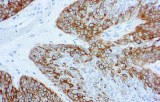
Cytokeratin 14 (CK14, keratin-14) is a type I intermediate filament protein predominantly expressed in the basal layer of stratified epithelium, where it contributes to cytoskeletal integrity and epithelial differentiation. In both normal tissues and tumors, CK14 is commonly associated with basal epithelial cell populations and with squamous differentiation programs. Its expression is frequently observed in basal-like molecular phenotypes across several epithelial malignancies.
In immunohistochemistry (IHC), CK14 functions as one component of broader epithelial marker panels because its expression pattern reflects cellular lineage and differentiation status. Peer-reviewed studies demonstrate that CK14 expression often increases during transitions toward squamous morphology and basal-like tumor states, providing insight into tumor biology and phenotypic plasticity. However, CK14 is typically interpreted alongside additional markers rather than as a standalone determinant of lineage.
For translational pathology research, CK14 staining is integrated into multiparametric diagnostic panels together with other cytokeratins and lineage markers to characterize epithelial tumors and support molecular subtyping frameworks that may inform prognostic assessment.
Biological Significance of Cytokeratin 14
The biological relevance of CK14 in epithelial biology and genitourinary cancer research relates primarily to basal cell identity and differentiation programs:
- CK14 is normally expressed in basal epithelial layers and is frequently upregulated in areas showing squamous differentiation.
- Its presence is commonly associated with basal/squamous-like tumor biology and has been linked in multiple studies to adverse clinicopathologic features, although this association is not universal across all tumor types or cohorts.
- CK14-positive tumors may exhibit transcriptional signatures consistent with less-differentiated or stem-cell–associated states; however, CK14 alone should not be interpreted as a definitive progenitor cell marker.
Because of these characteristics, CK14 is widely used to study epithelial plasticity, tumor heterogeneity, and lineage differentiation, particularly in investigations of tumor progression and molecular subtype classification.
Diagnostic Utility of Cytokeratin 14 in Genitourinary Pathology
In genitourinary pathology, CK14 immunostaining provides supportive diagnostic information, especially when interpreted within comprehensive IHC panels:
- CK14 expression can help highlight squamous differentiation in urothelial carcinoma and related lesions, although reported sensitivity and specificity vary across studies and methodologies.
- Basal/squamous-like subtypes of bladder and upper tract urothelial carcinoma frequently demonstrate CK14 positivity and are often associated with higher tumor grade, advanced stage, and less favorable clinical outcomes in population-level analyses.
- Within multiparametric IHC approaches, CK14 contributes to the distinction between squamous cell carcinoma and urothelial carcinoma with squamous differentiation, but definitive diagnosis relies on integrated morphologic and immunophenotypic assessment.
These roles make CK14 a valuable adjunct biomarker in diagnostic workflows and in translational research aimed at molecular subtyping rather than a single decisive marker.
Key Features of Anti-Cytokeratin 14 CE/IVD Antibodies for IHC
Anti-Cytokeratin 14 CE/IVD antibodies designed for immunohistochemistry enable standardized detection of CK14 expression in formalin-fixed paraffin-embedded tissues. When analytically validated, such antibodies may provide:
- Specific visualization of basal epithelial and squamous-differentiated tumor cells.
- Compatibility with multiparametric diagnostic IHC panels used for tumor characterization and molecular subtype research.
- Reproducible staining patterns that support pathology workflows and biomarker investigations.
While CK14 detection can contribute to the evaluation of tumor differentiation and subtype classification, interpretation of staining results should be performed in conjunction with additional markers, clinical context, and established diagnostic criteria.