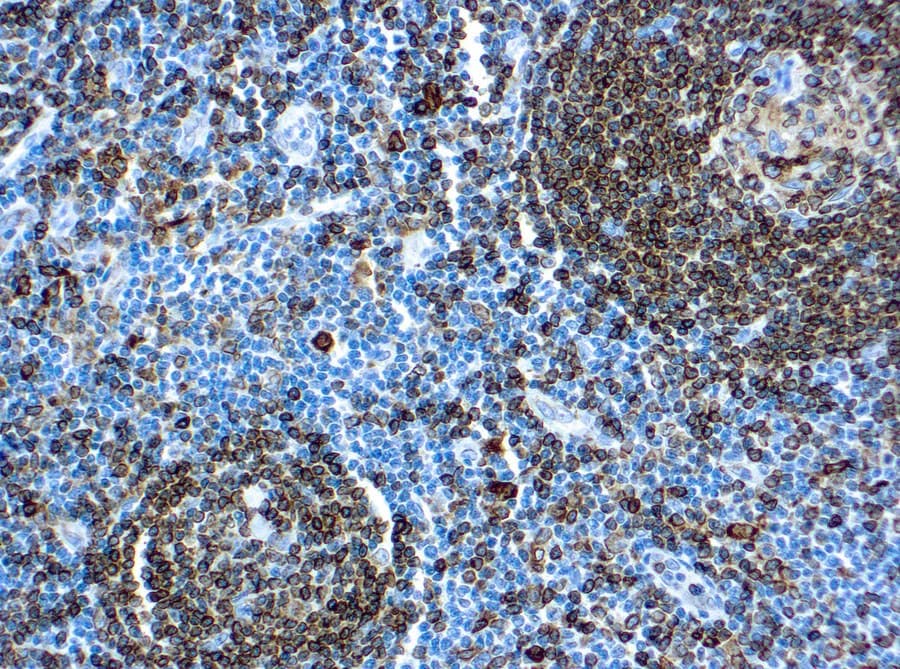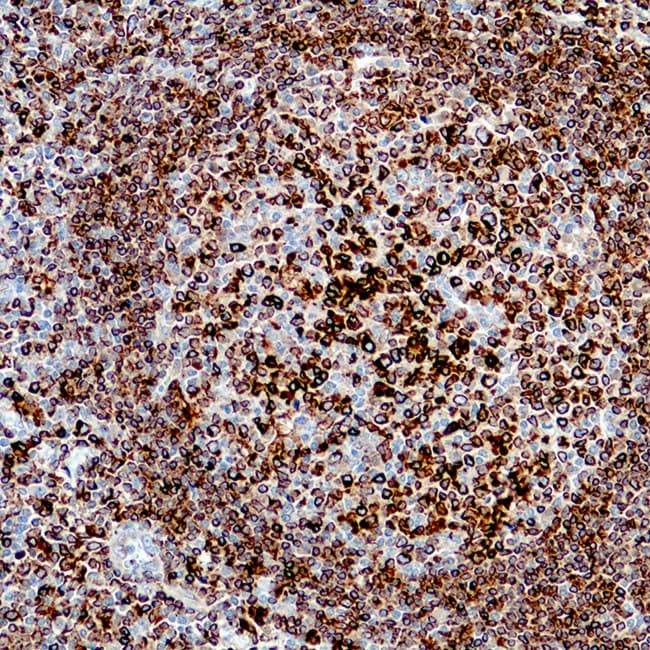


Anti-Cluster of Differentiation 74 (CD74) CE/IVD antibodies for immunohistochemistry (IHC) are valuable tools in hematopathology, supporting the evaluation of antigen-presenting cells and B-cell–associated processes in formalin-fixed, paraffin-embedded (FFPE) tissues. CD74, also known as the invariant chain (Ii), is a key regulator of MHC class II antigen presentation and immune signaling, making it a useful adjunct biomarker in lymphoid tissue analysis.
Biological Significance of CD74
- CD74 is a type II transmembrane glycoprotein predominantly expressed in B cells, macrophages, and dendritic cells.
- Functions as a chaperone for MHC class II molecules, regulating their folding, intracellular trafficking, and peptide loading.
- Forms the CLIP–MHC II complex, preventing premature peptide binding during antigen processing.
- Acts as a receptor for macrophage migration inhibitory factor (MIF), activating signaling pathways such as NF-κB (often in association with co-receptors).
- Contributes to immune regulation and supports B-cell survival and signaling.
Diagnostic Utility of CD74 in Hematopathology
- Commonly expressed in B-cell lineage cells and many B-cell lymphomas, supporting lineage assessment when used in combination with established markers (e.g., CD20, CD79a).
- Identifies antigen-presenting cell populations in lymphoid and extranodal tissues.
- Provides complementary information in multiparametric IHC panels rather than serving as a standalone lineage-defining marker.
- Expression patterns may reflect underlying immune activity and have been associated in research settings with tumor biology and signaling pathways.
Key Features of CD74 CE/IVD Antibodies (IHC)
- Validated for FFPE tissues, ensuring compatibility with routine histopathology workflows.
- Demonstrate membranous and cytoplasmic staining consistent with CD74 intracellular trafficking.
- Provide sensitive detection of antigen-presenting cells and B-cell–rich compartments.
- Optimized for reproducibility and standardized performance in CE/IVD diagnostic applications.