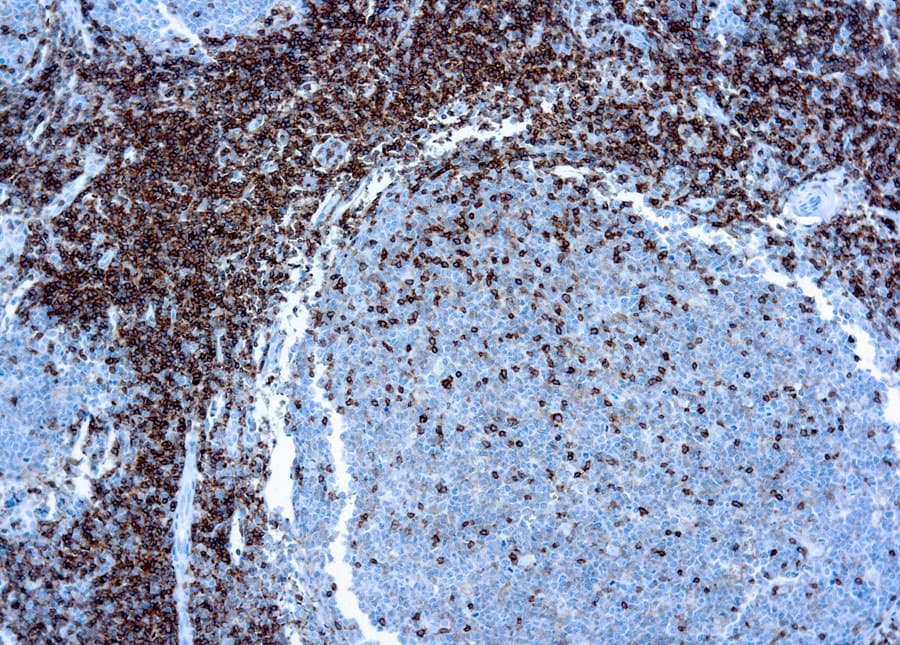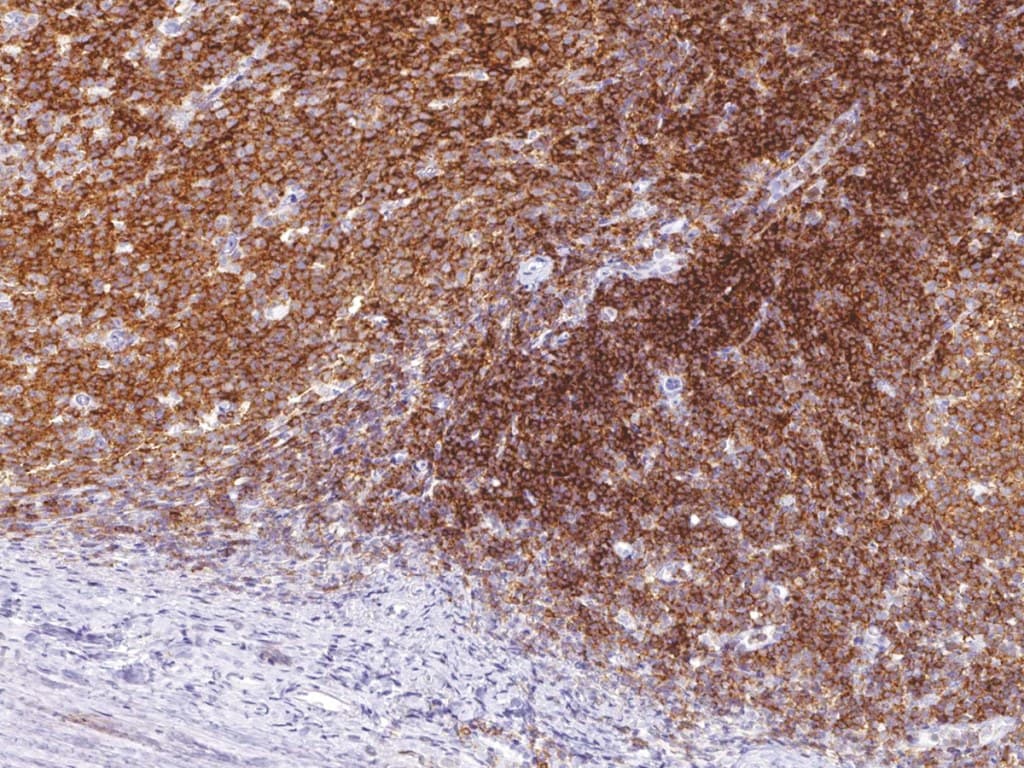

Anti-CD45 antibodies for immunohistochemistry (IHC) are essential reagents in hematopathology, enabling the reliable identification of hematolymphoid cells and supporting accurate tumor classification. CD45, also known as leukocyte common antigen (LCA), is a receptor-type protein tyrosine phosphatase expressed on nearly all nucleated hematopoietic cells and plays a central role in immune cell signaling.
Biological Significance of CD45
CD45 is a critical regulator of immune cell development, activation, and signaling:
- Pan-leukocyte marker expressed on lymphocytes, monocytes, granulocytes, and most macrophages, making it a fundamental identifier of hematopoietic lineage.
- Functions as a protein tyrosine phosphatase that regulates Src-family kinases, including Lck and Fyn, which are essential for antigen receptor signaling in T and B lymphocytes.
- Exhibits isoform diversity through alternative splicing, with distinct variants associated with specific cell lineages and activation states.
- Plays an essential role in T- and B-cell activation, with CD45 deficiency leading to severe immune dysfunction and impaired antigen receptor signaling.
Diagnostic Utility in Hematopathology
CD45 IHC is a cornerstone marker in diagnostic pathology and is widely used in routine practice:
- Confirms the hematopoietic origin of neoplasms, enabling distinction between lymphomas and non-hematologic malignancies such as carcinomas and sarcomas.
- Facilitates detection and characterization of leukocyte infiltration in tissues and inflammatory microenvironments.
- Strongly expressed in most lymphoid neoplasms, supporting lineage classification, although notable exceptions exist (e.g., classical Hodgkin lymphoma, which may show weak or absent CD45 expression).
- Serves as a key component of diagnostic antibody panels for the evaluation of leukemias, lymphomas, and other immune-related disorders.
Key Features of Anti-CD45 CE/IVD Antibodies (IHC)
- High specificity and sensitivity for hematolymphoid cells in formalin-fixed, paraffin-embedded (FFPE) tissues.
- Proven compatibility with standard IHC workflows, including heat-induced antigen retrieval and HRP/DAB detection systems.
- Reliable performance in established positive control tissues, such as bone marrow and lymphoid organs.
- Predominantly membranous staining pattern, consistent with CD45 localization, with possible cytoplasmic accentuation depending on tissue context and protocol conditions.
- Suitable for use in multiplex staining approaches and in combination with other lineage-specific or functional immune markers.