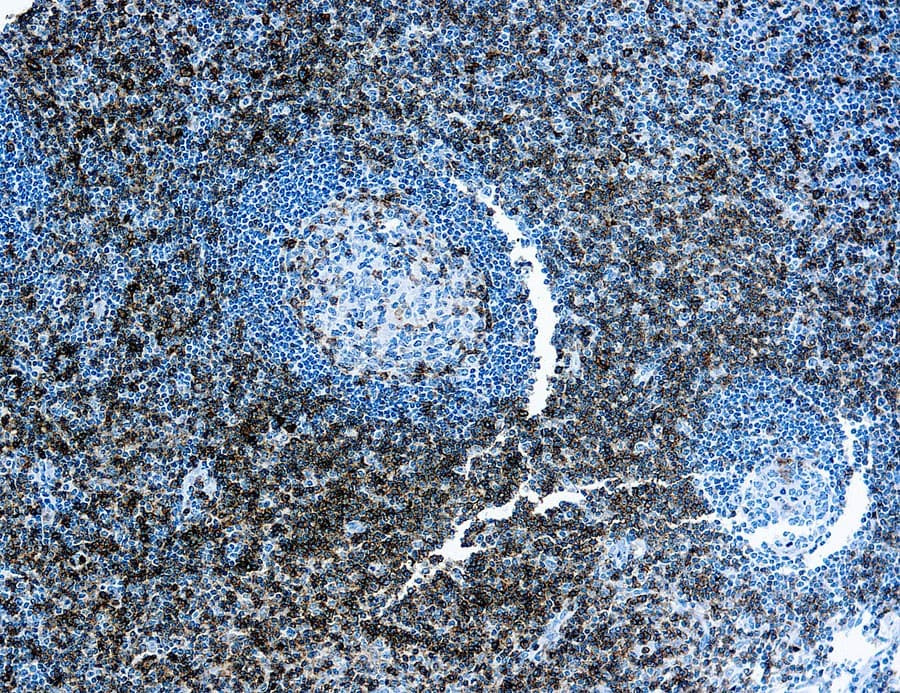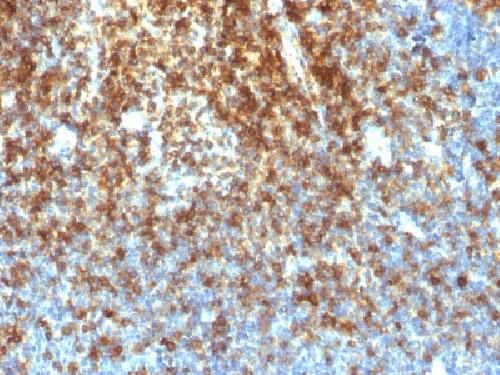

Anti-CD43 antibodies are essential tools in hematopathology for lineage assessment and tumor classification. CD43 (leukosialin/sialophorin) is a heavily glycosylated transmembrane protein expressed on most hematopoietic cells and plays a key role in immune regulation.
Biological Significance of CD43
- Broadly expressed on T lymphocytes, monocytes, granulocytes, and subsets of B cells (typically precursor or activated B cells).
- Key functions include:
- Regulation of cell adhesion and migration.
- Modulation of T-cell activation and intracellular signaling.
- Extensive glycosylation enables context-dependent roles, contributing to both anti-adhesive properties and signaling functions.
Diagnostic Utility of CD43 in Hematopathology
Serves as a sensitive pan-leukocyte marker, particularly useful when CD45 expression is weak or absent.
- Major applications:
- Detection of T-cell lymphomas with strong membranous expression.
- Identification of acute leukemias and myeloid neoplasms, including extramedullary presentations.
- Recognition of aberrant expression in certain B-cell lymphomas, aiding differentiation from reactive processes.
- Most effective when used within multiparametric IHC panels for accurate lineage determination.
Key Features of Anti-CD43 CE/IVD Antibodies (IHC)
- Optimized for formalin-fixed, paraffin-embedded (FFPE) tissues.
- Produce distinct membranous staining patterns in hematopoietic cells.
- Demonstrate high sensitivity for T-cell and myeloid populations with defined specificity.
- Compatible with standardized diagnostic workflows in clinical IHC laboratories.
- Require interpretation alongside morphology and complementary markers to ensure diagnostic accuracy.