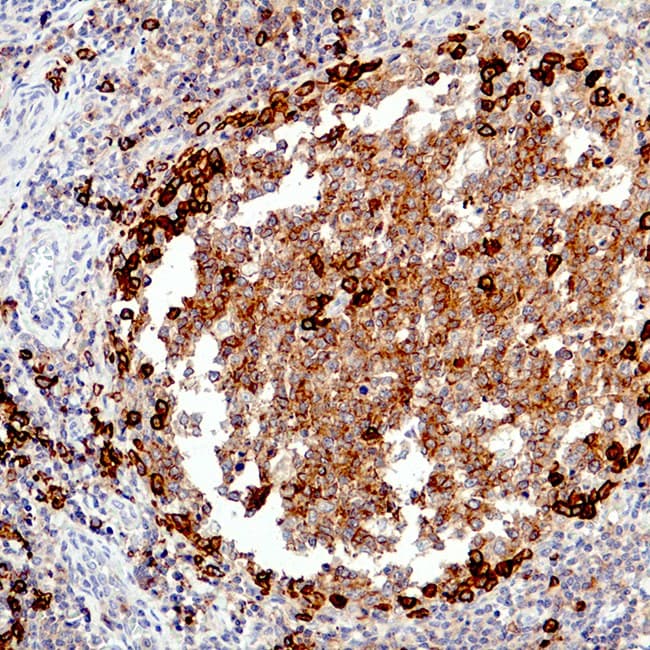

CD38 is a type II transmembrane glycoprotein widely expressed on plasma cells, B and T lymphocytes, natural killer (NK) cells, and cells of the myeloid lineage. It functions both as a surface receptor and as an ectoenzyme with NAD⁺ glycohydrolase and ADP-ribosyl cyclase activities. Through the metabolism of NAD⁺ and the generation of cyclic ADP-ribose, CD38 contributes to the regulation of intracellular Ca²⁺ signaling pathways that influence immune activation, cell proliferation, and differentiation. CD38 can also participate in cell adhesion and signal transduction through interactions with ligands such as CD31, supporting communication between immune and stromal cells.
Biological Significance
- Immune regulation: CD38 plays a central role in lymphocyte activation and differentiation. It modulates signaling pathways associated with B-cell receptor and T-cell activation and contributes to the regulation of immune responses.
- Metabolic signaling: Through its enzymatic control of NAD⁺ metabolism, CD38 regulates calcium mobilization and intracellular signaling pathways involved in cellular activation and metabolic homeostasis.
- Hematopoietic expression: CD38 expression is particularly strong in terminally differentiated plasma cells and activated lymphoid populations, making it a valuable lineage and activation marker in hematopoietic tissues.
Diagnostic Utility
- Plasma cell identification: Immunohistochemical detection of CD38 enables reliable identification of plasma cells within bone marrow and tissue biopsies, supporting the diagnosis of plasma cell neoplasms such as multiple myeloma.
- Lymphoid malignancy subtyping: Expression patterns of CD38 assist in the characterization of B-cell lymphoproliferative disorders and can help distinguish neoplastic populations from reactive lymphoid cells.
- Prognostic relevance: In certain hematologic malignancies, including chronic lymphocytic leukemia, CD38 expression levels may correlate with disease progression and contribute to immunophenotypic risk assessment.
Key Features of CE/IVD Antibodies
- High specificity and sensitivity: Optimized for robust detection of membranous and cytoplasmic CD38 expression in formalin-fixed, paraffin-embedded (FFPE) tissues.
- Regulatory validation: CE/IVD certification ensures standardized analytical performance suitable for diagnostic laboratory workflows.
- Compatibility: Designed for integration into hematopathology panels with markers such as CD138, CD45, and immunoglobulin light chains to support accurate disease classification.
- Reproducibility: Strict quality control and lot-to-lot consistency enable reliable staining performance and diagnostic interpretation in routine pathology practice.