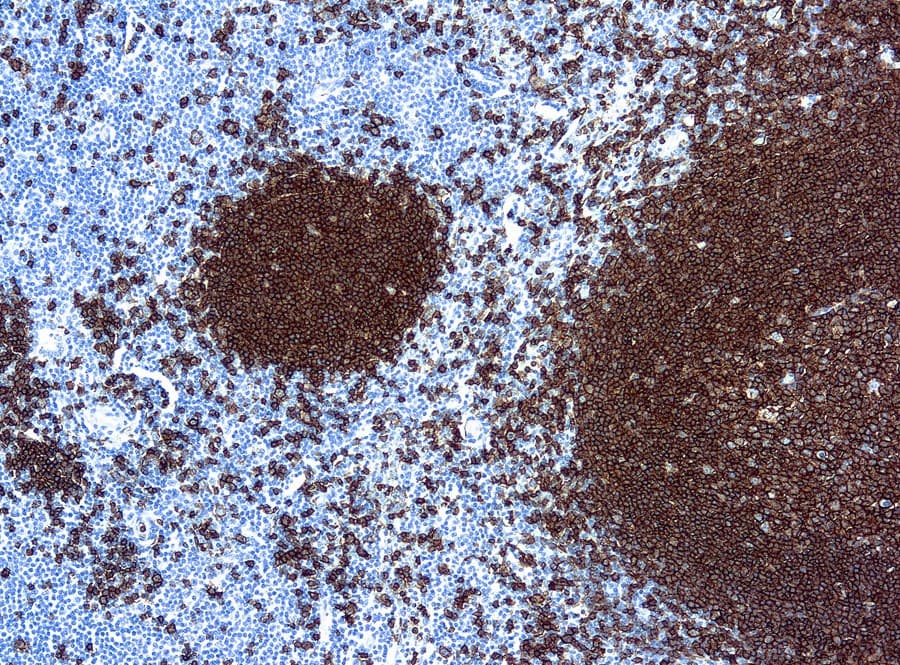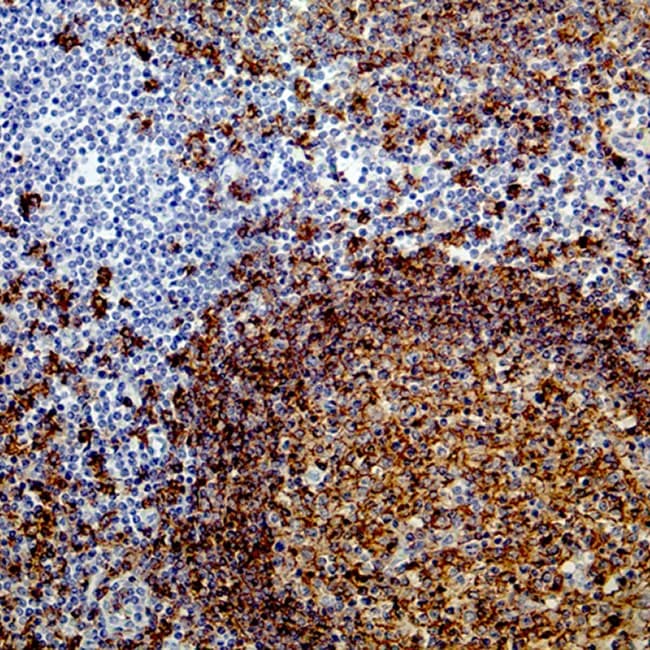


CD20 is a critical biomarker for B-cell identification and characterization in hematopathology. Its reliable detection via CE/IVD antibodies ensures accurate diagnosis and subclassification of B-cell malignancies, even in formalin-fixed, paraffin-embedded tissues.
Biological Significance of CD20 (MS4A1)
- Molecular identity: CD20 is a non-glycosylated transmembrane protein encoded by the MS4A1 gene. It is expressed on mature and memory B lymphocytes but absent on early pro-B cells and most plasma cells, serving as a canonical B-cell lineage marker.
- Biological role: CD20 modulates B-cell receptor signaling and calcium flux, which are necessary for B-cell activation and proliferation.
- Expression pattern: CD20 expression begins after early B-cell differentiation and persists through mature and memory B cells, facilitating distinction from T cells and other lymphoid populations. Rare plasma cell subsets may retain low CD20 expression.
Diagnostic Utility in Hematopathology
- B-cell lineage marker: CD20 is a highly sensitive and specific immunohistochemical marker for mature B-cell neoplasms.
- Lymphoma subclassification: Detection of CD20 supports diagnosis and subclassification of diffuse large B-cell lymphoma, follicular lymphoma, mantle cell lymphoma, chronic lymphocytic leukemia/small lymphocytic lymphoma, and other mature B-cell lymphomas through characteristic membranous staining.
- Expression heterogeneity: CD20 levels vary among lymphoma subtypes; for example, chronic lymphocytic leukemia often shows dim expression compared with diffuse large B-cell lymphoma.
- Diagnostic considerations: Some high-grade B-cell lymphomas and therapy-exposed tumors may lack CD20 despite B-cell origin, necessitating complementary markers such as PAX5 or CD79a.
Key Features of CD20 CE/IVD Antibodies for IHC
- Clinical validation: CE-marked IVD anti-CD20 antibodies are validated for reproducible detection on FFPE tissues in clinical workflows.
- Specificity: These antibodies target extracellular loops of CD20, producing strong membranous staining with minimal cross-reactivity when properly validated.
- Diagnostic panels: Integration of CD20 IHC with additional lineage markers enhances confidence in the identification and subclassification of mature B-cell neoplasms.