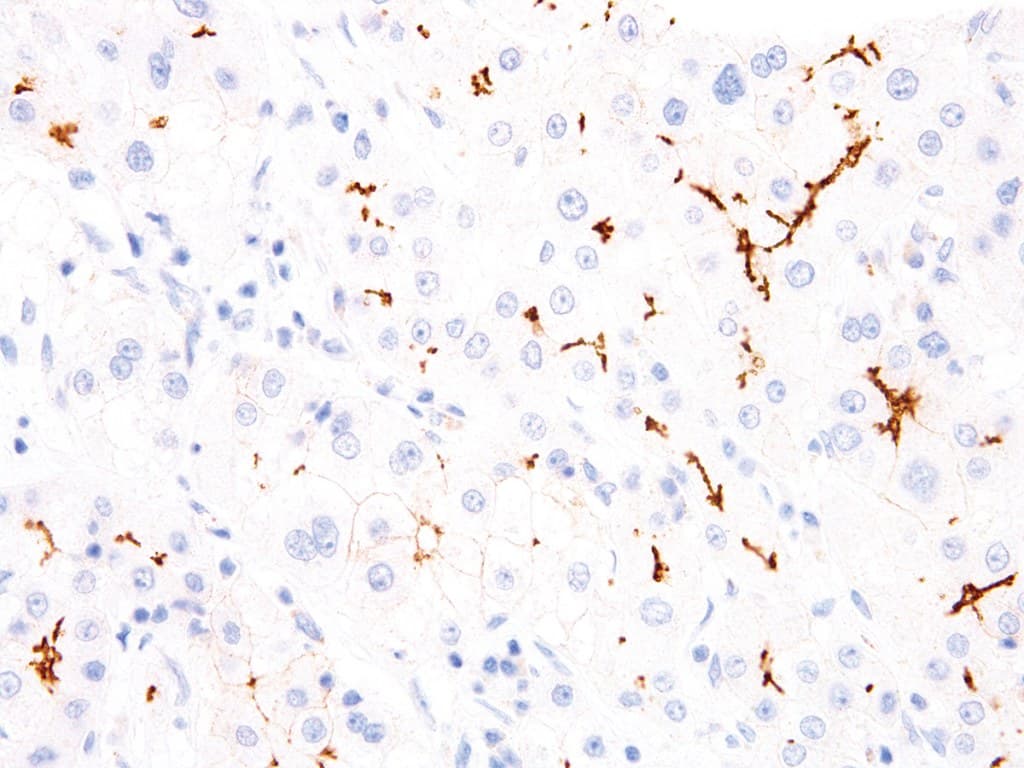

Anti-BSEP antibodies validated for CE/IVD immunohistochemistry (IHC) are specialized diagnostic reagents used in hepatobiliary pathology, enabling reliable visualization of the bile salt export pump (BSEP) in formalin-fixed, paraffin-embedded (FFPE) liver tissues. BSEP, encoded by the ABCB11 gene, is a canalicular ATP-binding cassette (ABC) transporter expressed predominantly at the apical (canalicular) membrane of hepatocytes. Its primary physiological role is to actively transport bile salts out of hepatocytes into the biliary canaliculi, using energy from ATP hydrolysis to move bile salts against steep concentration gradients. This step is the rate-limiting and major driving force for bile salt secretion into bile, which provides the principal osmotic component of bile flow and supports the enterohepatic circulation of bile acids.
Biological and Clinical Significance
BSEP plays a central role in bile acid homeostasis and the enterohepatic cycling of bile salts. By exporting bile salts into the canaliculi, BSEP drives much of bile flow and supports lipid digestion and absorption in the intestine. Genetic or acquired impairment of BSEP leads to intrahepatic bile salt accumulation, which is cytotoxic, disrupts bile flow, and can initiate cholestatic liver injury.
Diagnostic Utility of Anti-BSEP Immunohistochemistry (IHC)
BSEP is highly liver-specific and is not widely expressed outside hepatocytes. Its native distribution at the canalicular membrane of hepatocytes makes anti-BSEP immunostaining highly informative in hepatobiliary pathology.
Key Diagnostic Applications
Hepatocellular carcinoma (HCC)
- Canalicular BSEP expression is frequently retained in HCC and can help distinguish it from cholangiocarcinoma or metastatic tumors, which typically lack canalicular pattern staining.
Cholestatic liver diseases (e.g., PFIC2)
- Absent or markedly reduced BSEP staining in liver biopsy material can support the diagnosis of PFIC2 or other cholestatic liver diseases, particularly when genetic testing is unavailable or delayed.
- Absence or reduction of BSEP immunoreactivity generally corresponds with known ABCB11 mutations or impaired bile salt transport.
Key Features of Anti-BSEP CE/IVD Antibodies
- High specificity for the ABCB11 protein with distinct canalicular membranous staining in FFPE liver specimens.
- Robust signal-to-noise ratio and regulatory quality (CE/IVD) to ensure reproducibility across clinical laboratories.
- Correlation with functional deficiency: Absence or reduction of BSEP staining in cholestatic liver disease aligns with impaired bile salt transport.