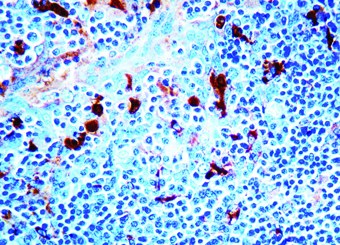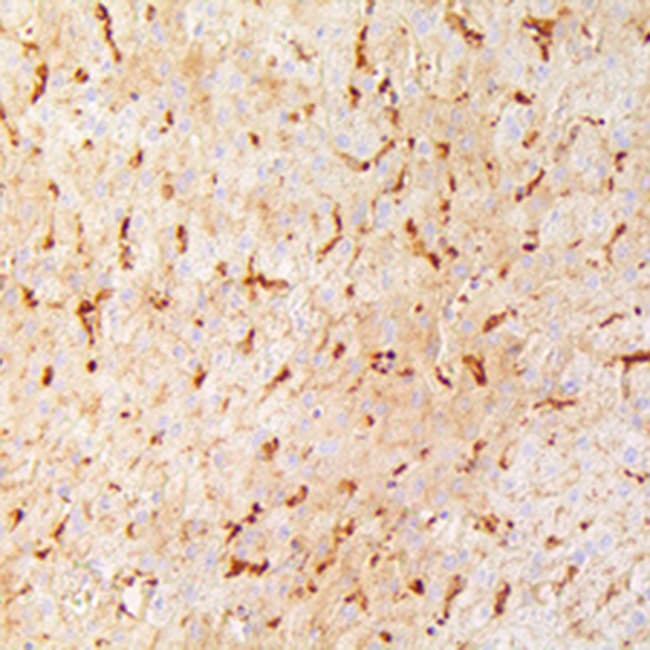

Alpha-1-antichymotrypsin (AACT), encoded by SERPINA3, is a secreted serine protease inhibitor of the serpin family and a recognized acute-phase reactant. Its expression increases in inflammatory microenvironments and in cells with monocyte–macrophage differentiation. In formalin-fixed paraffin-embedded (FFPE) tissue, AACT demonstrates cytoplasmic, often granular staining by immunohistochemistry (IHC).
Biological Role
- Acute-phase protein: Upregulated during inflammatory responses.
- Protease inhibition: Inhibits chymotrypsin-like serine proteases, contributing to regulation of tissue proteolysis and inflammatory injury.
Tissue Expression
AACT immunoreactivity may be observed in:
- Monocytes and macrophages
- Cells showing histiocytic differentiation
- Reactive inflammatory infiltrates
- Selected neoplastic settings with activated macrophage programs
- Reed–Sternberg and mononuclear Hodgkin cells in classical Hodgkin lymphoma
Because AACT is an inflammation-associated protein, expression is not lineage-specific and should be interpreted in context.
Diagnostic Application
Historically, AACT (often alongside α1-antitrypsin) supported evaluation of suspected histiocytic neoplasms in paraffin sections. In current hematopathology practice, AACT is best used as an adjunct marker within a broader IHC panel (e.g., CD68, CD163, lysozyme) and should not be used as a standalone discriminator.
Recommended Use
- IHC on FFPE tissue.
- Hematopathology and inflammatory tissue evaluation.
- Research applications involving acute-phase protein expression.
Interpret results in conjunction with morphology, additional immunophenotypic markers, and clinical findings.