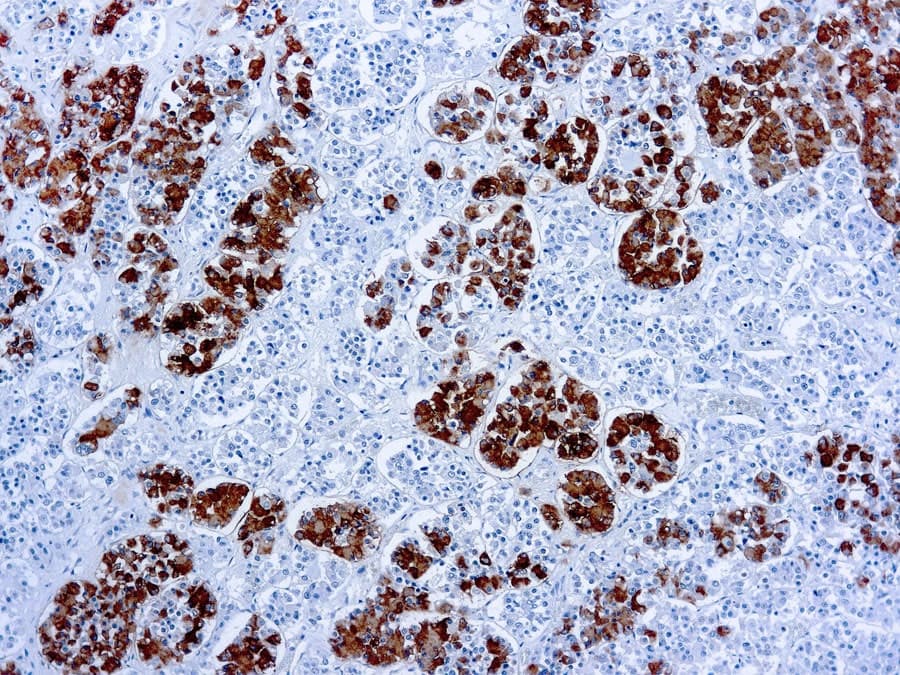

Adrenocorticotropic hormone (ACTH), also known as corticotropin, is a peptide hormone derived from the precursor molecule proopiomelanocortin (POMC). ACTH is synthesized primarily by corticotroph cells of the anterior pituitary gland and regulates glucocorticoid production through activation of the hypothalamic–pituitary–adrenal (HPA) axis. Aberrant ACTH production is characteristic of corticotroph pituitary neuroendocrine tumors (PitNETs), including functioning tumors associated with Cushing disease and clinically silent corticotroph tumors.
Biological Significance of ACTH
- Derived from post-translational processing of POMC in pituitary corticotroph cells.
- Essential regulator of adrenal cortisol synthesis and physiological stress-response pathways.
- Serves as a marker of hormone production and corticotroph differentiation, while TPIT (TBX19) functions as the lineage-defining transcription factor of corticotroph cells.
- Maintains physiological HPA-axis homeostasis through endocrine feedback mechanisms.
Diagnostic Utility of Anti-ACTH Antibodies in Neuropathology
- Identification and classification of ACTH-producing pituitary neuroendocrine tumors (PitNETs).
- Confirmation of corticotroph differentiation in pituitary neuroendocrine tumors and related sellar neuroendocrine lesions.
- Detection of ACTH expression in functioning and clinically silent corticotroph tumors.
- Support for differential diagnosis when used alongside pituitary transcription factors and hormone markers, including TPIT (TBX19), PIT1, SF1, prolactin, growth hormone, and TSH.
- Contribution to integrated histopathological assessment of sellar and parasellar lesions.
Key Features of CE/IVD Anti-ACTH Antibodies
- Validated for immunohistochemistry (IHC) on formalin-fixed, paraffin-embedded (FFPE) tissue.
- CE/IVD-compliant reagents manufactured under quality-controlled diagnostic standards.
- Demonstrate specific immunoreactivity for ACTH-producing corticotroph cells and ACTH-expressing pituitary neuroendocrine tumors when used according to validated protocols.
- Optimized staining protocols with reproducible performance and low background staining.
- Suitable for routine diagnostic neuropathology and endocrine pathology laboratories.