

Mouse Keratin, type I cytoskeletal 18(KRT18) ELISA kit

Referência CSB-E17158m-96T
Tamanho : 96T
Marca : Cusabio
Contactar o distribuidor local :

Telefone : +1 850 650 7790
 SDS
| Size | 96T,5×96T,10×96T |
Product Details
Intra-assay Precision (Precision within an assay): CV%<8% | |||||
Three samples of known concentration were tested twenty times on one plate to assess. | |||||
Inter-assay Precision (Precision between assays): CV%<10% | |||||
Three samples of known concentration were tested in twenty assays to assess. | |||||
To assess the linearity of the assay, samples were spiked with high concentrations of mouse KRT18 in various matrices and diluted with the Sample Diluent to produce samples with values within the dynamic range of the assay. | ||||||
| Sample | Serum(n=4) | ||||
1:1 | Average % | 83 | ||||
Range % | 80-86 | |||||
1:2 | Average % | 93 | ||||
Range % | 89-97 | |||||
1:4 | Average % | 84 | ||||
Range % | 81-89 | |||||
1:8 | Average % | 100 | ||||
Range % | 95-105 | |||||
The recovery of mouse KRT18 spiked to levels throughout the range of the assay in various matrices was evaluated. Samples were diluted prior to assay as directed in the Sample Preparation section. | ||||||
Sample Type | Average % Recovery | Range | ||||
Serum (n=5) | 96 | 93-99 | ||||
EDTA plasma (n=4) | 89 | 84-92 | ||||
These standard curves are provided for demonstration only. A standard curve should be generated for each set of samples assayed. | ||||||
| ||||||
ng/ml | OD1 | OD2 | Average | Corrected | ||
10 | 2.199 | 2.387 | 2.293 | 2.122 | ||
5 | 1.502 | 1.538 | 1.520 | 1.349 | ||
2.5 | 0.791 | 0.788 | 0.790 | 0.619 | ||
1.25 | 0.430 | 0.468 | 0.449 | 0.278 | ||
0.625 | 0.302 | 0.312 | 0.307 | 0.136 | ||
0.312 | 0.252 | 0.256 | 0.254 | 0.083 | ||
0.156 | 0.201 | 0.210 | 0.206 | 0.035 | ||
0 | 0.172 | 0.170 | 0.171 |
| ||

and FAQs
This Mouse KRT18 ELISA Kit was designed for the quantitative measurement of Mouse KRT18 protein in serum, plasma. It is a Sandwich ELISA kit, its detection range is 0.156 ng/mL-10 ng/mL and the sensitivity is 0.039 ng/mL.
Citations
- A Nine-Strain Bacterial Consortium Improves Portal Hypertension and Insulin Signaling and Delays NAFLD Progression In Vivo MT Salcedo,Biomedicines,/
- HH Hansen,BMC Gastroenterology,2020
- Tojo K.et al,FASEB J,2017
Customer Reviews and Q&A
Sample type: Serum
Sample species: Mouse
Sample dilution: 1:2
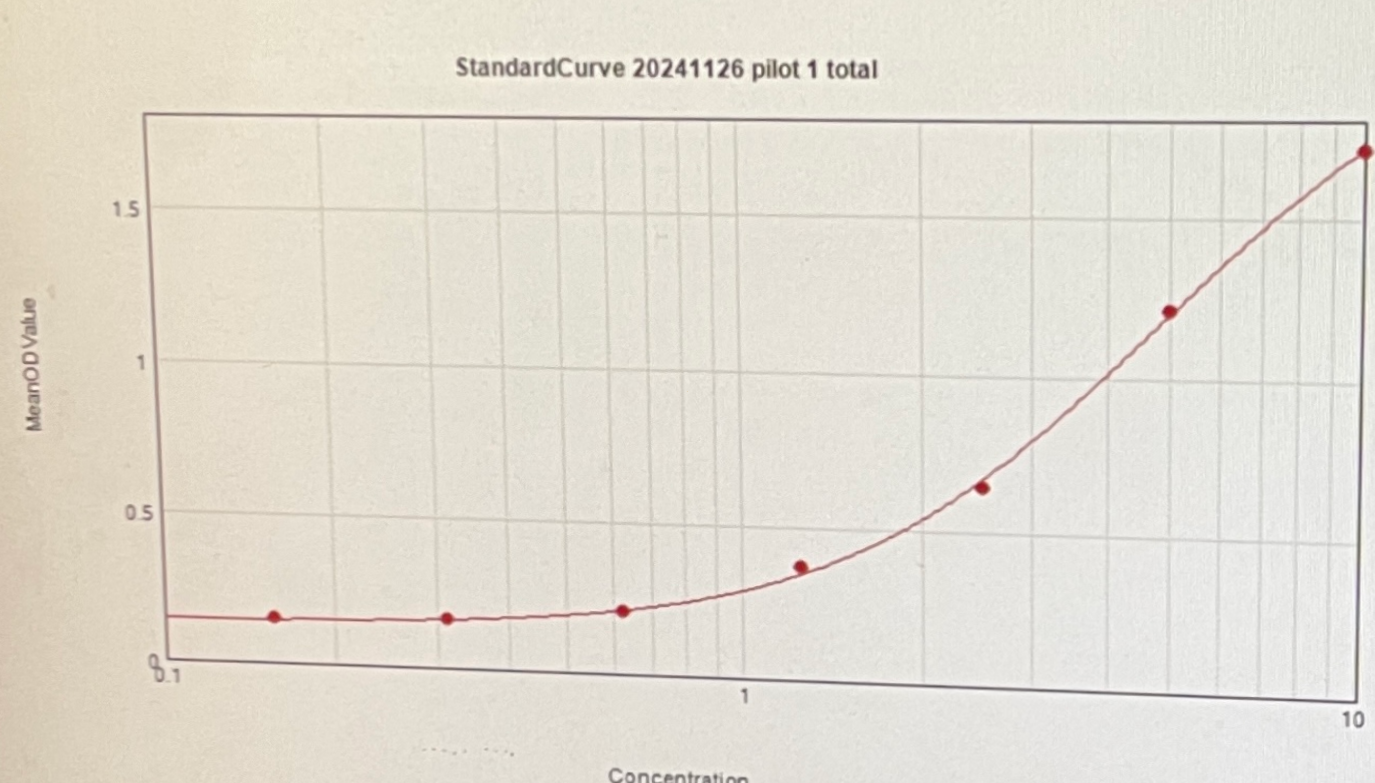
Review: The expression of CK18 in tumor-bearing mice was detected after administration. The standard version of the kit reached more than 1.5 for the first time, and the window was suitable.
By Anonymous
Sample type: Plasma (anticoagulant)
Sample species: Mouse
Sample dilution: 1:2.2
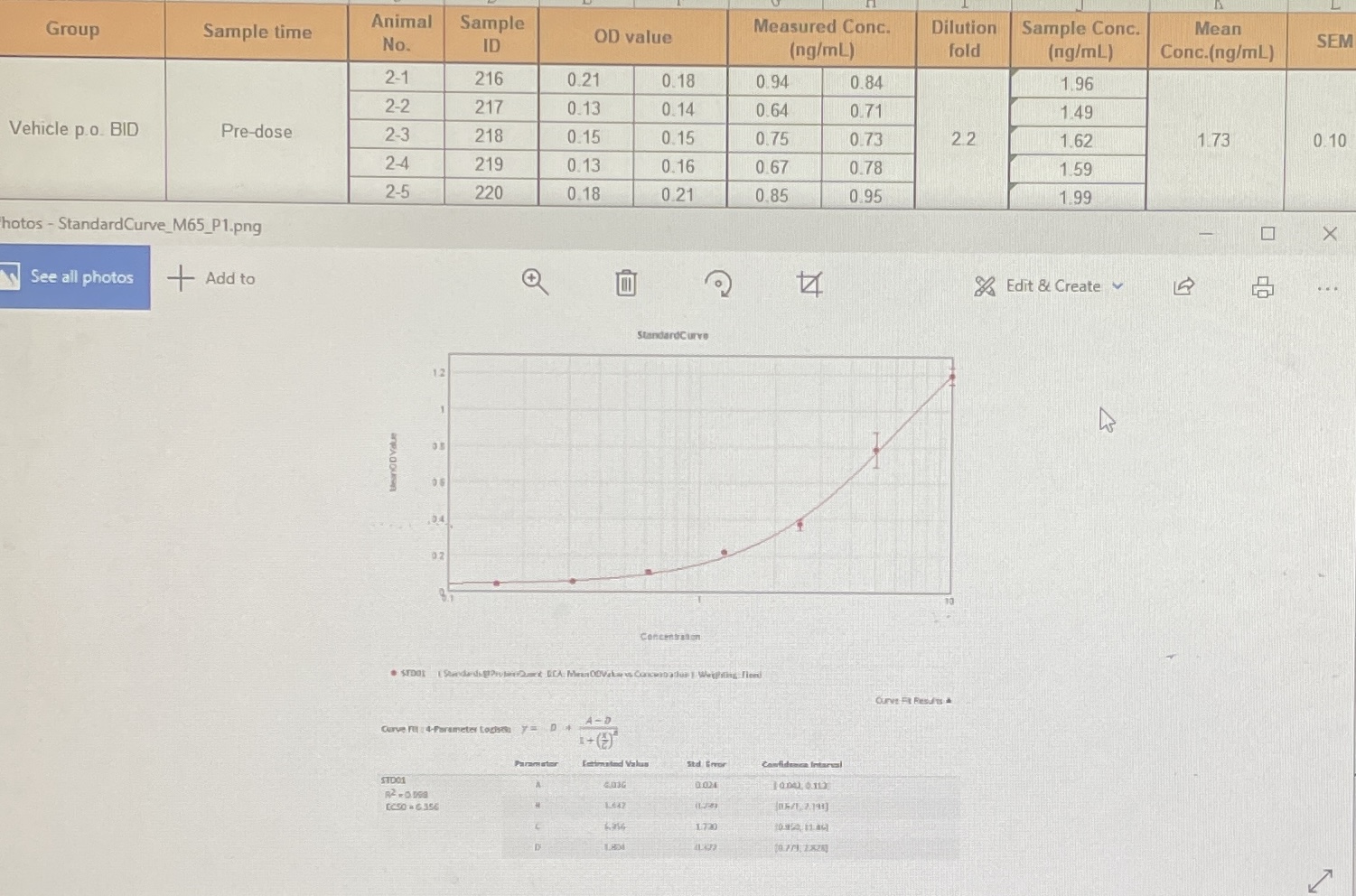
Review: Test mouse plasma, plasma needs 1:2.2 times dilution, after 30 minutes of TMB reaction, the maximum reaction of the standard product of this batch can be about 1.4, the window is reasonable; The detected mouse CK18 background expression was about 1.7ng/ml
By Anonymous
Target Background
(From Uniprot)
- K18 deficiency of hepatocytes leads to steatosis, increasing with age, and finally to SH. K18 deficiency and age promote liver tumor development in mice, frequently on the basis of chromosomal instability, resembling human HCC with stemness features.
- K8/K18-dependent PKCdelta- and ASMase-mediated modulation of lipid raft size can explain the more prominent FasR-mediated signaling resulting from K8/K18 loss.
- autoantibodies were detected in aging K18-null male mice that had a related liver phenotype but normal colon compared with K8-null mice, suggesting that the autoantibodies are linked to liver rather than colonic disease
- In human failing myocardium, where TNF-alpha expression is upregulated, K8/K18 were also ectopically expressed
- The findings demonstrate the near complete loss of K8/K18 with concomitant high levels of vimentin in CT26 cells, a chemically-induced mouse colonic tumor.
- in contrast to its importance as luminal cell marker, CK18 is dispensable for the prostate morphogenesis but contributes to adult prostate regeneration
- Keratin 18 increases CFTR expression by binding to its C-terminal hydrophobic domain.
- Oxidative stress, Nrf2 and keratin 18 up-regulation associate with Mallory-Denk body formation in mouse erythropoietic protoporphyria
- Keratin 8 and keratin 18 mice on the same genetic background show similar sensitivity to DDC intoxication.
- These findings reveal the potential for cytokeratin 18 to be used as a diagnostic marker for early detection of hepatosplenic schistosomiasis.
- K18 glycosylation provides a unique protective role in epithelial injury by promoting the phosphorylation and activation of cell-survival kinases.
- Krt18 may be a useful immunohistochemical marker for detecting hepatocellular proliferative lesions in mice.
- Keratin 8 and keratin 18 play roles in regulating the shape and function of mitochondria.
- Data show that inhibition of extracellular signal-regulated kinase 1 and 2 (ERK1/2) activation sensitizes wild-type but not keratin 8 (K8)-null mouse hepatocytes to apoptosis, and is associated with a reduction in c-Flip protein, part of a K8/K18 complex.
- loss of the keratin cytoskeleton causes defects in the trophoblast giant cell layer
- K18 overexpression protects mice from Mallory body (MB) formation and from DDC-induced liver injury, which supports the importance of the K8-to-K18 ratio in MB formation.
- Study demonstrates here that, in the developing placenta of the mouse, the absence of the Mrj co-chaperone prevents proteasome degradation of keratin 18 intermediate filaments, resulting in the formation of keratin inclusion bodies.
- study shows that dominant mutation hK18 R89C, leads to cell type-specific lethality in mice, depending on ratio of mutant to endogenous keratins; a single, endogenous K18 allele rescued embryonic lethality but caused aggregation of keratins
- Keratin absence or mutation is well tolerated after pancreatic but not liver injury, whereas excessive overexpression is toxic to the pancreas but not the liver when induced under basal conditions.
- Over expression of K18 R89C predisposes transgenic mice to thioacetamide- but not CCl(4)-induced liver fibrosis.
- gene expression of krt8, krt18, and krt19 and correlation with gene expression profiles and cell differentiation are compared in human and mouse embryonic stem cells
- Results suggest that the K8/K18 loss induces a switch in Fas-induced death signaling, likely through a DEDD involvement.
- Resutls show that the appearance caspase-cleaved CK18 in plasma was found to reflect formation of the caspase-cleaved epitope in
KEGG:
STRING:
UniGene: