
Estudo de libertação controlada de retinol e ácido hialurónico a partir de vesículas multilamelares
Introdução
As vesículas multilamelares (MLVs) são sistemas de entrega promissores em dermo-cosméticos, capazes de encapsular tanto moléculas hidrofílicas como lipofílicas. A sua arquitetura de multicamadas e composição ajustável oferecem um controlo fino sobre os perfis de libertação, estabilidade e biocompatibilidade. Neste estudo, exploramos como dois ingredientes amplamente utilizados, o retinol e o ácido hialurónico (HA), interagem com MLVs, com o objetivo de compreender e otimizar o seu comportamento de libertação para o desenvolvimento de formulações direcionadas.
Métodos
Vesícula multilamelar 
Coarse-Grained 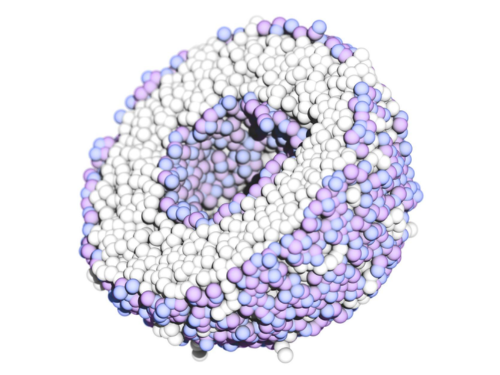
All-Atom 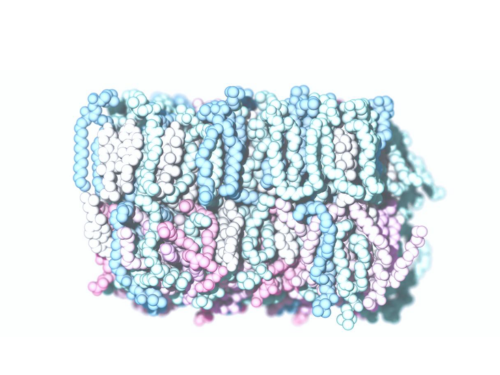
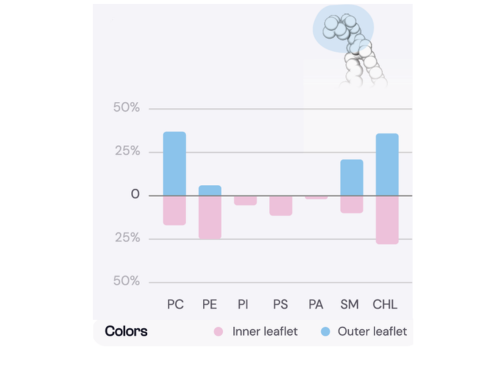
Tipo de cabeça
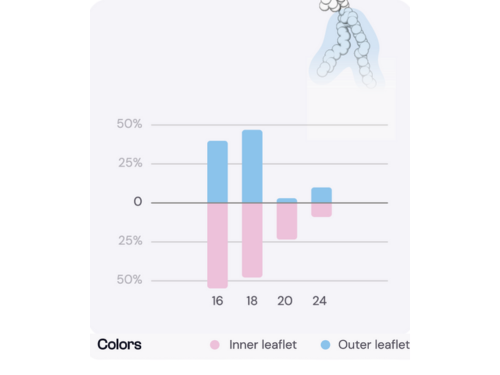
Comprimento da cadeia de ácidos gordos
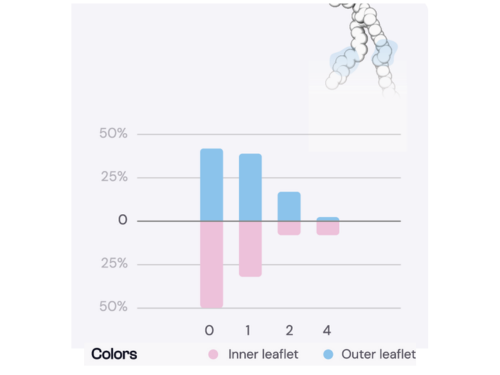
Grau de saturação
Resultados entregues
- Modelos MLV personalizados (CG/AA)
- Composição baseada em lipidómica ajustável
- Avaliação de drug delivery
Resultados & Discussão
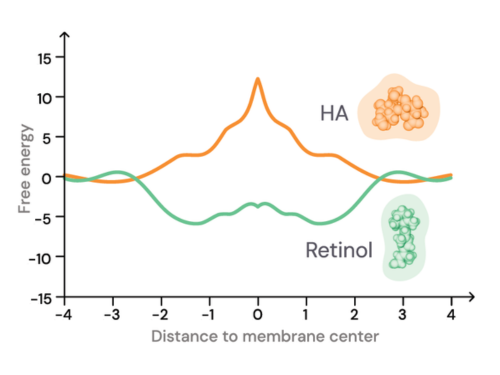
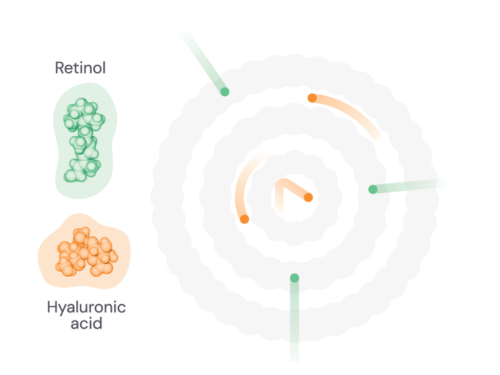
O retinol atravessa facilmente as bicamadas das vesículas, garantindo uma troca controlada com o ambiente que depende da composição dos MLVs, enquanto causa alterações estruturais mínimas nas membranas lipídicas, mesmo em altas concentrações. Em contraste, o HA permanece nas camadas aquosas, formando ligações de hidrogénio com os grupos cabeça dos lípidos, o que cria redes de hidratação que limitam fortemente a sua difusão. Isto torna o MLV um transportador eficaz para o HA, capaz de o entregar a locais de membrana onde a fusão pode libertar a molécula encapsulada. Como mostrado nos perfis de energia livre, o retinol exibe um poço de energia raso e extenso dentro das cadeias lipídicas, enquanto o HA enfrenta uma forte barreira termodinâmica à permeação.
Este estudo foi realizado por : Givaudan
A Givaudan é um líder global no desenvolvimento de sabores, fragrâncias e ingredientes cosméticos bioativos, apoiado por uma forte I&D científica. As suas equipas de investigação integram química, bioquímica, biotecnologia e ciência sensorial para conceber moléculas inovadoras com propriedades funcionais precisas. A empresa utiliza técnicas analíticas avançadas, incluindo GC-MS, LC-MS e screening baseado em recetores, para compreender interações moleculares e otimizar o desempenho. A Givaudan também investe fortemente em química verde e biossíntese sustentável para desenvolver ingredientes de alta pureza com impacto ambiental reduzido. Através de inovação científica contínua, apoia as indústrias alimentares, de fragrâncias e de beleza com soluções fiáveis e baseadas em investigação.
Saiba mais sobre o nosso serviço ; Modeling solution