
SIRT2 ELISA Kit (Human)

Referência OKEH00443
Tamanho : 96Wells
Marca : Aviva Systems Biology
Contactar o distribuidor local :
 Telefone : +1 850 650 7790
SIRT2 ELISA Kit (Human) : 96 Wells (OKEH00443)
| Datasheets/Manuals | Printable datasheet for SIRT2 ELISA Kit (Human) : 96 Wells (OKEH00443) |
|---|---|
| COA Datasheet | Printable COA datasheet for OKEH00443 |
| Predicted Species Reactivity | Homo sapiens|Human | ||||||||||||||||||||||
|---|---|---|---|---|---|---|---|---|---|---|---|---|---|---|---|---|---|---|---|---|---|---|---|
| Application | ELISA-Sandwich | ||||||||||||||||||||||
| ELISA Kit Detection Method | Colorimetric, OD450 nm | ||||||||||||||||||||||
| ELISA Kit Duration | ~ 3 Hours | ||||||||||||||||||||||
| ELISA Kit Principle | Aviva Systems Biology SIRT2 ELISA Kit (Human) (OKEH00443) is based on standard sandwich enzyme-linked immuno-sorbent assay technology. An antibody specific for Human SIRT2 has been pre-coated onto a 96-wellplate (12 x 8 Well Strips) and blocked. Standards or test samples are added to the wells, incubated and removed. After washing,a biotinylated detector antibody specific for Human SIRT2 is added, incubated and followed by washing. Avidin-Peroxidase Conjugate is then added, incubated and unbound conjugate is washed away.An enzymatic reaction is produced through the addition of TMB substrate which is catalyzed by HRP generating a blue color product that changes yellow after adding acidic stop solution. The density of yellow coloration read by absorbance at 450 nm is quantitatively proportional to the amount of sample Human SIRT2 captured in well. | ||||||||||||||||||||||
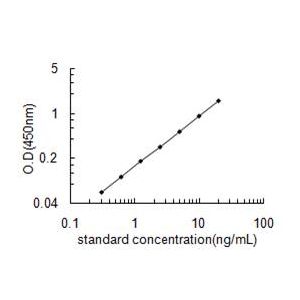
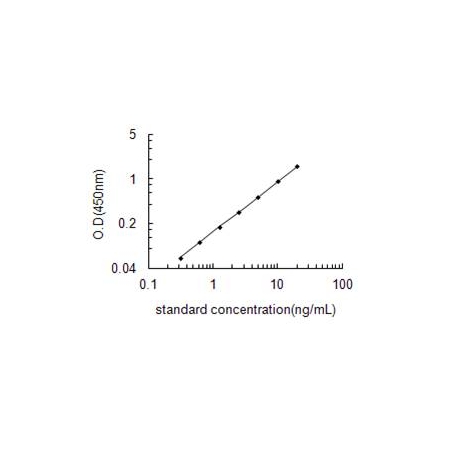
| ELISA Kit Range | 0.312-20ng/mL | ||||||||||||||||||||||
| ELISA Kit Reproducibility | Mean Intra-assay CV%: < 3.5% (n = 20) Mean Inter-assay CV%: < 6.8% (n = 20) | ||||||||||||||||||||||
| ELISA Kit Component |
| ||||||||||||||||||||||
| Reconstitution and Storage | Store as indicated in product manual. | ||||||||||||||||||||||
| Sample Type | Serum, Plasma, Tissue Homogenates, Cell Culture Supernates, Other Biological Fluids | ||||||||||||||||||||||
| Sensitivity | 0.11 ng/mL | ||||||||||||||||||||||
| Specificity | Natural and recombinant Human NAD-dependent deacetylase sirtuin-2 | ||||||||||||||||||||||
| Assay Info | Assay Methodology: Quantitative Sandwich ELISA |
| Gene Symbol | SIRT2 |
|---|---|
| Gene Full Name | sirtuin 2 |
| Alias Symbols | NAD-dependent deacetylase sirtuin-2, NAD-dependent protein deacetylase sirtuin-2, regulatory protein SIR2 homolog 2, silent information regulator 2, SIR2, SIR2-like protein 2, sir2-related protein type 2, SIR2L, SIR2L2, sirtuin type 2. |
| NCBI Gene Id | 22933 |
| Protein Name | NAD-dependent protein deacetylase sirtuin-2 |
| Description of Target | NAD-dependent protein deacetylase, which deacetylates internal lysines on histone and alpha-tubulin as well as many other proteins such as key transcription factors (PubMed:24177535, PubMed:12620231, PubMed:16648462, PubMed:18249187, PubMed:18332217, PubMed:18995842, PubMed:20587414, PubMed:21081649, PubMed:20543840, PubMed:22014574, PubMed:21726808, PubMed:21949390, PubMed:22771473, PubMed:23468428, PubMed:23908241, PubMed:24940000, PubMed:24769394, PubMed:24681946). Participates in the modulation of multiple and diverse biological processes such as cell cycle control, genomic integrity, microtubule dynamics, cell differentiation, metabolic networks, and autophagy. Plays a major role in the control of cell cycle progression and genomic stability. Functions in the antephase checkpoint preventing precocious mitotic entry in response to microtubule stress agents, and hence allowing proper inheritance of chromosomes. Positively regulates the anaphase promoting complex/cyclosome (APC/C) ubiquitin ligase complex activity by deacetylating CDC20 and FZR1, then allowing progression through mitosis. Associates both with chromatin at transcriptional start sites (TSSs) and enhancers of active genes. Plays a role in cell cycle and chromatin compaction through epigenetic modulation of the regulation of histone H4 'Lys-20' methylation (H4K20me1) during early mitosis. Specifically deacetylates histone H4 at 'Lys-16' (H4K16ac) between the G2/M transition and metaphase enabling H4K20me1 deposition by KMT5A leading to ulterior levels of H4K20me2 and H4K20me3 deposition throughout cell cycle, and mitotic S-phase progression (PubMed:23468428). Deacetylates KMT5A modulating KMT5A chromatin localization during the mitotic stress response (PubMed:23468428). Deacetylates also histone H3 at 'Lys-57' (H3K56ac) during the mitotic G2/M transition. Upon bacterium Listeria monocytogenes infection, deacetylates 'Lys-18' of histone H3 in a receptor tyrosine kinase MET- and PI3K/Akt-dependent manner, thereby inhibiting transcriptional activity and promoting late stages of listeria infection (PubMed:23908241). During oocyte meiosis progression, may deacetylate histone H4 at 'Lys-16' (H4K16ac) and alpha-tubulin, regulating spindle assembly and chromosome alignment by influencing microtubule dynamics and kinetochore function. Deacetylates histone H4 at 'Lys-16' (H4K16ac) at the VEGFA promoter and thereby contributes to regulate expression of VEGFA, a key regulator of angiogenesis (PubMed:24940000). Deacetylates alpha-tubulin at 'Lys-40' and hence controls neuronal motility, oligodendroglial cell arbor projection processes and proliferation of non-neuronal cells. Phosphorylation at Ser-368 by a G1/S-specific cyclin E-CDK2 complex inactivates SIRT2-mediated alpha-tubulin deacetylation, negatively regulating cell adhesion, cell migration and neurite outgrowth during neuronal differentiation. Deacetylates PARD3 and participates in the regulation of Schwann cell peripheral myelination formation during early postnatal development and during postinjury remyelination. Involved in several cellular metabolic pathways. Plays a role in the regulation of blood glucose homeostasis by deacetylating and stabilizing phosphoenolpyruvate carboxykinase PCK1 activity in response to low nutrient availability. Acts as a key regulator in the pentose phosphate pathway (PPP) by deacetylating and activating the glucose-6-phosphate G6PD enzyme, and therefore, stimulates the production of cytosolic NADPH to counteract oxidative damage. Maintains energy homeostasis in response to nutrient deprivation as well as energy expenditure by inhibiting adipogenesis and promoting lipolysis. Attenuates adipocyte differentiation by deacetylating and promoting FOXO1 interaction to PPARG and subsequent repression of PPARG-dependent transcriptional activity. Plays a role in the regulation of lysosome-mediated degradation of protein aggregates by autophagy in neuronal cells. Deacetylates FOXO1 in response to oxidative stress or serum deprivation, thereby negatively regulating FOXO1-mediated autophagy (PubMed:20543840). Deacetylates a broad range of transcription factors and co-regulators regulating target gene expression. Deacetylates transcriptional factor FOXO3 stimulating the ubiquitin ligase SCF(SKP2)-mediated FOXO3 ubiquitination and degradation (By similarity). Deacetylates HIF1A and therefore promotes HIF1A degradation and inhibition of HIF1A transcriptional activity in tumor cells in response to hypoxia (PubMed:24681946). Deacetylates RELA in the cytoplasm inhibiting NF-kappaB-dependent transcription activation upon TNF-alpha stimulation. Inhibits transcriptional activation by deacetylating p53/TP53 and EP300 (PubMed:18249187). Deacetylates also EIF5A (PubMed:22771473). Functions as a negative regulator on oxidative stress-tolerance in response to anoxia-reoxygenation conditions. Plays a role as tumor suppressor (PubMed:22014574). |
| Uniprot ID | Q8IXJ6 |
| Protein Accession # | NP_001180215.1 |
| Nucleotide Accession # | NM_001193286.1 |
| Protein Size (# AA) | 389 |
| Molecular Weight | 43 kDa |