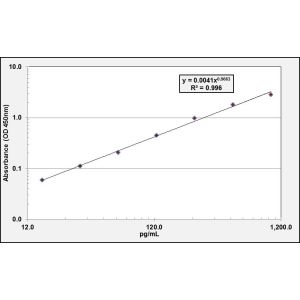
IL36A ELISA Kit (Human)

Referência OKCD08721
Tamanho : 96Wells
Marca : Aviva Systems Biology
Contactar o distribuidor local :

Telefone : +1 850 650 7790
IL36A ELISA Kit (Human) (OKCD08721)
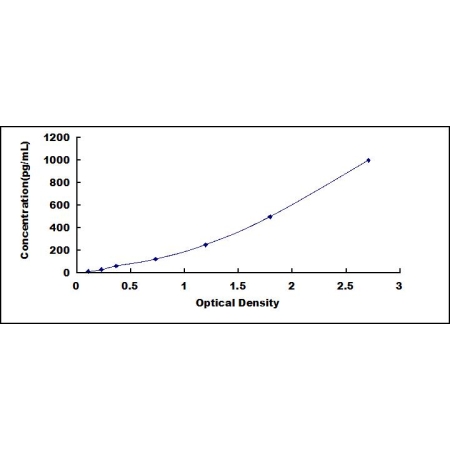
| Datasheets/Manuals | Printable datasheet for IL36A ELISA Kit (Human) (OKCD08721) |
|---|
| Predicted Species Reactivity | Homo sapiens|Human | ||||||||||||||||||||||
|---|---|---|---|---|---|---|---|---|---|---|---|---|---|---|---|---|---|---|---|---|---|---|---|
| Application | ELISA-Sandwich | ||||||||||||||||||||||
| ELISA Kit Detection Method | Colorimetric | ||||||||||||||||||||||
| ELISA Kit Duration | 3h | ||||||||||||||||||||||
| ELISA Kit Principle | The test principle applied in this kit is Sandwich enzyme immunoassay. The microtiter plate provided in this kit has been pre-coated with an antibody specific to Interleukin 1 Epsilon (IL1e). Standards or samples are then added to the appropriate microtiter plate wells with a biotin-conjugated antibody specific to Interleukin 1 Epsilon (IL1e). Next, Avidin conjugated to Horseradish Peroxidase (HRP) is added to each microplate well and incubated. After TMB substrate solution is added, only those wells that contain Interleukin 1 Epsilon (IL1e), biotin-conjugated antibody and enzyme-conjugated Avidin will exhibit a change in color. The enzyme-substrate reaction is terminated by the addition of sulphuric acid solution and the color change is measured spectrophotometrically at a wavelength of 450nm +/- 10nm. The concentration of Interleukin 1 Epsilon (IL1e) in the samples is then determined by comparing the O.D. of the samples to the standard curve. | ||||||||||||||||||||||
| ELISA Kit Range | 15.6-1,000pg/mL | ||||||||||||||||||||||
| ELISA Kit Reproducibility | Intra-assay Precision (Precision within an assay): 3 samples with low, middle and high level Interleukin 1 Epsilon (IL1e) were tested 20 times on one plate, respectively. Inter-assay Precision (Precision between assays): 3 samples with low, middle and high level Interleukin 1 Epsilon (IL1e) were tested on 3 different plates, 8 replicates in each plate. CV(%) = SD/meanX100 Intra-Assay: CV<10% Inter-Assay: CV<12% | ||||||||||||||||||||||
| ELISA Kit Component |
| ||||||||||||||||||||||
| Reconstitution and Storage | 2°C to 8°C|-20°C | ||||||||||||||||||||||
| Sample Type | Serum, plasma, tissue homogenates, cell lysates, cell culture supernates and other biological fluids | ||||||||||||||||||||||
| Sensitivity | < 5.9pg/mL |
| Gene Symbol | IL36A |
|---|---|
| Gene Full Name | interleukin 36 alpha |
| Alias Symbols | FIL1;FIL1 epsilon;FIL1(EPSILON);FIL1E;IL-1 epsilon;IL1(EPSILON);IL1F6;IL-1F6;IL-1F6 (FIL-1-epsilon);interleukin 1 family, member 6 (epsilon);interleukin-1 epsilon;interleukin-1 family member 6;interleukin-36 alpha. |
| NCBI Gene Id | 27179 |
| Protein Name | Interleukin-36 alpha |
| Description of Target | Cytokine that binds to and signals through the IL1RL2/IL-36R receptor which in turn activates NF-kappa-B and MAPK signaling pathways in target cells linked to a pro-inflammatory response. Part of the IL-36 signaling system that is thought to be present in epithelial barriers and to take part in local inflammatory response; similar to the IL-1 system with which it shares the coreceptor IL1RAP. Seems to be involved in skin inflammatory response by acting on keratinocytes, dendritic cells and indirectly on T-cells to drive tissue infiltration, cell maturation and cell proliferation. In cultured keratinocytes induces the expression of macrophage, T-cell, and neutrophil chemokines, such as CCL3, CCL4, CCL5, CCL2, CCL17, CCL22, CL20, CCL5, CCL2, CCL17, CCL22, CXCL8, CCL20 and CXCL1, and the production of proinflammatory cytokines such as TNF-alpha, IL-8 and IL-6. In cultured monocytes upregulates expression of IL-1A, IL-1B and IL-6. In myeloid dendritic cells involved in cell maturation by upregulating surface expression of CD83, CD86 and HLA-DR. In monocyte-derived dendritic cells facilitates dendritic cell maturation and drives T-cell proliferation. May play a role in proinflammatory effects in the lung. |
| Uniprot ID | Q9UHA7 |
| Protein Accession # | NP_055255.1 |
| Nucleotide Accession # | NM_014440.2 |