

TGFB1 ELISA Kit (Chicken)

Referencia OKEH07319
embalaje : 96T
Marca : Aviva Systems Biology
Contact local distributor :

Teléfono : +1 850 650 7790
TGFB1 ELISA Kit (Chicken) (OKEH07319)
| Datasheets/Manuals | Printable datasheet for TGFB1 ELISA Kit (Chicken) (OKEH07319) |
|---|
| Predicted Species Reactivity | Chicken|Gallus gallus | ||||||||||||||||||||||
|---|---|---|---|---|---|---|---|---|---|---|---|---|---|---|---|---|---|---|---|---|---|---|---|
| Application | ELISA-Sandwich | ||||||||||||||||||||||
| ELISA Kit Detection Method | Colorimetric, OD450 nm | ||||||||||||||||||||||
| ELISA Kit Principle | Aviva Systems Biology TGFB1 ELISA Kit (Chicken) (OKEH07319) is based on standard sandwich enzyme-linked immuno-sorbent assay technology. An antibody specific for TGFB1 has been pre-coated onto a 96-well plate (12 x 8 Well Strips) and blocked. Standards or test samples are added to the wells, incubated and removed. A biotinylated detector antibody specific for TGFB1 is added, incubated and followed by washing. Avidin-Peroxidase Conjugate is then added, incubated and unbound conjugate is washed away. An enzymatic reaction is produced through the addition of TMB substrate which is catalyzed by HRP generating a blue color product that changes yellow after adding acidic stop solution. The density of yellow coloration read by absorbance at 450 nm is quantitatively proportional to the amount of sample TGFB1 captured in well. | ||||||||||||||||||||||
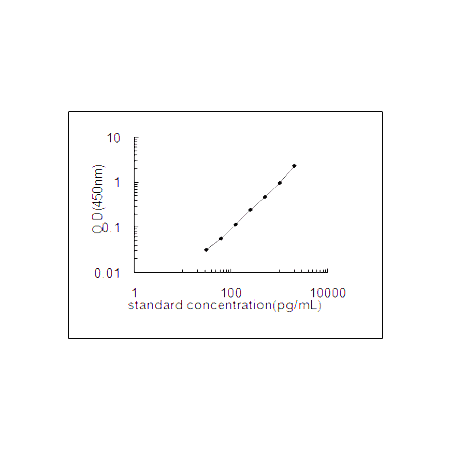
| ELISA Kit Range | 31.2-2000pg/mL | ||||||||||||||||||||||
| ELISA Kit Recovery | Mean recovery when spiking into sample matrices at concentrations within the dynamic range: 110% (n = 20) | ||||||||||||||||||||||
| ELISA Kit Reproducibility | Mean Intra-assay CV%: <=3.1% (n = 20) Mean Inter-assay CV%: <=6.8% (n = 20) | ||||||||||||||||||||||
| ELISA Kit Component |
| ||||||||||||||||||||||
| Additional Information | Function: Transforming growth factor beta-1: Multifunctional protein that regulates the growth and differentiation of various cell types and is involved in various processes, such as normal development, immune function, microglia function and responses to neurodegeneration (By similarity). Activation into mature form follows different steps: following cleavage of the proprotein in the Golgi apparatus, Latency-associated peptide (LAP) and Transforming growth factor beta-1 (TGF-beta-1) chains remain non-covalently linked rendering TGF-beta-1 inactive during storage in extracellular matrix. At the same time, LAP chain interacts with 'milieu molecules', such as LTBP1, LRRC32/GARP and LRRC33/NRROS that control activation of TGF-beta-1 and maintain it in a latent state during storage in extracellular milieus. TGF-beta-1 is released from LAP by integrins (ITGAV:ITGB6 or ITGAV:ITGB8): integrin-binding to LAP stabilizes an alternative conformation of the LAP bowtie tail and results in distortion of the LAP chain and subsequent release of the active TGF-beta-1. Once activated following release of LAP, TGF-beta-1 acts by binding to TGF-beta receptors (TGFBR1 and TGFBR2), which transduce signal (By similarity). While expressed by many cells types, TGF-beta-1 only has a very localized range of action within cell environment thanks to fine regulation of its activation by Latency-associated peptide chain (LAP) and 'milieu molecules'. Plays an important role in bone remodeling: acts as a potent stimulator of osteoblastic bone formation. Can promote either T-helper 17 cells (Th17) or regulatory T-cells (Treg) lineage differentiation in a concentration-dependent manner (By similarity). Can induce epithelial-to-mesenchymal transition (EMT) and cell migration in various cell types (By similarity). | ||||||||||||||||||||||
| :: | Subcellular Location: Transforming growth factor beta-1 Secreted | ||||||||||||||||||||||
| :: | Unigene: Gga.929 SMR: P09531 | ||||||||||||||||||||||
| :: | Pfam: PF00019 | ||||||||||||||||||||||
| Reconstitution and Storage | Store as indicated in product manual. | ||||||||||||||||||||||
| Sensitivity | 15.6pg/mL | ||||||||||||||||||||||
| Specificity | Natural and recombinant Chicken Transforming growth factor beta-1 proprotein | ||||||||||||||||||||||
| Assay Info | Assay Methodology: Quantitative Sandwich ELISA |
| Gene Symbol | TGFB1 |
|---|---|
| Alias Symbols | TGF-beta-1 |
| Protein Name | Transforming growth factor beta-1 |
| Description of Target | Multifunctional protein that control proliferation, differentiation, and other functions in many cell types. Many cells synthesize TGFB1 and essentially all of them have specific receptors for this protein. It regulates the actions of many other growth factors and determines a positive or negative direction of their effects. It plays an important role in bone remodeling. It is a potent stimulator of osteoblastic bone formation, causing chemotaxis, proliferation and differentiation in committed osteoblasts. Mediates SMAD2/3 activation by inducing its phosphorylation and subsequent translocation to the nucleus (By similarity). |
| Uniprot ID | P09531 |