


The RayBiotech urea nitrogen (BUN) colorimetric assay kit provides a simple, reproducible, and sensitive tool for detecting urea nitrogen in plasma, serum, cell lysates, urine and other biological liquid samples.
Urea Nitrogen (BUN) Detection Assay Kit (Colorimetric)
Urea Nitrogen (BUN) Detection Assay Kit (Colorimetric)
Contact Us for Bulk Request
Product Description
Specifications
| Size | 1 Plate Kit, 2 Plate Kit, 5 Plate Kit |
| Sensitivity | 0.138 mg/dL |
| Detection Range | 0.138 mg/dL - 5 mg/dL |
| Compatible Sample Types | Plasma, Serum, Tissue Lysates, Cell Lysates, Urine |
| Quantitative/Semi-Quantitative | Quantitative |
| Solid Support | 96-well Microplate |
| Method Of Detection | Colorimetric |
| Research Area | Energy Metabolism, Liver & Renal Function |
| Shipping Type | Blue ice |
| Storage | 4°C |
Related Products
Creatinine Assay for Serum & Plasma
As low as $279.00
Introduction
Urea is the end product of protein nitrogen metabolism and is the primary vehicle for removing toxic ammonia from the body. It is synthesized in the liver from the ammonia produced from the catabolism of amino acids via the hepatic urea cycle. Urea is transported in the bloodstream to the kidneys where it is excreted in the urine. The rate of urea clearance and elimination through the kidneys correlates with the flow rate; higher flow rates result in greater urea nitrogen clearance. Consequently, the level of circulating urea nitrogen, along with serum creatinine, serves as a primary measure of kidney function. Normal adult Blood Urea Nitrogen (BUN) levels typically range between 7 and 21 mg urea nitrogen per 100 mL blood (mg/dL). Elevated BUN levels (≥ 50 mg/dL), known as azotemia, are associated with acute kidney failure or injury, severe acute pancreatitis, congestive heart failure or gastrointestinal bleeding. Azotemia also can occur due to dehydration, alcohol abuse, or high protein diets. Lower than expected BUN levels are usually less clinically significant but may indicate liver disease or malnutrition, including malabsorption and low protein diets.
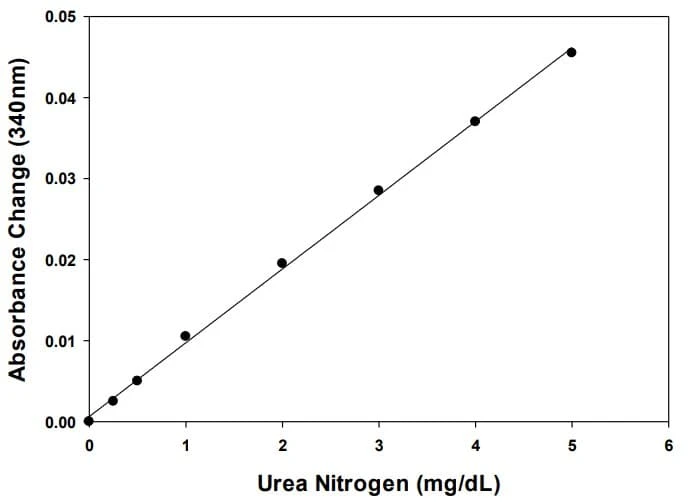
Urea Nitrogen (BUN) Detection Assay Kit provides a simple, reproducible, and sensitive tool for measuring urea nitrogen in plasma, serum, cell lysates, urine and other biological liquid samples. This assay utilizes a coupled enzymatic reaction system. First, urea is hydrolyzed by urease to produce ammonia and carbon dioxide. The liberated ammonia reacts with α-ketoglutarate in the presence of NADH to yield glutamate. During this reaction, an equimolar quantity of NADH undergoes oxidation resulting in a decrease in absorbance at 340 nm directly proportional to the urea nitrogen concentration in the sample.
Kit Components
| Component | Size / Description |
|---|---|
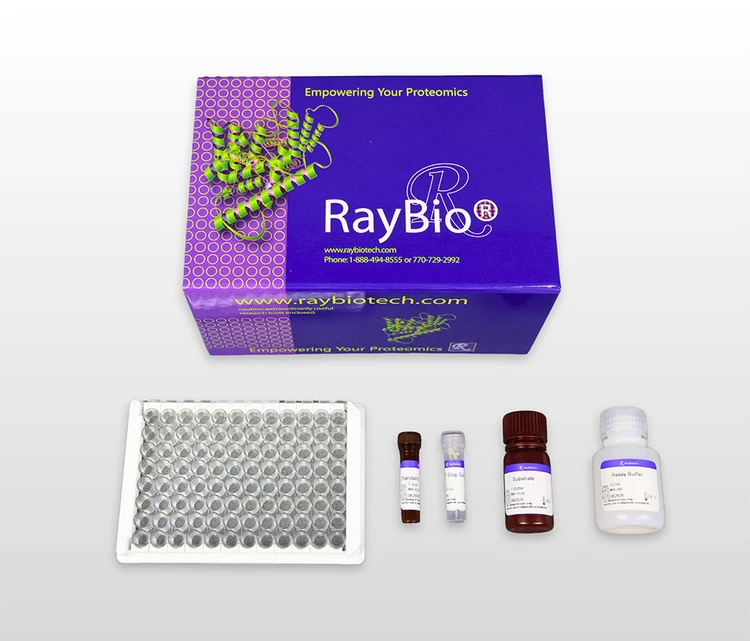
| Microplate | A 96-well (12 strips x 8 wells) plate |
| Sample Buffer | 10 ml |
| Urea Nitrogen Standard | 1 vial (210 µL of 20 mg/dL) |
| Enzyme Mix Solution | 14 ml |
| Coenzyme Solution | 3 ml |
Additional Materials Required
- Microplate reader capable of measuring absorbance at 340 nm at 37°C
- Precision pipettes to deliver 2 µL to 1 mL volumes
- Multi-channel pipettes to deliver 20 µL to 200 µL volumes
- Tubes to prepare sample dilutions
- Incubator at 37°C
Assay Procedure Summary
Each Urea Nitrogen Standard and sample should be assayed in duplicate or triplicate. A freshly prepared standard curve should be used each time the assay is performed.
- Pre-warm the Enzyme Mix Solution at 37°C for five minutes.
- Add 30 µL of the diluted Urea Nitrogen Standards or samples to the 96-well microtiter plate.
- Initiate the reaction by adding 150 µL of Enzyme Mix Solution to each well (pre-heat reagent at 37°C).
- Cover with the plate cover. Carefully shake the plate for a few seconds to mix.
- After thirty seconds read and record the absorbance (A1) at 340nm using a plate reader.
- One minute after the first reading take another reading (A2) at 340nm.
- Determine the absorbance change between the two readings (A1-A2).
Storage/Stability
The entire kit may be stored at 2–8°C for up to 6 months from the date of shipment.
citations
De novo pyrimidine biosynthesis inhibition synergizes with BCL-XL targeting in pancreatic cancer
- Species:
- Mouse
- Sample Type:
- Serum
- Year:
- 2025
- Journal Name:
- Nature Communications
- PubMed ID:
- 40738904
Reducing glucocorticoid burden in lupus with omega-3 fatty acids: docosahexaenoic acid augments prednisone efficacy in maintaining cyclophosphamide-induced remission of preclinical lupus nephritis
- Species:
- Mouse
- Sample Type:
- Plasma (lupus nephritis model)
- Year:
- 2026
- Journal Name:
- Autoimmunity
- PubMed ID:
- 41542645
ZBiotics ameliorates T2DM-induced histopathological damage in liver, kidney and adipose tissues by modulating the NOD-like receptor signaling in Wistar rats
- Species:
- Rat
- Sample Type:
- Serum (T2DM wistar rats)
- Year:
- 2025
- Journal Name:
- Diabetology & Metabolic Syndrome
- PubMed ID:
- 39905472
Comprehensive machine learning models for predicting therapeutic targets in type 2 diabetes utilizing molecular and biochemical features in rats
- Species:
- Rat
- Sample Type:
- Serum (type 2 diabetes model)
- Year:
- 2024
- Journal Name:
- Frontiers in Endocrinology
- PubMed ID:
- 38854687