

TNF Antibody

Referencia CSB-PA07427A0Rb-50ug
embalaje : 50ug
Marca : Cusabio
Contact local distributor :

Teléfono : +1 850 650 7790
| Image |
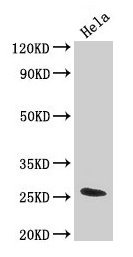
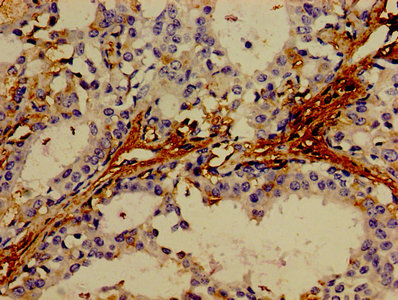
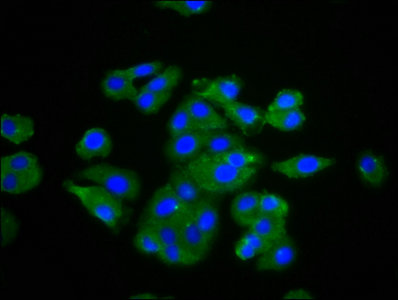
Product Details
The TNF Antibody (Product code: CSB-PA07427A0Rb) is Non-conjugated. For TNF Antibody with conjugates, please check the following table.
Constituents: 50% Glycerol, 0.01M PBS, PH 7.4
| Application | Recommended Dilution |
|---|---|
| WB | 1:500-1:5000 |
| IHC | 1:20-1:200 |
| IF | 1:50-1:200 |
Citations
- D Palioura, K Feidantsis, A Lazou,Molecular and Cellular Biochemistry,2025
- A Yang,Food & function,2024
- A Lattos,Microorganisms,2023
- KH Han,International journal of molecular sciences,2022
- A Lattos,Cells,2021
- Tao H,Molecular Reproduction and Development,2019
Customer Reviews and Q&A
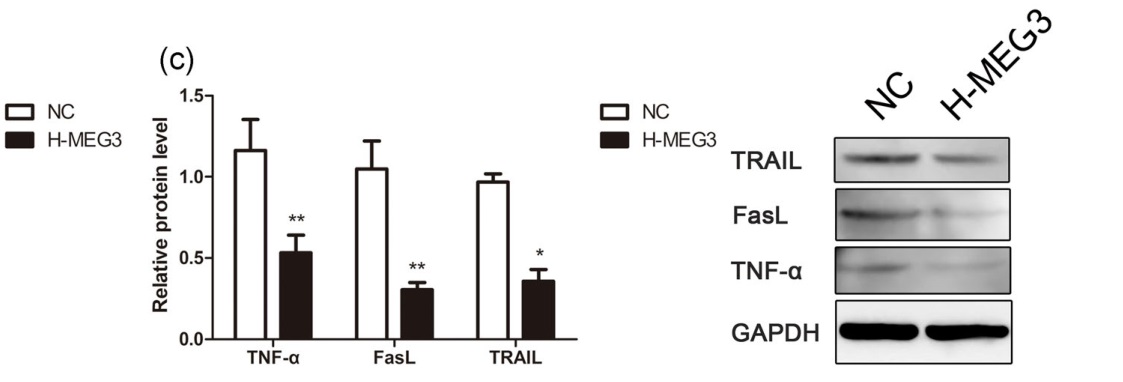
Applications : WB
Sample dilution: 1: 500
Review: The protein expression of TNF-α (0.53 ± 0.11 vs. 1.16 ± 0.19), FasL (0.31 ± 0.04 vs. 1.05 ± 0.17), and TRAIL (0.36 ± 0.07 vs. 0.97 ± 0.05) in HTR-8/SVneo cells were also decreased in the H-MEG3 group compared with the NC group. ***p < 0.001, **p < 0.01, *p < 0.05 by two-way ANOVA.
By Anonymous
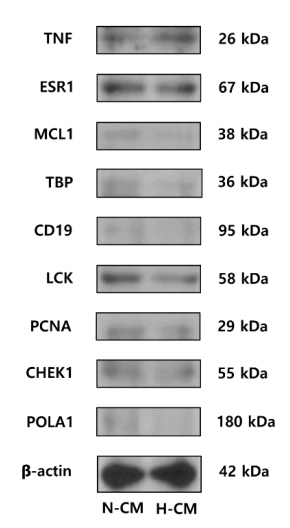
Applications : Western blot analysis
Sample type: cell
Review: The expression of hub proteins (TNF, ESR1, MCL1, TBP, CD19, LCK, PCNA, CHEK1, and POLA1) in HeLa cells treated with N-CM and H-CM. The expression of hub proteins in HeLa cells treated with N-CM and H-CM for 24 h was analyzed with Western blotting.
By Anonymous
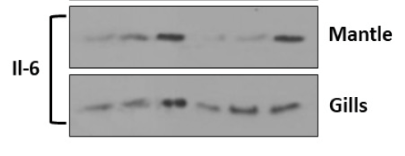
Applications : Immonoblot
Sample type: cells
Review: As far as Il-6 is concerned, its levels increased parallel to the increasing seawater temperature in both the gills and the mantle of Fthiotis and Lesvos individuals, with Fthiotis exhibiting statistically significant higher Il-6 levels in general compared to Lesvos.
By Anonymous
Target Background
- Genetic predisposition to rheumatoid arthritis in Russian population in the Republic of Karelia is associated with the presence of the GG TNF-alpha genotype.
- Treatment with 30 microg/ml curcumin also significantly diminishes the protein production of TNFalpha in Behcet's disease patients (p < .01) and healthy controls (p < .05) M1 macrophages.
- the protective role of the A allele in TNF-alpha 238A/G but not TNF-alpha 308A/G against the occurrence of juvenile idiopathic arthritis in the Caucasian population (Meta-Analysis)
- TNF-alpha expressed regionally in Epicardial Adipose Tissue may exert potent effects on the progression of coronary atherosclerosis
- The effect of the pro-inflammatory diet on concentrations of TNF-alpha was more pronounced in pregnant women reporting higher levels of stress.
- TNF-alpha -308G/A polymorphism is not associated with the risk to develop of bullous pemphigoid and alopecia areata in our Iranian cohort
- data support that only the promoter single-nucleotide polymorphism (SNP) rs1800629 within the TNF-alpha gene is associated with increased risk for developing Graves' disease (GD), especially in European population. Future large-scale studies are required to validate the associations between TNF-alpha gene and GD.
- We studied 173 polymorphisms to establish an association with the response to anti-TNF drugs in patients with moderate-to-severe plaque psoriasis (N=144).
- The SNP rs4819554 in the promoter region of IL17RA significantly influences the response to anti-TNF drugs at week 12.
- TNF-alpha promoter gene polymorphisms and/or haplotypes are risk factors of Nephrotic syndrome and resistance to steroid among Egyptian children
- The findings of this study demonstrated that polymorphism in TNF-alpha gene might be a risk factor for nasal polyposis in the north part of Iran and the minor frequency of G308A allele in the current study is slightly more than other major populations.
- results suggest, the interplay of pro-inflammatory cytokines IFN-gamma derived from CD4+T lymphocytes and TNF-alpha from CD14+ cells has no direct additive impact on parasite replication but induces IL-4 production.
- The single nucleotide polymorphisms rs361525, rs1800629, and rs17999645 of tumor necrosis factor-alpha were significantly correlated with the diagnosis of cervical cancer
- Rs11541076 in IRAK3, a negative regulator of TLR signalling, as a predictor of anti-TNF treatment response.
- In this Brazilian population, TNF and IL17 gene polymorphisms responsible for the expression of important inflammatory cytokines were associated with overall spondyloarthritis and, specifically, with ankylosing spondylitis and psoriatic arthritis, regardless of gender and HLA-B27
- by restraining TNFR1 at the cell surface via sialylation, ST6Gal-I acts as a functional switch to divert signaling toward survival. These collective findings point to a novel glycosylation-dependent mechanism that regulates the cellular response to TNF and may promote cancer cell survival within TNF-rich tumor microenvironments.
- The TNF*A allele confer susceptibility to AIH in the Tunisian patients and is associated with increased production of TNF-alpha. Anti-TNF antibodies could be an alternative to the use of corticotherapy and may avoid the exacerbated immune response in Autoimmune hepatitis.
- Impairment in TNF, IL-1beta, and IL-17 production upon stimulation with mycobacterial antigens may contribute to the increased susceptibility to M. tuberculosis infection observed in HTLV-1 infected individuals.
- LL was significantly negatively correlated with PGC-1alpha, TNF-alpha, and IL-6 mRNA expressions. PGC-1alpha mRNA expression levels in paraspinal muscles may be affected by lumbar kyphosis.
- TNF-alpha-308G>A polymorphism affects the overall survival of cancer patients and is a potential therapeutic target for cancer.
- Many inflammatory pathologies are now recognized to be driven by aberrant TNF-induced cell death, which, in most circumstances, depends on the kinase Receptor-interacting serine/threonine-protein kinase 1 (RIPK1). [review]
- High TNF-alpha expression is associated with retinopathy of prematurity.
- Tumour necrosis factor-alpha selectively reduces BMPR-II transcription and mediates post-translational BMPR-II cleavage via the sheddases, ADAM10 and ADAM17 in pulmonary artery smooth muscle cells.
- Polymorphisms of IL-1betab and TNF-a are not a risk of ICC, but an individual with O. viverrini infection has an effect on all genotypes of the TNF-alpha gene that might promote intrahepatic cholangiocarcinoma . Primary prevention of intrahepatic cholangiocarcinoma in high-risk areas is based on efforts to reduce O. viverrini infection.
- In placenta, when gestational age was controlled for, partial correlation revealed a significant positive correlation between TNF-alpha and MMP-9 only in the second trimester.
- Study shows that in human endometrial stromal cells, high tumor necrosis factor levels negatively affect the insulin action through decreased adiponectin signaling and glucose transporter type 4 protein. This could explain the failures observed in endometrial function of obese women with polycystic ovary syndrome.
- Three single nucleotide polymorphisms (SNPs) within P2X4R and two SNPs within CAMKK2 influenced concentrations of TNFalpha in peripheral blood mononuclear cells, but these SNP did not associate with risk for HIV-associated sensory neuropathy in South Africans.
- Results indicated that the proinflammatory cytokine TNF-alpha impairs endothelial tight junctions and promotes monocyte-endothelial cell adhesion by upregulating beta-site amyloid precursor protein enzyme 1 expression through activating PKC signaling and sequentially cleaving alpha-2, 6-sialic acid transferase 1.
- These findings reveal that PrP enhances the responses to TNF-alpha, promoting proinflammatory cytokine production, which may contribute to inflammation and tumorigenesis.
- This study found that the protein and mRNA expression levels of the cytokines TNF-alpha is significantly increased.
- Taking together, these results suggest that Wnt/beta-catenin signal pathway activation-dependent up-regulation of syncytin-1 contributes to the pro-inflammatory factor TNF-alpha-enhanced fusion between oral squamous cell carcinoma cells and endothelial cells.
- Data suggest that, in children with pediatric obesity, lifestyle weight-loss intervention results in down-regulation of serum cardiotrophin-1 (CTF1), interleukin-6 (IL6), and tumor necrosis factor-alpha (TNFA); expression of CTF1, IL6, and TNFA is also down-regulated in peripheral blood mononuclear cells after improvement in adiposity, body mass index, and waist-hip ratio.
- TNFalpha differently regulated the levels of PPARalpha, LXRalpha, and LXRbeta binding to the apoA-I gene promoter in THP-1 cells. Obtained results suggest a novel tissue-specific mechanism of the TNFalpha-mediated regulation of apoA-I gene in monocytes and macrophages and show that endogenous ApoA-I might be positively regulated in macrophage during inflammation.
- this is the first evidence to suggest that TET2 mutations promote clonal dominance with aging by conferring TNFalpha resistance to sensitive bone marrow progenitors while also propagating such an inflammatory environment.
- Anti-rotavirus effect of TNF-alpha was achieved by NFkappaB-regulated genes via the activation of classical nuclear factor kappaB (NF-kappaB) signaling.
- Results revealed that heterozygous genotype GA of TNF-alpha-238 (rs 361525) SNP significantly increased the risk of adverse-outcome (mortality rate), regardless of organ dysfunction or severity of sepsis.
- in the patients with primary depression, depressive symptoms were associated with TNF-alpha
- Addition of TNFalpha to podocytes causes CD80 upregulation, actin reorganization and podocyte injury.
- The results of the study suggest that the levels of C-reactive protein and tumor necrosis factor-alpha are important diagnostic markers of inflammation in patients with chronic pancreatitis and type 2 diabetes mellitus.
- TNF-alpha and IL-10 treatment can affect the expression of ICAM-1 and CD31 in human coronary artery endothelial cells.
- the results of the present study suggested that overexpression of KLF15 in Eahy926 cells exhibited a protective effect against TNFalpha induced dysfunction via activation of Nrf2 signaling and inhibition of nuclear factor kappaB signaling.
- The present study demonstrated the ability of 30 and 100 ng/ml TIMP3 to attenuate migration and proliferation, and to inhibit the activity of MMP2, MMP9 and TNFalpha secretion of NA SMCs. In conclusion, TIMP3 may be considered a potential therapeutic drug for use in a novel drugeluting stent, to attenuate the progressive dilation of the aortic NA.
- Elevated A20 promotes TNF-induced and RIPK1-dependent intestinal epithelial cell death
- TNF-alpha GG genotype at -238 and GG haplotype at positions -308 and -238 were associated with Kawasaki disease in an Iranian population.
- We have shown that a TNFalpha gene polymorphism, rs1800629, is highly significantly associated with postmenopausal osteoporosis and BMD in the female Han Chinese population
- allele -308 A TNF-alpha may have a role in progression of rheumatoid arthritis in a North Indian population
- ATF3 mediates the inhibitory action of TNF-alpha on osteoblast differentiation and that the TNF-alpha-activated JNK pathway is responsible for the induction of Atf3 expression.
- TNF-alpha, DKK1, and OPG have roles in pathogenesis of knee osteoarthritis
- Btk acts in the TLR7/8 pathway and mediates Ser-536 phosphorylation of p65 RelA and subsequent nuclear entry in primary human macrophages.
- Results indicated that prolonged tumor necrosis factor (TNFalpha) exposure could have detrimental consequences to endothelial cells by causing senescence and, therefore, chronically increased TNFalpha levels might possibly contribute to the pathology of chronic inflammatory diseases by driving premature endothelial senescence.
HGNC:
OMIM:
KEGG:
STRING:
UniGene: