

Recombinant Mouse Cathelicidin antimicrobial peptide (Camp) - E.coli

Referencia CSB-EP004476MO-100ug
embalaje : 100ug
Marca : Cusabio
Contact local distributor :

Teléfono : +1 850 650 7790
| Abbreviation | Recombinant Mouse Camp protein |
| MSDS | |
| Image | |
Product Details
Purity
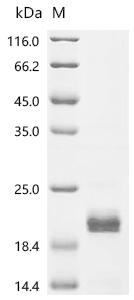
≥ 85% as determined by SDS-PAGE.
Activity
Not Test
Target Names
Uniprot No.
Research Area
Immunology
Alternative Names
Cathelin-like protein;CLP;Cramp
Species
Mus musculus (Mouse)
Source
E.coli
Expression Region
135-172aa
Target Protein Sequence
ISRLAGLLRKGGEKIGEKLKKIGQKIKNFFQKLVPQPE
Note: The complete sequence may include tag sequence, target protein sequence, linker sequence and extra sequence that is translated with the protein sequence for the purpose(s) of secretion, stability, solubility, etc.
If the exact amino acid sequence of this recombinant protein is critical to your application, please explicitly request the full and complete sequence of this protein before ordering.
Mol. Weight
17.2 kDa
Protein Length
Full Length of Mature Protein
Tag Info
N-terminal 6xHis-SUMO-tagged
Form
Liquid or Lyophilized powder
Note: We will preferentially ship the format that we have in stock, however, if you have any special requirement for the format, please remark your requirement when placing the order, we will prepare according to your demand.
Note: We will preferentially ship the format that we have in stock, however, if you have any special requirement for the format, please remark your requirement when placing the order, we will prepare according to your demand.
Buffer
If the delivery form is liquid, the default storage buffer is Tris/PBS-based buffer, 5%-50% glycerol. If the delivery form is lyophilized powder, the buffer before lyophilization is Tris/PBS-based buffer, 6% Trehalose.
Reconstitution
We recommend briefly centrifuging the vial prior to opening to bring the contents to the bottom. Reconstitute the lyophilized protein in sterile deionized water to a recommended concentration of 0.1–1.0 mg/mL. If used immediately after reconstitution, glycerol is not required. If not for immediate use, after the protein is completely dissolved, add glycerol to a final concentration of 5%–50% (default: 50%), aliquot as needed, and store at -20℃/-80℃ for long-term storage. If dilution is needed during subsequent use, dilute with the same buffer as the protein, but without stabilizers (e.g., glycerol, trehalose, etc).
Troubleshooting and FAQs
Storage Condition
Store at -20°C/-80°C upon receipt, aliquoting is necessary for mutiple use. Avoid repeated freeze-thaw cycles.
Shelf Life
The shelf life is related to many factors, storage state, buffer ingredients, storage temperature and the stability of the protein itself.
Generally, the shelf life of liquid form is 6 months at -20°C/-80°C. The shelf life of lyophilized form is 12 months at -20°C/-80°C.
Generally, the shelf life of liquid form is 6 months at -20°C/-80°C. The shelf life of lyophilized form is 12 months at -20°C/-80°C.
Notes
Repeated freezing and thawing is not recommended. Store working aliquots at 4°C for up to one week.
Datasheet & COA
Please contact us to get it.
Customer Reviews and Q&A
■ Customer Reviews
There are currently no reviews for this product.
Target Background
Function
Acts as a potent antimicrobial peptide.
Gene References into Functions
- Mice treated with BMMNCs pre-incubated with CRAMP had smaller scars, enhanced cardiac recovery and less adverse remodeling. Histologically, this group had higher capillary density. Similarly, sustained CRAMP release from hydrogels enhanced the therapeutic effect of SDF-1, leading to enhanced functional recovery
- LL-37/CRAMP represents an important mediator of platelet activation and thrombo-inflammation.
- CRAMP deficiency impairs phagocytosis in cultured microglia cells after exposure to N. meningitides.
- Immunoblotting, qPCR, ChIP and siRNA-mediated gene knockdown studies revealed that the activation of phosphatidylinositol 3-kinase/protein kinase C zeta pathways in poly(I:C)-stimulated cells underlies Sp1 phosphorylation and recruitment to the mCRAMP promoter, leading to enhanced transcription
- The effect on insulin resistance found in Cramp-/- mice is solely due to leukocyte infiltration and not due to inflammatory phenotype of macrophages. Therefore we conclude that cathelicidin causes insulin resistance by the recruitment of myeloid cells into the adipose tissue.
- Cathelicidin is required for innate resistance to M. tuberculosis in a relevant animal model and is a key mediator in regulation of the levels of pro-inflammatory cytokines by calcium and cyclic nucleotides.
- Histological examination confirmed that CRAMP deficiency worsened the pancreatic inflammatory condition. These results indicate that CRAMP may be considered a novel modulatory mediator in mouse experimental AP.
- promotes olfactory epithelium inflammation
- overexpressed CRAMP in prostate tumor initially chemoattracts early myeloid progenitors to tumor microenvironment and mediates differentiation and polarization of early myeloid progenitors into protumorigenic M2 macrophages during PCa progression
- critical role in prevention of RSV-mediated disease postinfection exogenously applied LL-37 is protective against RSV-mediated disease in vivo.
- The aim of this project was to examine the functional impact of the human cathelicidin LL-37 and the mouse cathelicidin-related AMP (CRAMP) on the pathogenesis of lupus and arthritis.
- pancreatic beta-cells' production is controlled by short-chain fatty acids produced by the gut microbiota, and is defective in non-obese diabetic (NOD) mice
- Data indicate the role of cathelicidin-related antimicrobial peptide (CRAMP) as part of the innate immune defense against pathogens in bacterial CNS infections.
- Hypoxia-inducible factor-1alpha (HIF-1alpha), a transcription factor important for activating innate immune effectors, and the antimicrobial peptide LL-37 (CRAMP in mice) are key determinants of C. albicans colonization resistance.
- Specific structural motifs in syndecan-1 HS promote Staphylococcus aureus corneal infection by inhibiting neutrophil CRAMP.
- these findings show that the production of an antimicrobial peptide Camp by adipocytes is an important element for protection against S. aureus infection of the skin
- Cathelicidin-deficient (Cnlp(-/-)) mice produce much less LTB4 and TXB2 in vivo in response to TNF-alpha compared with control mice.
- observations indicate a nonredundant role for Fpr2 and its agonist CRAMP in DC maturation in immune responses.
- Expression of the antimicrobial peptide cathelicidin in the context of inflammation and in non-tumorous cells is an important factor for lung tumor growth.
- Citrullination alters immunomodulatory function of LL-37 essential for prevention of endotoxin-induced sepsis.
- visfatin enhances CAMP, hBD-2, hBD-3, and S100A7 production in human keratinocytes and their orthologs in murine imiquimod-treated psoriatic skin.
- These data demonstrated that Salmonella Typhimurium PhoQ can sense cationic antimicrobial peptides and CRAMP serves as a putative direct PhoPQ activation signal in the mouse intestine.
- suppresses osteoclastogenesis induced by LPS and flagellin
- Collectively, these findings indicate that cathelicidin protects against H. pylori infection and its associated gastritis in vivo. Our study also demonstrates the feasibility of using the transformed food-grade bacteria to deliver cathelicidin.
- this investigation revealed an indispensable role for BD3, BD4, and CRAMP in defense against F. solani-induced keratitis
- Neutrophil-derived cathelicidin promotes adhesion of classical monocytes.
- TLR9 can induce the expression of antimicrobial peptides such as CRAMP in response to bacterial DNA motifs in primary glial cells.
- LL-37 activates caspase-1 in murine macrophages, resulting in release of active IL-1beta & IL-18. LL-37 activation of the NLRP3 inflammasome utilizes P2X7 receptor-mediated potassium efflux.
- CRAMP may exert important immunomodulatory effects that regulate lung injury and Gram-negative bacterial dissemination.
- CRAMP promotes atherosclerosis by enhancement of the recruitment of inflammatory monocytes.
- The role of the Src family kinase Lyn in the immunomodulatory activities of cathelicidin peptide LL-37 on monocytic cells
- Cathelicidin signaling via the Toll-like receptor (TLR9) protects against colitis in mice.
- results suggest that mCRAMP differentially regulates B- and T-cell function and implicate mCRAMP in the regulation of adaptive immune responses.
- ER stress increases CAMP expression via NF-kappaB-C/EBPalpha activation, independent of VDR, illuminating a novel VDR-independent role for ER stress in stimulating innate immunity.
- The presence of pronounced host inflammatory infiltration in lesions and lymph nodes of Leishmania-infected animals was CAMP-dependent.
- LL-37 induces apoptosis in CTLs via multiple different mechanisms, initiated by the LL-37-induced leakage of granzymes from cytolytic granules
- Data show that cathelicidin is highly produced during experimental pulmonary tuberculosis from diverse cellular sources and could have significant participation in its pathogenesis.
- Data show flagellin-induced protection was partially abrogated in cathelicidin-related antimicrobial peptide-deficient mice.
- CRAMP, the unique antimicrobial peptide derived from cathelin in mouse inhibited all the responses coupled to P2X(7) receptors in macrophages from wild type mice.
- an important native component of innate host defence in mice and provide protection against necrotic skin infection caused by Group A Streptococcus (GAS).
- solution structure in TFE/H2O solution determined by CD and NMR spectroscopy
- Cathelicidins are localized in the cytoplasmic granules of murine bone marrow-derived mast cells and directly participate in the mast cell immune response.
- cathelicidin expression (CRAMP) in the skin is 10- to 100-fold greater in the perinatal period than adult
- Intracellular reactive oxygen intermediates and proteases regulate macrophage CRAMP expression and activity to impair the replication of an intracellular bacterial pathogen.
- cathelicidin antimicrobial peptides are expressed in murine mammary glands
- Mig-14 and VirK inhibit binding of CRAMP to Salmonella typhimurium and thus promote bacterial resistance to CRAMP
- important component of innate antimicrobial defense in the colon
- CRAMP functions as both a chemoattractant for phagocytic leukocytes and an enhancer of adaptive immune response.
- role of cathelicidin in host susceptibility to HSV infection
- Data describe the production and function of the cathelicidin antimicrobial peptides LL-37, its precursor hCAP-18 and its ortholog CRAMP in epithelial cells of human and mouse urinary tract, respectively.
Subcellular Location
Secreted.
Protein Families
Cathelicidin family
Tissue Specificity
Expressed in testis, spleen, stomach, and intestine. Very low expression found in heart, lung and skeletal muscle. No expression in brain, kidney or liver.
Database Links
KEGG:
STRING:
UniGene: