

Recombinant Human Cathelicidin antimicrobial peptide (CAMP) - E.coli

Referencia CSB-EP004476HUb3-100ug
embalaje : 100ug
Marca : Cusabio
Contact local distributor :

Teléfono : +1 850 650 7790
| Abbreviation | Recombinant Human CAMP protein |
| MSDS | |
| Image | |
Product Details
Purity
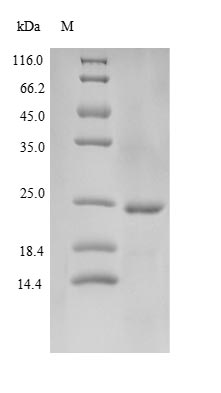
≥ 90% as determined by SDS-PAGE.
Target Names
Uniprot No.
Research Area
others
Alternative Names
18 kDa cationic antimicrobial protein; Antibacterial peptide LL-37; Antibacterial protein FALL-39; CAMP; CAMP_HUMAN; CAP 18; CAP-18; CAP18; Cathelicidin antimicrobial peptide; Cathelin-like protein; Cathelin-related antimicrobial peptide; CATHL3; Cationic antimicrobial protein; 18-KD; CLP; Cnlp; Cramp; CRAMP; mouse; homolog of; FALL 39 ; FALL-39 peptide antibiotic; FALL39 ; hCAP 18; hCAP-18; hCAP18; HSD26 ; LL37; MCLP; Peptide antibiotic; PR-39; porcine; homolog of
Species
Homo sapiens (Human)
Source
E.coli
Expression Region
132-170aa
Target Protein Sequence
FALLGDFFRKSKEKIGKEFKRIVQRIKDFLRNLVPRTES
Note: The complete sequence may include tag sequence, target protein sequence, linker sequence and extra sequence that is translated with the protein sequence for the purpose(s) of secretion, stability, solubility, etc.
If the exact amino acid sequence of this recombinant protein is critical to your application, please explicitly request the full and complete sequence of this protein before ordering.
Mol. Weight
24.7kDa
Protein Length
Full Length of Mature Protein
Tag Info
N-terminal 10xHis-SUMO-tagged and C-terminal Myc-tagged
Form
Liquid or Lyophilized powder
Note: We will preferentially ship the format that we have in stock, however, if you have any special requirement for the format, please remark your requirement when placing the order, we will prepare according to your demand.
Note: We will preferentially ship the format that we have in stock, however, if you have any special requirement for the format, please remark your requirement when placing the order, we will prepare according to your demand.
Buffer
If the delivery form is liquid, the default storage buffer is Tris/PBS-based buffer, 5%-50% glycerol. If the delivery form is lyophilized powder, the buffer before lyophilization is Tris/PBS-based buffer, 6% Trehalose.
Reconstitution
We recommend briefly centrifuging the vial prior to opening to bring the contents to the bottom. Reconstitute the lyophilized protein in sterile deionized water to a recommended concentration of 0.1–1.0 mg/mL. If used immediately after reconstitution, glycerol is not required. If not for immediate use, after the protein is completely dissolved, add glycerol to a final concentration of 5%–50% (default: 50%), aliquot as needed, and store at -20℃/-80℃ for long-term storage. If dilution is needed during subsequent use, dilute with the same buffer as the protein, but without stabilizers (e.g., glycerol, trehalose, etc).
Troubleshooting and FAQs
Storage Condition
Store at -20°C/-80°C upon receipt, aliquoting is necessary for mutiple use. Avoid repeated freeze-thaw cycles.
Shelf Life
The shelf life is related to many factors, storage state, buffer ingredients, storage temperature and the stability of the protein itself.
Generally, the shelf life of liquid form is 6 months at -20°C/-80°C. The shelf life of lyophilized form is 12 months at -20°C/-80°C.
Generally, the shelf life of liquid form is 6 months at -20°C/-80°C. The shelf life of lyophilized form is 12 months at -20°C/-80°C.
Notes
Repeated freezing and thawing is not recommended. Store working aliquots at 4°C for up to one week.
Datasheet & COA
Please contact us to get it.
Description
Amino acids 132-170 form the expressed segment for recombinant Human CAMP. The theoretical molecular weight of the CAMP protein is 24.7 kDa. The CAMP protein was expressed in e.coli. The N-terminal 10xHis-SUMO tag and C-terminal Myc tag was fused into the coding gene segment of CAMP, making it easier to detect and purify the CAMP recombinant protein in the later stages of expression and purification.Cathelicidin antimicrobial peptide (CAMP) is a protein primarily studied in the fields of immunology and infectious diseases. Its pivotal role lies in the innate immune system, where it acts as a...
Citations
- X Zhang, Z Wang, S Xiao, Y Li, Z Ren, N Chuan,Pediatrics & Neonatology,2026
Customer Reviews and Q&A
■ Customer Reviews
There are currently no reviews for this product.
Target Background
Function
Binds to bacterial lipopolysaccharides (LPS), has antibacterial activity.
Gene References into Functions
- The correlation between serum LL-37 and high-density lipoprotein cholesterol levels suggests that LL-37 may play a key role in regulation of cholesterol levels in hypercholesterolemia.
- LL-37/CRAMP represents an important mediator of platelet activation and thrombo-inflammation.
- Low vitamin D3 status and higher systemic levels of LL-37 may be a consequence of reduced TB control and enhanced pathological inflammation.
- these data show that LL-37 affects surface and intracellular Toll-Like Receptor expression in tissue mast cells
- This review describes novel advances involving the roles and mechanisms of human cathelicidin LL-37 in cancer.
- this study shows that LL-37 serum level correlates with healing of venous leg ulcers
- Elevated serum levels of LL-37 in bipolar patients may suggest the role of this peptide in the pathomechanism of BD.
- LL-37 serum levels are not affected by body composition in elderly women with unipolar depression.
- The findings support a role for STAT3 and HIF-1A in the regulation of LL-37 expression.
- In silico docking study have confirmed the high binding affinities of multiple 9-mer peptides derived from LL-37 to the HLA-C*06:02 molecule proposed a mechanism of the interaction between this LL-37-HLA-C*06:02 complex and T cells via TCRs.
- IL-33 down-regulates the induction of hCAP-18/LL-37 production in human gingival epithelial cells.
- in teens with positive recto-vaginal group B streptococcus colonization, placental mRNA expression of cathelicidin is lower compared to those who tested negative for this infection
- Serum levels of LL-37 were found to be higher in elderly patients with major depressive disorder compared to controls.
- these results suggested that human CAMP/LL-37 might act as a tumor-suppressor in OSCC and DNA methylation might play roles during carcinogenesis via directly downregulating human CAMP promoter activity.
- omoted epithelial and smooth-muscle-like differentiation of Adipose-derived stem cells through activating the Wnt/beta-catenin and NF-kappaB pathways, respectively
- Patients with type 1 diabetes and presence of microangiopathy characterize higher level of serum cathelicidin.
- The expression of LL-37 was up-regulated in the inflamed mucosa of IBD patients. LL-37 was induced by TLR-3 stimulation and exhibited an anti-microbial effect via interaction with lipopolysaccharide (LPS).
- the mean level of LL-37 was statistically significantly higher in TB patients than that in patients with Gram-positive bacteria-induced pneumonia (p < 0.001), in patients with Gram-negative bacteria-induced pneumonia (p < 0.001), and in healthy controls (p < 0.001).
- data suggest that cathelicidin LL-37 is an important element of host defense in the course of bacterial diseases within the respiratory tract, particularly when the infection is caused by an intracellular pathogen.
- This review summarizes the current knowledge on molecular mechanisms underlying LL-37-induced receptor activation.
- L-CATH-2, D-CATH-2 and LL-37 can modulate the immune response of primary chicken immune cells by increasing mannose receptor expression, antigen presentation, endocytosis and neutralizing LPS-induced cytokine production and as a result augment activation of the adaptive immune system.
- study demonstrated a substantial loss of antimicrobial function when the peptide was exposed to low concentrations of nanomaterials, and further showed that the nanomaterial-peptide interaction resulted in a significant change in the structure of the peptide
- cathelicidin selectively modulated synthesis of TLR4 and 9 in intestinal epithelium, but only when cells were exposed to virulence factors, mostly from apical surfaces.
- Autologous endothelial progenitor cells transfected by lentiviral vectors expressing antibiotic peptide LL37, as well as urothelial and smooth muscle cells from New Zealand white male rabbits, were cultured and seeded onto preconfigured acellular collagen-based tubular matrices
- this study shows that LL-37 may aid clearance of influenza A virus by promoting monocyte uptake of the virus, while reducing viral replication and virus-induced TNF-a responses in these cells
- Male placental cotyledons showed reduced basal CYP27B1 and cathelicidin gene expression compared to females.
- Study demonstrates high levels of serum hBD2 and LL-37 levels in paediatric post- infectious bronchiolitis obliterans patients. These antimicrobial peptides may have important roles in immune systems and the pathogenesis of these patients.
- the expression of CAMP, vitamin D receptor (VDR), and the retinoid X receptor (RXR) isoforms in human skin and gingival tissue biopsies and investigated the signaling pathways involved in 1alpha,25-dihydroxyvitamin D3-induced upregulation of CAMP.
- A positive correlation was found between vitamin D and urine cathelicidin levels in the vitamin D sufficient group, however, there was no correlation between vitamin D and urine cathelicidin levels in the vitamin D insufficient group.
- LL37 induced YB1 expression, and increased tumor cell proliferation, migration and invasion of A375 and A875 malignant melanoma cell lines.
- this study shows that serum cathelicidin levels of acute asthma group are higher than controlled asthma group, and can be used to predict viral-induced acute asthma
- Our results suggest that calcitriol anti-cancer therapy is more likely to induce higher levels of CAMP in ERalpha- breast cancer cells, when compared to ERa + breast cancer cells.
- These findings highlight the role of cathelicidin in the pathogenesis of allergic rhinitis.
- expressions of LL-37 mRNA and protein in the lesions of cutaneous tuberculosis and tuberculids were similar to that of normal skin
- this study shows that carbamylation has profound and diverse effects on the structure and biological properties of LL-37. In some cases, anti-inflammatory LL-37 was rapidly converted to pro-inflammatory LL-37
- In rhinovirus infected cystic fibrosis patients, LL37 was inversely correlated with viral load in bronchoalveolar lavage fluid.
- we discuss 1,25D3-induced down-regulation of cytokine/chemokine production and stimulation of hCAP-18/LL-37 gene expression which represent two very important pathways for 1,25D3-evoked regulation of the innate immune response--{REVIEW}
- this study provides evidence for the ability of LL37 to bind and internalize viral or endogenous DNA into non-immune cells.
- The human cathelicidin LL-37--A pore-forming antibacterial peptide and host-cell modulator.
- higher nasal levels are associated with protection against RSV infection, directly damages viral envelopes and disrupts viral particles
- Data indicate that endoplasmic reticulum (ER) stress increase sphingosine-1-phosphate (S1P) production, in turn activating nuclear factor kappa B (NF-kappaB)-mediated cathelicidin antimicrobial peptide (CAMP) synthesis.
- The authors show that the group A Streptococcus surface-associated M1 protein sequesters and neutralizes LL-37 antimicrobial activity through its N-terminal domain.
- Cathelicidin appears to play different roles in the development of pulmonary sarcoidosis and tuberculosis.
- Neonates with congenital pneumonia had significantly higher serum cathelicidin and lower serum 25(OH)D compared to controls.
- Taken together, these observations suggest that activation of human mast cells by LL-37 could be modified by TLR2 ligands and the function of human mast cells could be switched from allergic reactions to innate immune response.
- the use of hCAP-18 levels in blood plasma for differential diagnosis of neutropenic patients, was assessed.
- LL37, HMGB1 and S100A9 are increased in serum during exacerbation in COPD patients
- The aim of this project was to examine the functional impact of the human cathelicidin LL-37 and the mouse cathelicidin-related AMP (CRAMP) on the pathogenesis of lupus and arthritis.
- LL-37 interacts with negatively charged membranes forming a stable aggregate, which may produce toroidal pores. There is also an aggregate with a higher oligomeric degree for interaction of LL-37 with neutral membranes.
- Chlamydial plasmid-encoded virulence factor Pgp3 neutralizes the antichlamydial activity of human cathelicidin LL-37.
Subcellular Location
Secreted.
Protein Families
Cathelicidin family
Tissue Specificity
Expressed in bone marrow and testis and neutrophils.
Database Links
HGNC:
OMIM:
KEGG:
STRING:
UniGene: