

Hyocholic Acid [547-75-1]

Referencia M15050-5mg
embalaje : 5mg
Marca : AbMole Bioscience
Contact local distributor :
 Teléfono : +1 850 650 7790
All AbMole products are for research use only, cannot be used for human consumption.
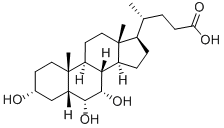
γ-Muricholic Acid
Quality Control & Documentation
Biological Activity
Hyocholic acid is a primary bile acid in pigs and other mammals. Hyocholic Acid promotes GLP-1 secretion via activating TGR5 and inhibiting FXR in enteroendocrine cells. Hyocholic acid is converted by gut microflora primarily to taurohyocholate and, to a lesser extent, taurocholic acid and tauro-β-muricholic acid in mice.
Hyocholic acid has low toxicity against human hepatoma HepG2 cells. HCA (25 and 50 μM, 24 h) upregulates proglucagon gene transcription in STC-1 and NCI-H716 cells. HCA (25 and 50 μM, 24 h) upregulates GLP-1 protein secretion in STC-1 and NCI-H716 cells.
Hyocholic Acid (20 mg/kg, p.o.) suppresses BA depletion-induced blood glucose increase in pigs. Hyocholic Acid (100 mg/kg/day, p.o.) improves serum fasting GLP-1 secretion and glucose homeostasis in diabetic mouse models.
Chemical Information
| Molecular Weight | 408.57 |
| Formula | C24H40O5 |
| CAS Number | 547-75-1 |
| Solubility (25°C) | DMSO 42 mg/mL |
| Storage | Powder -20°C 3 years ; 4°C 2 years In solvent -80°C 6 months ; -20°C 1 month |
References
[1] Wei Jia, et al. J Mol Cell Biol. Hyocholic acid and glycemic regulation: comments on 'Hyocholic acid species improve glucose homeostasis through a distinct TGR5 and FXR signaling mechanism'
[2] Xiaojiao Zheng, et al. Nat Commun. Hyocholic acid species as novel biomarkers for metabolic disorders
[3] Xiaojiao Zheng, et al. Cell Metab. Hyocholic acid species improve glucose homeostasis through a distinct TGR5 and FXR signaling mechanism
[4] Yunhuan Liu, et al. Hepatology. Probiotic Lactobacillus rhamnosus GG Prevents Liver Fibrosis Through Inhibiting Hepatic Bile Acid Synthesis and Enhancing Bile Acid Excretion in Mice
[5] Sama I Sayin, et al. Cell Metab. Gut microbiota regulates bile acid metabolism by reducing the levels of tauro-beta-muricholic acid, a naturally occurring FXR antagonist