


RayBio® Human TNF alpha ELISA Kit for cell culture supernatants, plasma, serum, and lysate samples. 30 pg/ml sensitivity.
Best Seller
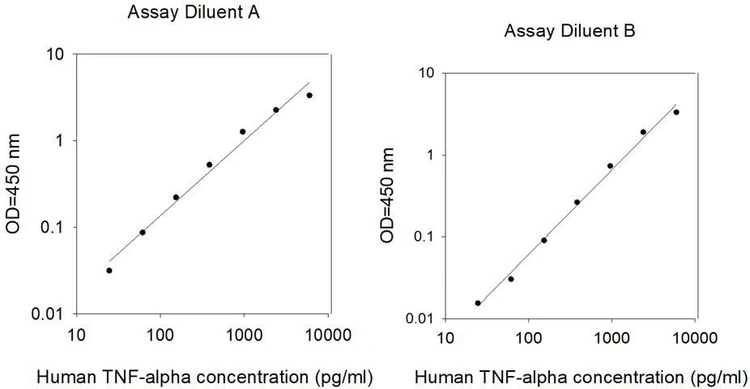
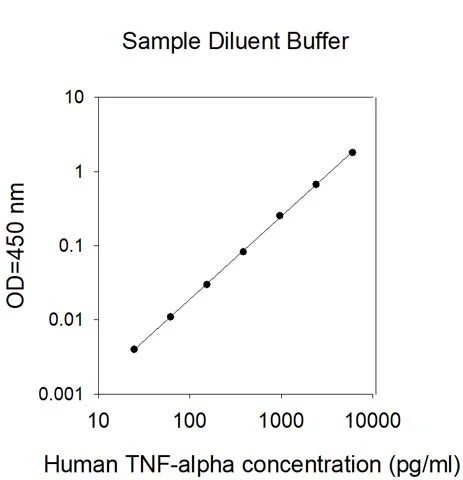

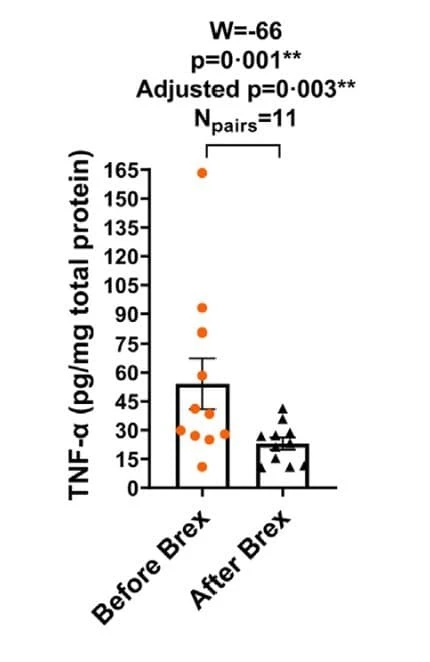
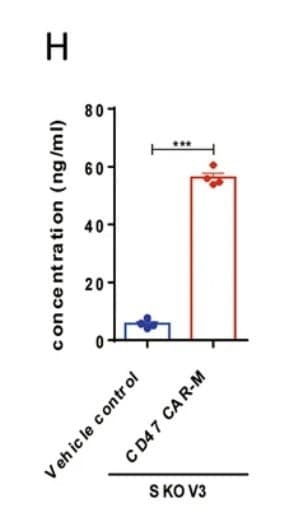
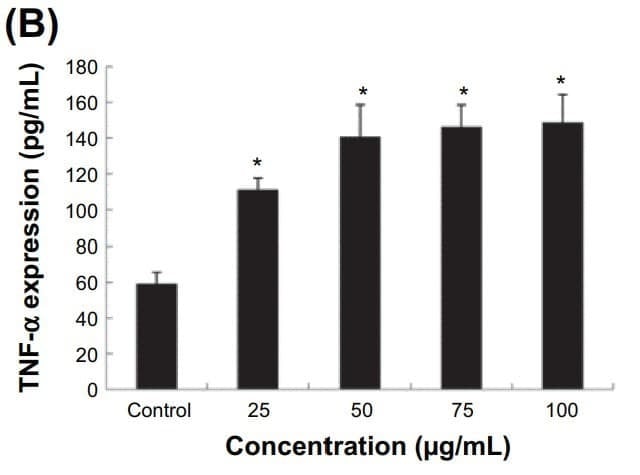
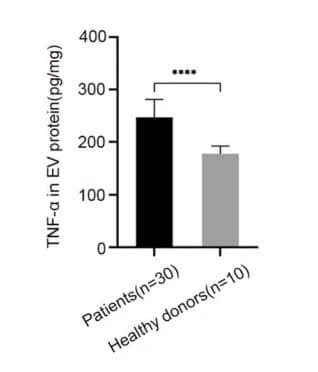
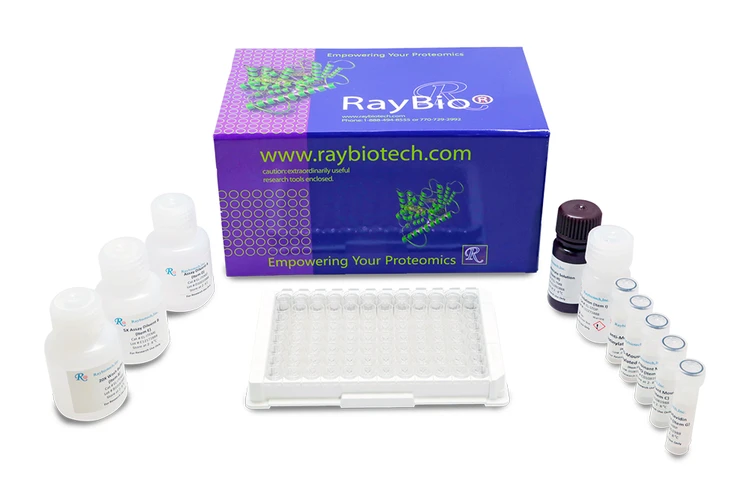

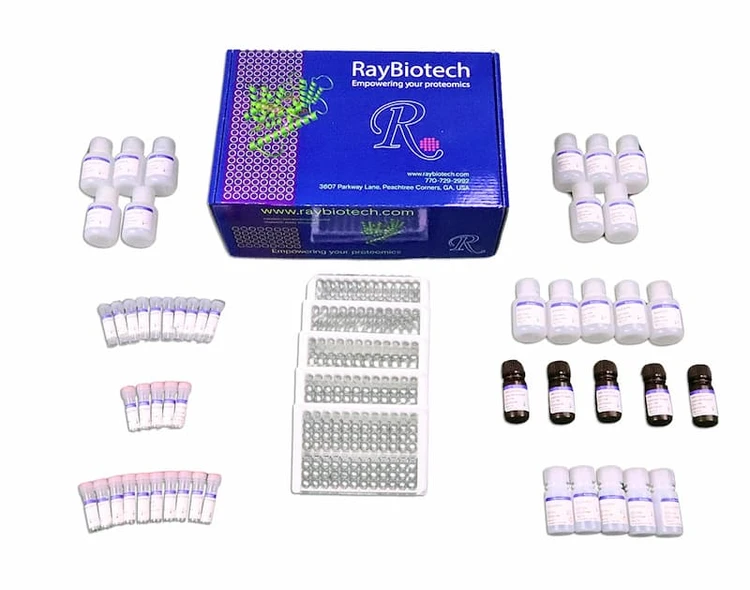
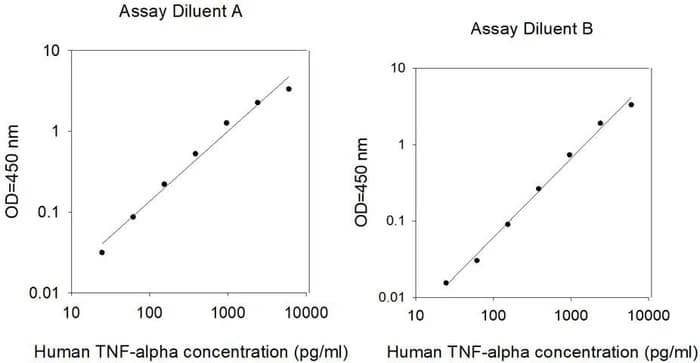
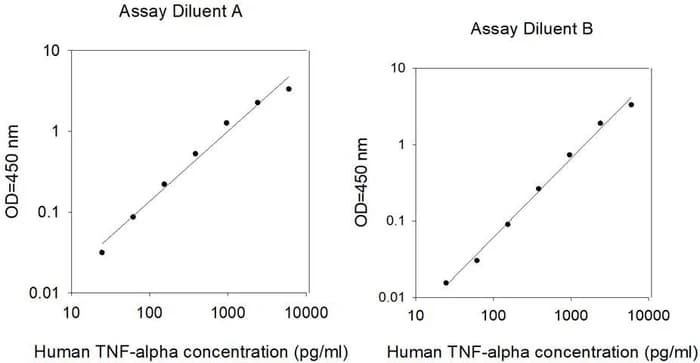
Human TNF alpha ELISA Kit Standard Curve
Human TNF alpha ELISA Kit
Contact Us for Bulk Request
Product Description
Specifications
| Size | 1 Plate Kit, 2 Plate Kit, 5 Plate Kit |
| Species | Human |
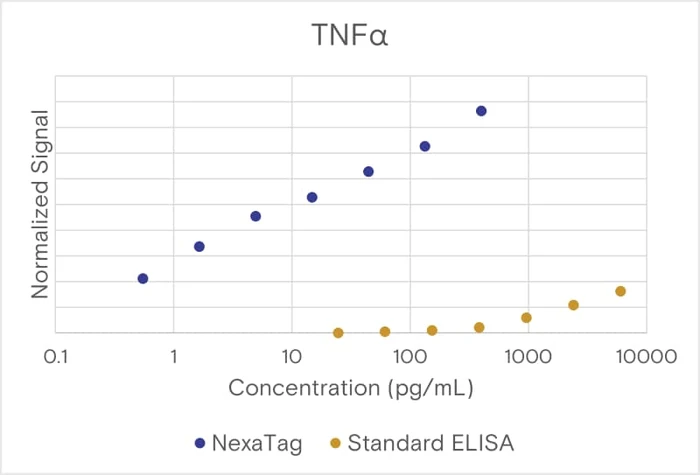
| Sensitivity | 30 pg/ml Need more sensitivity? Check out the new NexaTag® kit for this target. Still not enough? Then your answer is our Ultrasensitive Biomarker Testing Service powered by Simoa™ technology. |
| Detection Range | 30 pg/ml - 6000 pg/ml |
| Specificity | This ELISA kit shows no cross-reactivity with any of the cytokines tested: Human ANG, CD23, Eotaxin, GCSF, GM-CSF, GRO-alpha, GRO-beta, GRO-gamma, I-309, IFN-gamma, IL-1 alpha, IL-1 beta, IL-3, IL-4, IL-5, IL-6, IL-7, IL-8, IL-10, IL-12 (p40), IL-12 (p70), IL-15, IL-16, IP-10, MCP-1, MCP-2, MCP-3, MCP-4, MCSF, MIG, MIP-1 alpha, MIP-1 beta, NAP-2, PDGF, PF-4. |
| Compatible Sample Types | Cell Culture Supernatants, Plasma, Serum, Tissue Lysates, Cell Lysates |
| Recommended Dilution (Serum/Plasma) | 2 fold |
| Accession Number | P01375 |
| Gene Id | 7124 |
| Gene Symbols | TNF, TNFA, TNFSF2 |
| Protein Name / Synonyms | Tumor necrosis factor (Cachectin) (TNF-alpha) (Tumor necrosis factor ligand superfamily member 2) (TNF-a) [Cleaved into: Tumor necrosis factor, membrane form (N-terminal fragment) (NTF) Intracellular domain 1 (ICD1) Intracellular domain 2 (ICD2) C-domain 1 C-domain 2 Tumor necrosis factor, soluble form] |
| Quantitative/Semi-Quantitative | Quantitative |
| Solid Support | 96-well Microplate |
| Design Principle | Sandwich-based |
| Method Of Detection | Colorimetric |
| Research Area | Cardiovascular Disease, Cancer, Inflammation, Antibody Drug Development, Protein Therapeutics |
| Shipping Type | Blue ice |
| Storage | ≤-20°C |
Related Products
Anti-TNF alpha Antibody
As low as $41.60
Anti-TNF alpha Antibody, Biotinylated
$176.00
NexaTag® Human TNF alpha qIPCR ELISA Kit
As low as $639.00
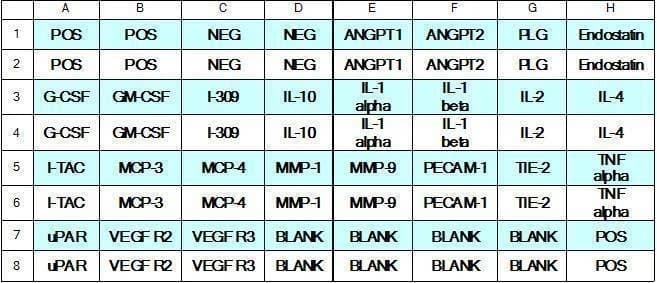
Target Background
Tumor necrosis factor alpha (TNF alpha), also known as lymphotoxin and cachectin, is a pleiotropic cytokine. TNF alpha is a smaller cytokine with a molecular weight of 26 kDa (transmembrane) and 17 kDa (soluble) that binds to the same receptors producing a vast array of effects similar to those of TNF-beta. Both TNF-alpha and TNF-beta share 30% amino acid homology and have similar biological activities. TNF-alpha is produced primarily by monocytes, neutrophils and macrophages. It is found in synovial cells and macrophages in the tissues. TNF-alpha and TNF-beta can modulate many immune and inflammatory functions, while having the ability to inhibit tumor growth. Target tumor cells must express TNF receptors 1 (55 kDa) and 2 (75 kDa) to be killed, with the p55 receptor mediating the cytotoxic response.
Product Features
- Strip plates and additional reagents allow for use in multiple experiments
- Quantitative protein detection
- Establishes normal range
- The best products for confirmation of antibody array data
Standard Curves
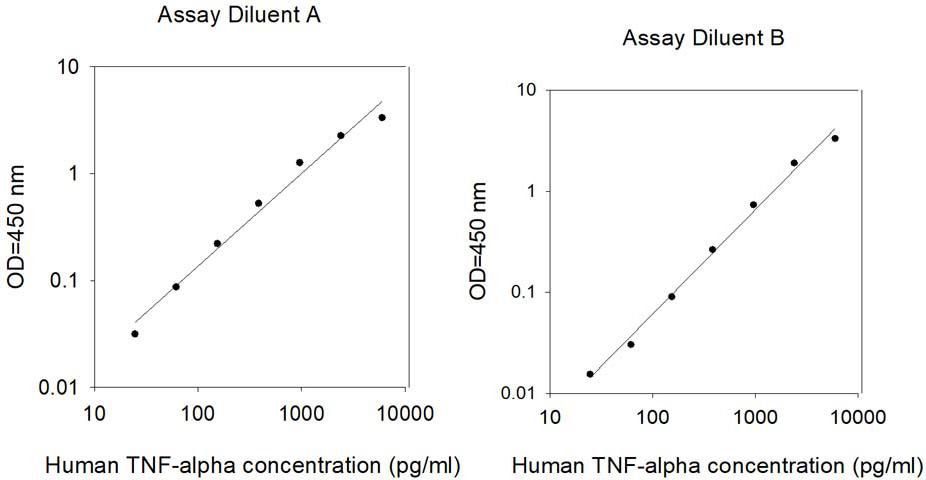
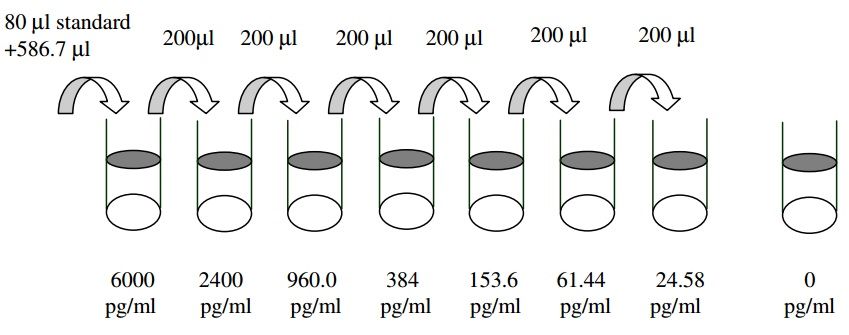
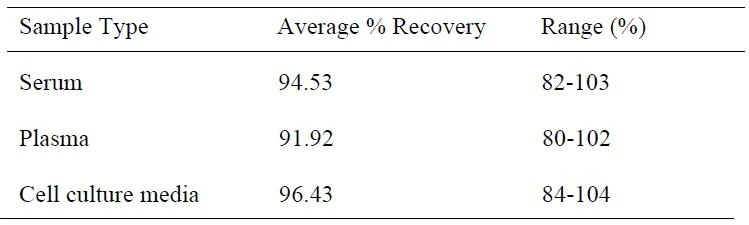
Spiking & Recovery Results
| Sample Type | Average % Recovery | Range (%) |
|---|---|---|
| Serum | 94.53 | 82-103 |
| Plasma | 91.92 | 80-102 |
| Cell culture media | 96.43 | 84-104 |
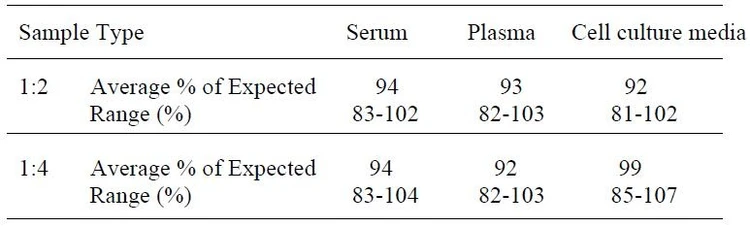
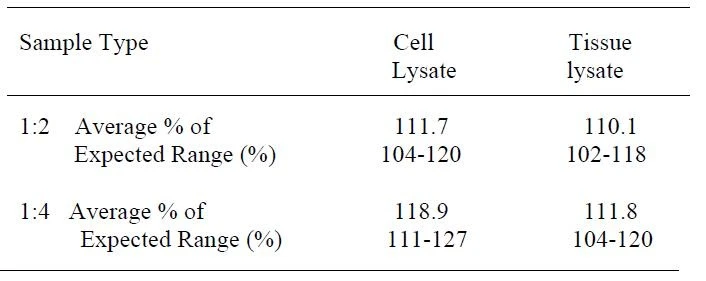
Linearity Results
| Serum | Plasma | Cell Culture Media | ||
|---|---|---|---|---|
| 1:2 | Average % of expected Range (%) | 94 83-102 | 93 82-103 | 92 81-102 |
| 1:4 | Average % of expected Range (%) | 94 83-104 | 92 82-103 | 99 85-107 |
Typical Data
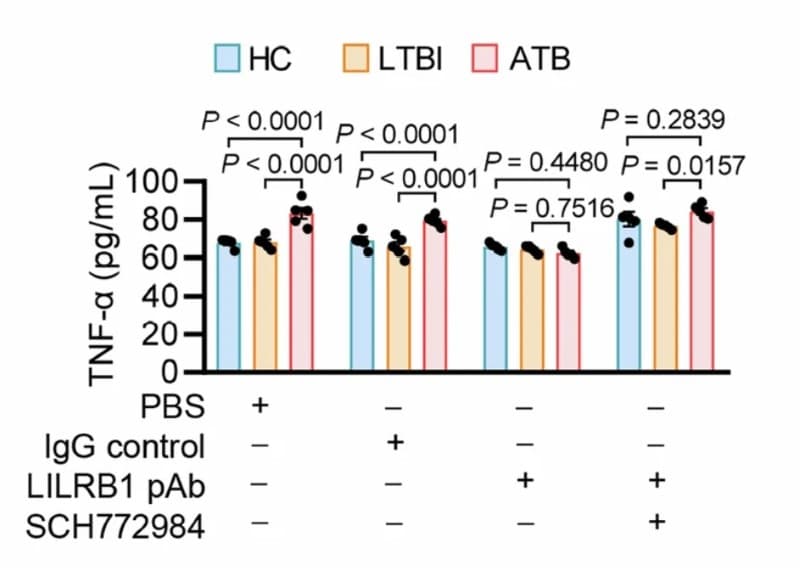
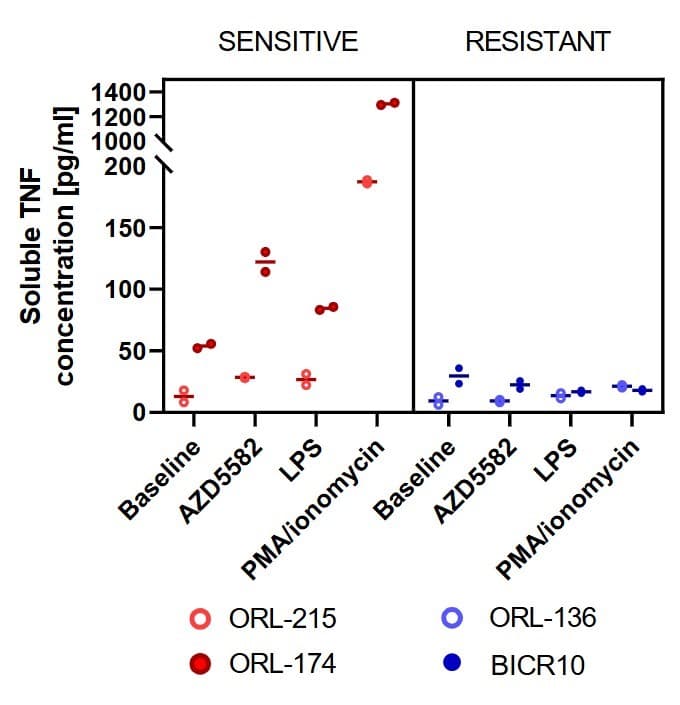
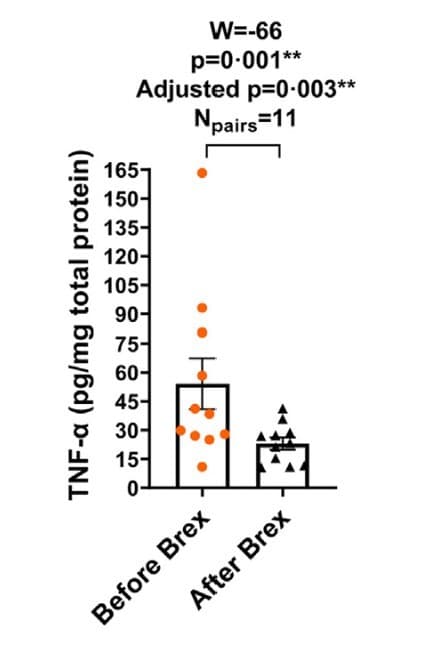
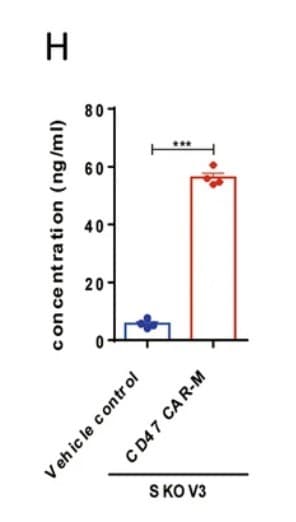
Kit Components
- Pre-Coated 96-well Strip Microplate
- Wash Buffer
- Stop Solution
- Assay Diluent(s)
- Lyophilized Standard
- Biotinylated Detection Antibody
- Streptavidin-Conjugated HRP
- TMB One-Step Substrate
Additional Materials Required
- Distilled or deionized water
- Precision pipettes to deliver 2 µL to 1 µL volumes
- Adjustable 1-25 µL pipettes for reagent preparation
- 100 µL and 1 liter graduated cylinders
- Tubes to prepare standard and sample dilutions
- Absorbent paper
- Microplate reader capable of measuring absorbance at 450nm
- Log-log graph paper or computer and software for ELISA data analysis
Assay Procedure Summary
- Prepare all reagents, samples and standards as instructed in the manual.
- Add 100 µL of standard or sample to each well.
- Incubate 2.5 h at RT or O/N at 4°C.
- Add 100 µL of prepared biotin antibody to each well.
- Incubate 1 h at RT.
- Add 100 µL of prepared Streptavidin solution to each well.
- Incubate 45 min at RT.
- Add 100 µL of TMB One-Step Substrate Reagent to each well.
- Incubate 30 min at RT.
- Add 50 µL of Stop Solution to each well.
- Read at 450 nm immediately.
Storage/Stability
The entire kit may be stored at -20°C for up to 1 year from the date of shipment. Avoid repeated freeze-thaw cycles. The kit may be stored at 4°C for up to 6 months. For extended storage, it is recommended to store at -80°C.
Customize This Human TNF alpha ELISA
We manufacture our ELISAs in-house, so we can build a custom version for your study.
- Post-translational modifications (PTMs): Detect modified TNF alpha (TNFA), including phosphorylation, acetylation, S-nitrosylation, S-acylation, oxidation, lactylation, sumoylation, ubiquitination, nitration, carbamylation, and more
- Sample types: Validation in your matrix using samples you provide, such as CSF, urine, saliva, lysates, or exosomes
- Also available: More sensitive platforms such as Simoa® and NexaTag®, multiplex panels, bulk lots, and other species when suitable reagents exist
Feasibility varies by target and modification, and we’ll tell you upfront what’s achievable.
Learn more about custom ELISA development
documents
Excel (Sandwich-ELISA-Analysis-Tool.xlsm)
citations
Enhanced sialylation of bone marrow mesenchymal stromal cells contributes to immune remodeling through macrophage polarization in multiple myeloma patients
- Species:
- Human
- Sample Type:
- Cell Culture Supernatant (culture supernatants of primary macrophages)
- Year:
- 2026
- Journal Name:
- Frontiers in Immunology
- PubMed ID:
- 42712628
The HCG11/QKI5 Axis Regulates Endothelial Angiogenic Adaptation During Chronic Cerebral Hypoperfusion
- Species:
- Human
- Sample Type:
- Plasma (chronic cerebral hypoperfusion patients)
- Year:
- 2026
- Journal Name:
- CNS Neuroscience & Therapeutics
- PubMed ID:
- 42484275
GPRC5A/CXCL8/NLRP3-mediated neutrophil extracellular traps drive gemcitabine-nab-paclitaxel resistance in pancreatic adenocarcinoma
- Species:
- Human
- Sample Type:
- Cell Culture Supernatant (cell culture supernatants of GnP-resistant MIA PaCa-2 or PANC-1 cells)
- Year:
- 2025
- Journal Name:
- Cancer Biology & Medicine
- PubMed ID:
- 40665634
A 3D Alginate-Gelatin Co-Culture Model to Study Epithelial-Stromal Interactions in the Gut
- Species:
- Human
- Sample Type:
- Cell Culture Supernatant (HT-29/IMR-90 3D co-culture)
- Year:
- 2026
- Journal Name:
- Gels (Basel, Switzerland)
- PubMed ID:
- 41590095
Adjunctive effect of gaseous ozone on inflammatory biomarkers and microbial profile in grade C molar-incisor pattern periodontitis: a randomized split-mouth placebo-controlled clinical trial
- Species:
- Human
- Sample Type:
- Other Body Fluid (sample strips eluate gingival crevicular fluid)
- Year:
- 2026
- Journal Name:
- BMC oral health
- PubMed ID:
- 41942979
Elevated Salivary TNF-α Levels and Clinical Severity of Oral Lichen Planus
- Species:
- Human
- Sample Type:
- Saliva (unstimulated whole saliva)
- Year:
- 2026
- Journal Name:
- Dentistry 3000
Sleep disturbances, inflammation, and muscle function in older adults with sarcopenia
- Species:
- Human
- Sample Type:
- Whole Blood (older adults with sarcopenia)
- Year:
- 2026
- Journal Name:
- Sleep & breathing = Schlaf & Atmung
- PubMed ID:
- 42696225
Spent Hop (Humulus lupulus L.) Extract and Its Flaxseed Polysaccharide-Based Encapsulates Attenuate Inflammatory Bowel Diseases Through the Nuclear Factor-Kappa B, Extracellular Signal-Regulated Kinase, and Protein Kinase B Signalling Pathways
- Species:
- Human
- Sample Type:
- Cell Lysate (protein cell lysates); Tissue Lysate / Homogenate
- Year:
- 2025
- Journal Name:
- Cells
- PubMed ID:
- 40710352
Late-pregnancy air pollution exposure and neonatal anthropometry with and without gestational hypertension
- Species:
- Human
- Sample Type:
- Serum (maternal serum); Whole Blood (umbilical cord blood)
- Year:
- 2026
- Journal Name:
- iScience
- PubMed ID:
- 42602318
Effects of Acute Fish Oil Supplementation on Muscle Function and Soreness After Eccentric Contraction-Induced Muscle Damage
- Species:
- Human
- Sample Type:
- Plasma (after eccentric muscle damage)
- Year:
- 2025
- Journal Name:
- Nutrients
- PubMed ID:
- 41228481