

Tubulin Alpha4A Chain Polyclonal Antibody

Cat# MBS448052-1mg
Size : 1mg
Brand : MyBiosource
Contact local distributor :

Phone : +1 850 650 7790
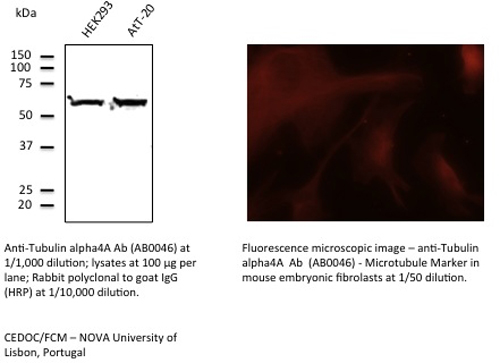
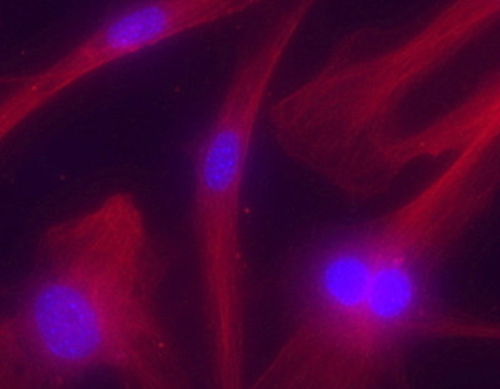
Immunofluorescence – anti-Tubulin alpha4A Ab - Microtubule Marker in mouse embryonic fibrolasts at 1/50 dilution;
TUBA4A Antibody – Goat Polyclonal
For Research Use Only. Not for use in diagnostic procedures. Catalog #: MBS44805211 units are in stock for immediate shipment. Please contact us for more details.
Goat polyclonal antibody to alpha tubulin. Microtubules of the eukaryotic cytoskeleton perform essential and diverse functions and are composed of a heterodimer of alpha and beta tubulin. The alpha and beta tubulins represent the major components of… More details
Product Overview
Online Datasheet in PDFProduct Name
TUBA4A, Polyclonal Antibody
Full Product Name
Tubulin Alpha4A Chain Polyclonal Antibody
Product Gene Name
anti-TUBA4A antibody
Product Synonym Names
Anti-TUBA4A; TUBA1; TUBA4A antibody
Clonality
Polyclonal
Isotype
IgG
Host
Goat
Species Reactivity
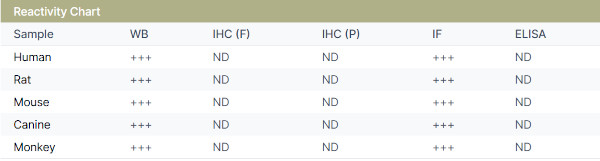
Reacts against human, rat, mouse, canine and monkey proteins.
Form/Format
Polyclonal antibody supplied as a 200 or 500 ul (2 mg/ml) aliquot in PBS, 20% glycerol and 0.05% sodium azide. This antibody is epitope-affinity purified from goat antiserum.
Specificity
This antibody gives a positive signal in the following human (293A, HMEC-1, U-118, HaCat), rat (TR-iBRB), mouse (AtT-20, Hepa), canine (D17) and monkey (COS-7) whole cell lysates.
Preparation and Storage
For continuous use, store at 2-8°C for one-two days. For extended storage, store in -20°C freezer. Working dilution samples should be discarded if not used within 12 hours.
Chromosome Location
Chromosome: 2; NC_000002.12 (219249711..219254608, complement). Location: 2q35
OMIM
191110
Gene Identifier
ENSG00000127824
Immunogen
Purified recombinant peptide derived from within residues 400 aa to the C-terminus of human alpha tubulin produced in E. coli.
Applications Tested/Suitable for anti-TUBA4A antibody
Immunofluorescence (IF), Western Blot (WB)
Application Notes for anti-TUBA4A antibody
Western Blot: 1:250-1:2,000
Immunofluorescence: 1:50-1:200
Immunofluorescence: 1:50-1:200
Other Notes
Small volumes of anti-TUBA4A antibody vial(s) may occasionally become entrapped in the seal of the product vial during shipment and storage. If necessary, briefly centrifuge the vial on a tabletop centrifuge to dislodge any liquid in the container`s cap. Certain products may require to ship with dry ice and additional dry ice fee may apply.
Searchable Terms for TUBA4A purchase
MBS448052 is an antibody targeting TUBA4A. Also known as Tubulin Alpha4A Chain Polyclonal Antibody. Reactive in Reacts against human, rat, mouse, canine and monkey proteins.. Host: Goat.
Additional Details
NCBI/Uniprot data below describe general gene information for TUBA4A. It may not necessarily be applicable to this product.
UniProt Primary Accession #
UniProt Related Accession #
GenBank Nucleotide #
NCBI Official Full Name
tubulin alpha-4A chain isoform 1
NCBI Official Synonym Full Names
tubulin, alpha 4a
NCBI Official Symbol
TUBA4A
NCBI Official Synonym Symbols
TUBA1; H2-ALPHA
UniProt Protein Name
Tubulin alpha-4A chain
UniProt Synonym Protein Names
Alpha-tubulin 1; Testis-specific alpha-tubulin; Tubulin H2-alpha; Tubulin alpha-1 chain
Protein Family
Tubulin
UniProt Gene Name
TUBA4A
UniProt Synonym Gene Names
TUBA1
UniProt Entry Name
TBA4A_HUMAN
NCBI Protein Information
tubulin alpha-4A chain; tubulin H2-alpha; tubulin alpha-1 chain; tubulin, alpha 1 (testis specific)
NCBI Summary for TUBA4A
Microtubules of the eukaryotic cytoskeleton perform essential and diverse functions and are composed of a heterodimer of alpha and beta tubulin. The genes encoding these microtubule constituents are part of the tubulin superfamily, which is composed of six distinct families. Genes from the alpha, beta and gamma tubulin families are found in all eukaryotes. The alpha and beta tubulins represent the major components of microtubules, while gamma tubulin plays a critical role in the nucleation of microtubule assembly. There are multiple alpha and beta tubulin genes and they are highly conserved among and between species. This gene encodes an alpha tubulin that is a highly conserved homolog of a rat testis-specific alpha tubulin. Alternatively spliced transcript variants encoding different isoforms have been found for this gene. [provided by RefSeq, Jun 2013]
Show more UniProt Comments for TUBA4A
Function: Tubulin is the major constituent of microtubules. It binds two moles of GTP, one at an exchangeable site on the beta chain and one at a non-exchangeable site on the alpha chain.
Subunit structure: Dimer of alpha and beta chains. A typical microtubule is a hollow water-filled tube with an outer diameter of 25 nm and an inner diameter of 15 nM. Alpha-beta heterodimers associate head-to-tail to form protofilaments running lengthwise along the microtubule wall with the beta-tubulin subunit facing the microtubule plus end conferring a structural polarity. Microtubules usually have 13 protofilaments but different protofilament numbers can be found in some organisms and specialized cells.
Subcellular location: Cytoplasm › cytoskeleton.
Post-translational modification: Some glutamate residues at the C-terminus are polyglutamylated. This modification occurs exclusively on glutamate residues and results in polyglutamate chains on the gamma-carboxyl group. Also monoglycylated but not polyglycylated due to the absence of functional TTLL10 in human. Monoglycylation is mainly limited to tubulin incorporated into axonemes (cilia and flagella) whereas glutamylation is prevalent in neuronal cells, centrioles, axonemes, and the mitotic spindle. Both modifications can coexist on the same protein on adjacent residues, and lowering glycylation levels increases polyglutamylation, and reciprocally. The precise function of such modifications is still unclear but they regulate the assembly and dynamics of axonemal microtubules
Probable.Acetylation of alpha chains at Lys-40 stabilizes microtubules and affects affinity and processivity of microtubule motors. This modification has a role in multiple cellular functions, ranging from cell motility, cell cycle progression or cell differentiation to intracellular trafficking and signaling
By similarity.
Miscellaneous: This tubulin does not have a C-terminal tyrosine.
Sequence similarities: Belongs to the tubulin family.
Show more Subunit structure: Dimer of alpha and beta chains. A typical microtubule is a hollow water-filled tube with an outer diameter of 25 nm and an inner diameter of 15 nM. Alpha-beta heterodimers associate head-to-tail to form protofilaments running lengthwise along the microtubule wall with the beta-tubulin subunit facing the microtubule plus end conferring a structural polarity. Microtubules usually have 13 protofilaments but different protofilament numbers can be found in some organisms and specialized cells.
Subcellular location: Cytoplasm › cytoskeleton.
Post-translational modification: Some glutamate residues at the C-terminus are polyglutamylated. This modification occurs exclusively on glutamate residues and results in polyglutamate chains on the gamma-carboxyl group. Also monoglycylated but not polyglycylated due to the absence of functional TTLL10 in human. Monoglycylation is mainly limited to tubulin incorporated into axonemes (cilia and flagella) whereas glutamylation is prevalent in neuronal cells, centrioles, axonemes, and the mitotic spindle. Both modifications can coexist on the same protein on adjacent residues, and lowering glycylation levels increases polyglutamylation, and reciprocally. The precise function of such modifications is still unclear but they regulate the assembly and dynamics of axonemal microtubules
Probable.Acetylation of alpha chains at Lys-40 stabilizes microtubules and affects affinity and processivity of microtubule motors. This modification has a role in multiple cellular functions, ranging from cell motility, cell cycle progression or cell differentiation to intracellular trafficking and signaling
By similarity.
Miscellaneous: This tubulin does not have a C-terminal tyrosine.
Sequence similarities: Belongs to the tubulin family.
Precautions
All of MyBioSource's Products are for scientific laboratory research purposes and are not for diagnostic, therapeutics, prophylactic or in vivo use. Through your purchase, you expressly represent and warrant to MyBioSource that you will properly test and use any Products purchased from MyBioSource in accordance with industry standards. MyBioSource and its authorized distributors reserve the right to refuse to process any order where we reasonably believe that the intended use will fall outside of our acceptable guidelines.
Disclaimer
While every efforts were made to ensure the accuracy of the information provided in this datasheet, MyBioSource will not be liable for any omissions or errors contained herein. MyBioSource reserves the right to make changes to this datasheet at any time without prior notice.
It is the responsibility of the customer to report product performance issues to MyBioSource within 30 days of receipt of the product. Please visit our Terms & Conditions page for more information.
It is the responsibility of the customer to report product performance issues to MyBioSource within 30 days of receipt of the product. Please visit our Terms & Conditions page for more information.
Product Note
Select online data sheet information is drawn from bioinformatics databases, occasionally resulting in ambiguous or non-relevant product information. It is the responsibility of the customer to review, verify, and evaluate the information to make sure it matches their requirements before purchasing the kit. Our ELISA Kit assays are dynamic research tools and sometimes they may be updated and improved. If the format of this assay is important to you then please request the current manual or contact our technical support team with a presales inquiry before placing an order. We will confirm the current details of the assay. We cannot guarantee the sample manual posted online is the most current manual, it is intended to serve as an example only. Please refer to the instructions For Use provided with the assay kit for precise details.
Product PubMed Publications
Pathways associated with anti-TUBA4A antibody
| Products by Pathway | Pathway Diagram |
|---|---|
| Cell Cycle Pathway antibodies | Cell Cycle Pathway Diagram |
| Cell Cycle, Mitotic Pathway antibodies | Cell Cycle, Mitotic Pathway Diagram |
| Centrosome Maturation Pathway antibodies | Centrosome Maturation Pathway Diagram |
| Chaperonin-mediated Protein Folding Pathway antibodies | Chaperonin-mediated Protein Folding Pathway Diagram |
| Cooperation Of Prefoldin And TriC/CCT In Actin And Tubulin Folding Pathway antibodies | Cooperation Of Prefoldin And TriC/CCT In Actin And Tubulin Folding Pathway Diagram |
| Formation Of Tubulin Folding Intermediates By CCT/TriC Pathway antibodies | Formation Of Tubulin Folding Intermediates By CCT/TriC Pathway Diagram |
| G2/M Transition Pathway antibodies | G2/M Transition Pathway Diagram |
| Gap Junction Pathway antibodies | Gap Junction Pathway Diagram |
| Gap Junction Pathway antibodies | Gap Junction Pathway Diagram |
| Hemostasis Pathway antibodies | Hemostasis Pathway Diagram |
Diseases associated with anti-TUBA4A antibody
| Disease Name | Pubmed Publications |
|---|---|
| Nervous System Diseases Antibodies | >2 publications with TUBA4A and Nervous System Diseases |
| Brain Diseases Antibodies | >1 publications with TUBA4A and Brain Diseases |
Organs/Tissues associated with anti-TUBA4A antibody
| Organ/Tissue Name | Pubmed Publications |
|---|---|
| Blood Antibodies | >1 publications with TUBA4A and Blood |
| Testis Antibodies | >1 publications with TUBA4A and Testis |