

Quimigen Portugal > SMAD1 Antibody - middle region - HRP
SMAD1 Antibody - middle region - HRP

Cat# ARP32003_P050-HRP
Size : 100ul
Contact local distributor :

Phone : +1 850 650 7790
Brand : Aviva Systems Biology
Contact local distributor :
Phone : +1 850 650 7790
Size:100ul
Bulk
Order
Order
Aviva's
Satisfaction
Guarantee
Satisfaction
Guarantee
Contact Us:
- Toll Free: 888-880-0001
- Phone: 858-552-6979
- Email: info@avivasysbio.com
Shipping Info:
- : Antibody & Protein in US
- + /Kit in US
- Contact us for international orders.
SMAD1 Antibody - middle region : HRP (ARP32003_P050-HRP)
| Datasheets/Manuals | Printable datasheet for anti-SMAD1 (ARP32003_P050-HRP) antibody |
|---|
| Predicted Species Reactivity | Human, Mouse, Rat, Cow, Dog, Guinea Pig, Horse, Rabbit, Sheep |
|---|---|
| Product Format | Liquid. Purified antibody is supplied in high phosphate PBS, 100 mm phosphate, 150 mM NaCl, pH 7.6. |
| Clonality | Polyclonal |
| Host | Rabbit |
| Conjugation | HRP: Horseradish Peroxidase |
| Application | WB |
| Reconstitution and Storage | All conjugated antibodies should be stored in light-protected vials or covered with a light protecting material (i.e. aluminum foil). Conjugated antibodies are stable for at least 12 months at 4C. If longer storage is desired (24 months), conjugates may be diluted with up to 50% glycerol and stored at -20C to -80C. Freezing and thawing conjugated antibodies will compromise enzyme activity as well as antibody binding. |
| Immunogen | The immunogen is a synthetic peptide directed towards the middle region of human SMAD1 |
| Purification | Affinity Purified |
| Predicted Homology Based on Immunogen Sequence | Cow: 100%; Dog: 92%; Guinea Pig: 100%; Horse: 100%; Human: 100%; Mouse: 100%; Rabbit: 100%; Rat: 100%; Sheep: 100% |
| Peptide Sequence | Synthetic peptide located within the following region: LAQFRNLGQNEPHMPLNATFPDSFQQPNSHPFPHSPNSSYPNSPGSSSST |
| Concentration | 0.5 mg/ml |
| Blocking Peptide | For anti-SMAD1 (ARP32003_P050-HRP) antibody is Catalog # AAP32003 (Previous Catalog # AAPP02904) |
| Specificity | This antibody reacts with SMAD1 + SMAD5. |
| Reference | Blount,A.L., (2008) J. Biol. Chem. 283 (11), 7016-7026 |
|---|---|
| Gene Symbol | SMAD1 |
| Gene Full Name | SMAD family member 1 |
| Alias Symbols | BSP1, JV41, BSP-1, JV4-1, MADH1, MADR1 |
| NCBI Gene Id | 4086 |
| Protein Name | Mothers against decapentaplegic homolog 1 |
| Description of Target | SMAD1 belongs to the SMAD family. SMAD proteins are signal transducers and transcriptional modulators that mediate multiple signaling pathways. SMAD1 mediates the signals of the bone morphogenetic proteins (BMPs), which are involved in a range of biological activities including cell growth, apoptosis, morphogenesis, development and immune responses. In response to BMP ligands, SMAD1 can be phosphorylated and activated by the BMP receptor kinase. The phosphorylated form of SMAD1 forms a complex with SMAD4, which is important for its function in the transcription regulation. SMAD1 is a target for SMAD-specific E3 ubiquitin ligases, such as SMURF1 and SMURF2, and undergoes ubiquitination and proteasome-mediated degradation.The protein encoded by this gene belongs to the SMAD, a family of proteins similar to the gene products of the Drosophila gene 'mothers against decapentaplegic' (Mad) and the C. elegans gene Sma. SMAD proteins are signal transducers and transcriptional modulators that mediate multiple signaling pathways. This protein mediates the signals of the bone morphogenetic proteins (BMPs), which are involved in a range of biological activities including cell growth, apoptosis, morphogenesis, development and immune responses. In response to BMP ligands, this protein can be phosphorylated and activated by the BMP receptor kinase. The phosphorylated form of this protein forms a complex with SMAD4, which is important for its function in the transcription regulation. This protein is a target for SMAD-specific E3 ubiquitin ligases, such as SMURF1 and SMURF2, and undergoes ubiquitination and proteasome-mediated degradation. Alternatively spliced transcript variants encoding the same protein have been observed.The protein encoded by this gene belongs to the SMAD, a family of proteins similar to the gene products of the Drosophila gene 'mothers against decapentaplegic' (Mad) and the C. elegans gene Sma. SMAD proteins are signal transducers and transcriptional modulators that mediate multiple signaling pathways. This protein mediates the signals of the bone morphogenetic proteins (BMPs), which are involved in a range of biological activities including cell growth, apoptosis, morphogenesis, development and immune responses. In response to BMP ligands, this protein can be phosphorylated and activated by the BMP receptor kinase. The phosphorylated form of this protein forms a complex with SMAD4, which is important for its function in the transcription regulation. This protein is a target for SMAD-specific E3 ubiquitin ligases, such as SMURF1 and SMURF2, and undergoes ubiquitination and proteasome-mediated degradation. Alternatively spliced transcript variants encoding the same protein have been observed. |
| Uniprot ID | Q15797 |
| Protein Accession # | NP_005891 |
| Nucleotide Accession # | NM_005900 |
| Protein Size (# AA) | 465 |
| Molecular Weight | 52kDa |
| Protein Interactions | HDAC1; SMURF1; WDR77; AR; UBC; ACVRL1; SMAD4; LEMD3; MAPK1; GSK3B; ZNF521; ZNF423; AKR1B1; AP2A2; PIAS4; ZDHHC3; HBP1; IRF2BP1; SF3B1; MGA; ZNF510; ICK; GMEB1; ZEB2; PUM1; PIGQ; PIAS1; TTF2; KMT2D; ZNF76; XPC; TTF1; SOX5; SNRNP70; SMAD3; SMAD2; SMAD1; INP |
-
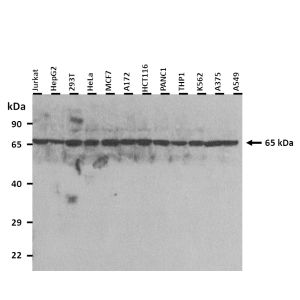 SMAD1 Antibody - C-terminal region (ARP38693_T100)Catalog #: ARP38693_T100Species Tested: HumanApplication: WBFormat: Liquid. Purified antibody supplied in 1x PBS buffer with 0.09% (w/v) sodium azide and 2% sucrose.
-
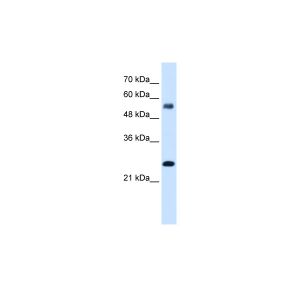 SMAD1 Antibody - N-terminal region (ARP38692_T100)Catalog #: ARP38692_T100Species Tested: Human, MouseApplication: IHC, WBFormat: Liquid. Purified antibody supplied in 1x PBS buffer with 0.09% (w/v) sodium azide and 2% sucrose.
-
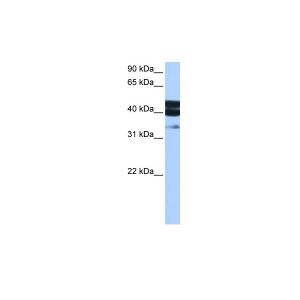 SMAD1 Antibody - middle region (ARP32003_P050)Catalog #: ARP32003_P050Species Tested: Human, MouseApplication: WBFormat: Liquid. Purified antibody supplied in 1x PBS buffer with 0.09% (w/v) sodium azide and 2% sucrose.
-
 Smad1/5/9 Colorimetric Cell-Based ELISA Kit (OKAG01356)Catalog #: OKAG01356Application: ELISAKit Range: At least 5000 cells/wellFormat: 96-Well Microplate