


Use code ELISA25-262 for 25% off all ELISAs through November.
25% off all ELISA kits
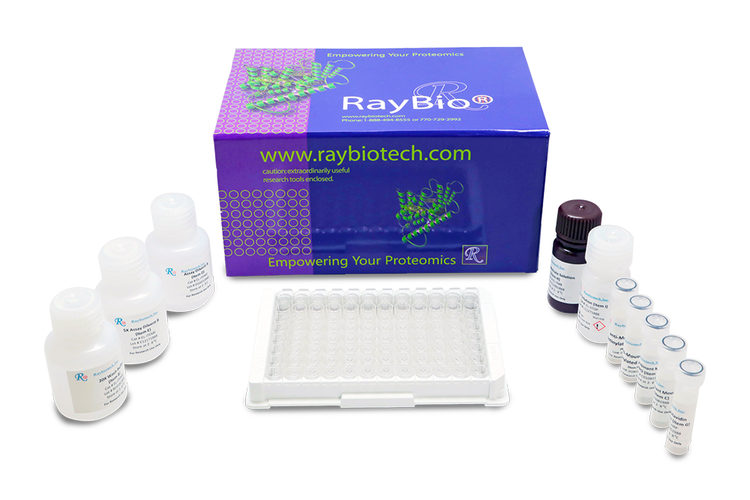

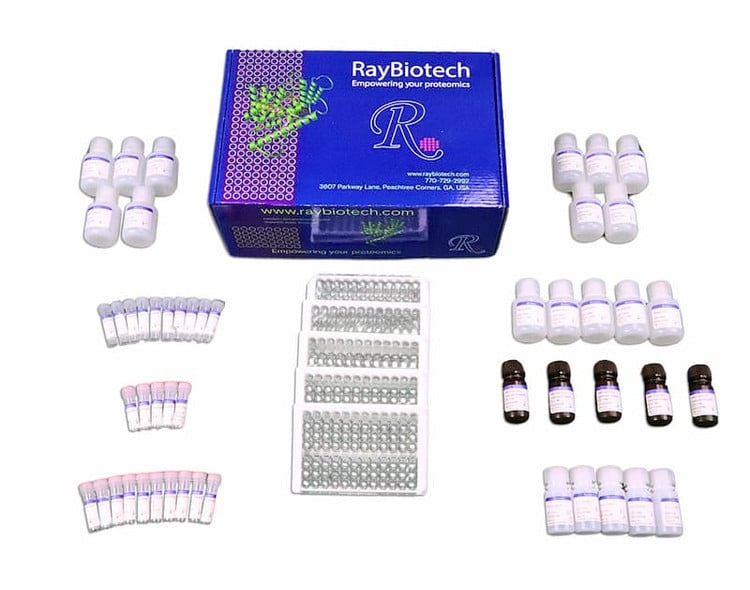
Mouse IL-22 ELISA Kit
Mouse IL-22 ELISA Kit
RayBio® Mouse IL-22 ELISA Kit for Cell Culture Supernatants, Plasma, and Serum samples.
Lead time: Typically ships within 1-2 business days. No Friday shipments.
Contact Us for Bulk Request
Product Description
Specifications
| Size | 1 Plate Kit, 2 Plate Kit, 5 Plate Kit |
| Species | Mouse |
| Sensitivity | 1.6 ng/ml Need more sensitivity? Check out the new NexaTag® kit for this target. Still not enough? Then your answer is our Ultrasensitive Biomarker Testing Service powered by Simoa™ technology. |
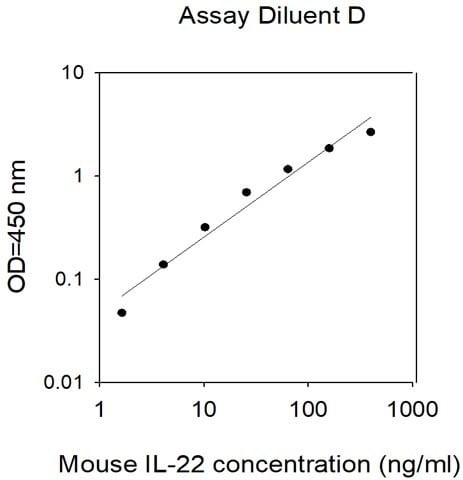
| Detection Range | 1.6 ng/ml - 400 ng/ml |
| Specificity | Cross Reactivity: This ELISA kit shows no cross-reactivity with the following cytokines tested: Mouse 6Ckine, Activin A, ADAMTS-1, Adiponectin, Angiopoietin-3, ANGPTL3, Artemin, CCL28, CD36, Chordin, CRP, E-Cadherin, Epigen, Epiregulin, Fas, Galectin-7, gp130, Granzyme B, Gremlin-1, IFN-gamma R1, IL-17 RB, IL-17B, MIP-1beta, MMP-10, MMP-2, MMP-3, PDGF-AA, Persephin, sFRP-3, SLAM, Sonic Hedgehog NTerminal, TCK-1, TECK, TGF beta 1, Trance, TREML1, TWEAK, VEGF-B, VEGFR2.This antibody pair shows approximately 75% cross-reactivity with recombinant rat IL22 is observed and less than 25% cross-reactivity with recombinant human IL22 is observed. |
| Compatible Sample Types | Cell Culture Supernatants, Plasma, Serum |
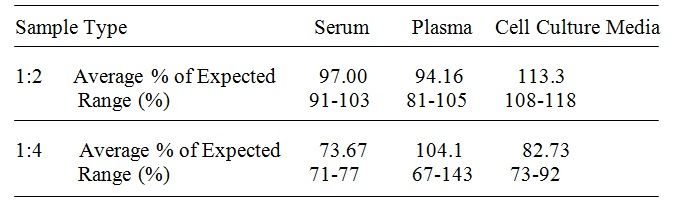
| Recommended Dilution (Serum/Plasma) | 2 fold |
| Accession Number | Q9JJY9 |
| Gene Id | 50929 |
| Gene Symbols | IL22, ILTIF, IL22A, ILTIFA |
| Protein Name / Synonyms | Interleukin-22 (IL-22) (IL-10-related T-cell-derived-inducible factor) (IL-TIF) (IL-TIF alpha) (Interleukin-22a) (IL-22a) |
| Quantitative/Semi-Quantitative | Quantitative |
| Solid Support | 96-well Microplate |
| Design Principle | Sandwich-based |
| Method Of Detection | Colorimetric |
| Research Area | Inflammation |
| Shipping Type | Blue ice |
| Storage | ≤-20°C |
Related Products
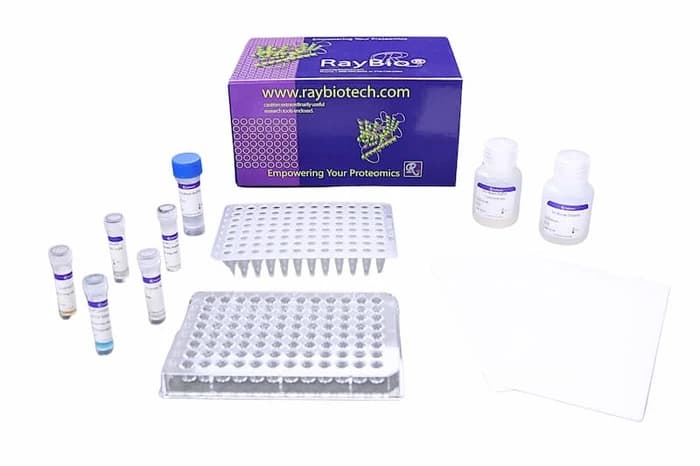
NexaTag® Mouse IL-22 qIPCR ELISA Kit
As low as $779.00
Product Features
Additional Notes
- Strip plates and additional reagents allow for use in multiple experiments
- Quantitative protein detection
- Establishes normal range
- The best products for confirmation of antibody array data
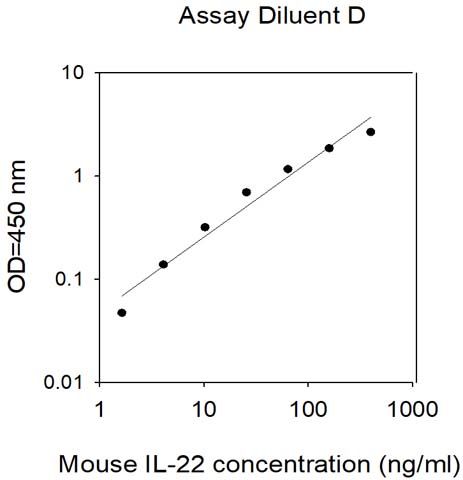
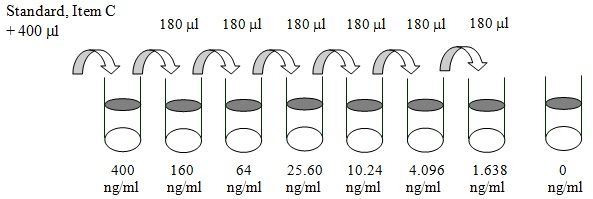
Standard Curves
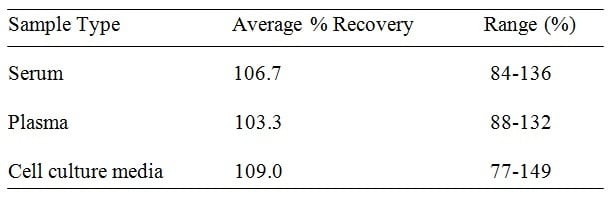
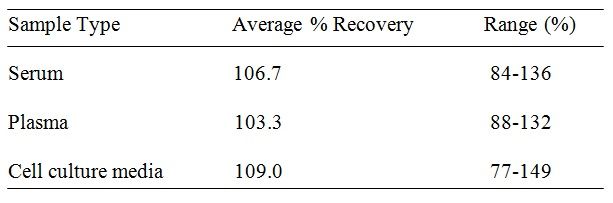
Spiking & Recovery Results
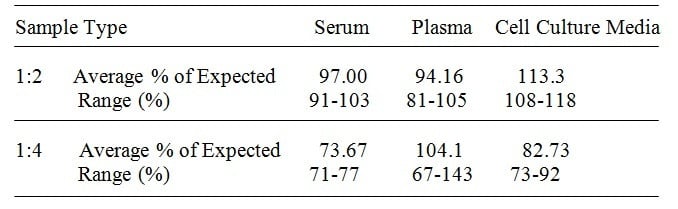
Linearity Results
Application Notes
Kit Components
- Pre-Coated 96-well Strip Microplate
- Wash Buffer
- Stop Solution
- Assay Diluent(s)
- Lyophilized Standard
- Biotinylated Detection Antibody
- Streptavidin-Conjugated HRP
- TMB One-Step Substrate
Other Materials Required
- Distilled or deionized water
- Precision pipettes to deliver 2 µl to 1 µl volumes
- Adjustable 1-25 µl pipettes for reagent preparation
- 100 µl and 1 liter graduated cylinders
- Tubes to prepare standard and sample dilutions
- Absorbent paper
- Microplate reader capable of measuring absorbance at 450nm
- Log-log graph paper or computer and software for ELISA data analysis
Protocol Outline
- Prepare all reagents, samples and standards as instructed in the manual.
- Add 100 µl of standard or sample to each well.
- Incubate 2.5 h at RT or O/N at 4°C.
- Add 100 µl of prepared biotin antibody to each well.
- Incubate 1 h at RT.
- Add 100 µl of prepared Streptavidin solution to each well.
- Incubate 45 min at RT.
- Add 100 µl of TMB One-Step Substrate Reagent to each well.
- Incubate 30 min at RT.
- Add 50 µl of Stop Solution to each well.
- Read at 450 nm immediately.
Storage/Stability
May be stored for up to 6 months at 2° to 8°C from the date of shipment. Opened Microplate Wells or reagents may be store for up to 1 month at 2° to 8°C. Return unused wells to the pouch containing desiccant pack, reseal along entire edge. Reconstituted standard can be stored at -80°C for up to 1 week.
Note: the kit can be used within one year if the whole kit is stored at -20°C. Avoid repeated freeze-thaw cycles.
Note: the kit can be used within one year if the whole kit is stored at -20°C. Avoid repeated freeze-thaw cycles.
Customize This Mouse IL-22 ELISA
We manufacture our ELISAs in-house, so we can build a custom version for your study.
- Post-translational modifications (PTMs): Detect modified IL-22 (IL22), including phosphorylation, acetylation, S-nitrosylation, S-acylation, oxidation, lactylation, sumoylation, ubiquitination, nitration, carbamylation, and more
- Sample types: Validation in your matrix using samples you provide, such as CSF, urine, saliva, lysates, or exosomes
- Also available: More sensitive platforms such as Simoa® and NexaTag®, multiplex panels, bulk lots, and other species when suitable reagents exist
Feasibility varies by target and modification, and we’ll tell you upfront what’s achievable.
Learn more about custom ELISA development
documents
citations
Stenotrophomonas tuberculopleuritidis sp. nov., a novel pathogenic Stenotrophomonas species isolated from tuberculous pleurisy patient
- Species:
- Mouse
- Sample Type:
- Tissue Lysate / Homogenate (lung homogenates)
- Year:
- 2025
- Journal Name:
- Frontiers in Cellular and Infection Microbiology
- PubMed ID:
- 40851804
A synbiotic combination of Bifidobacterium longum Bif10 and Bifidobacterium breve Bif11, isomaltooligosaccharides and finger millet arabinoxylan prevents dextran sodium sulphate induced ulcerative colitis in mice
- Species:
- Mouse
- Sample Type:
- colon
- Year:
- 2023
- Journal Name:
- International Journal of Biological Macromolecules
Maternal polysorbate 80 exposure causes intestinal ILCs and CD4+ T cell developmental abnormalities in mouse offspring
- Species:
- Mouse
- Sample Type:
- fecal
- Year:
- 2023
- Journal Name:
- Environmental Pollution
Interleukin-22 Contributes to Blood-Brain Barrier Disruption via STAT3/VEGFA Activation in Escherichia coli Meningitis
- Species:
- Mouse
- Sample Type:
- Serum (brain extracts)
- Year:
- 2024
- Journal Name:
- ACS Infectious Diseases
- PubMed ID:
- 38317607
The role of B cells in regulation of Th cell differentiation in Coxsackievirus B3-Induced Acute Myocarditis
- Species:
- Mouse
- Sample Type:
- Cell Culture Supernatant
- Year:
- 2021
- Journal Name:
- Research Square