


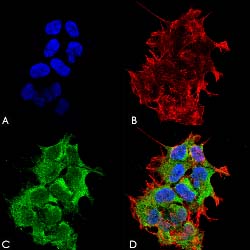
Immunofluorescence
Immunofluorescence staining of SK-N-BE. (A) DAPI (blue) nuclear stain. (B) Phalloidin Texas Red F-Actin stain. (C) GRP170 Antibody. (D) Composite.
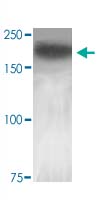
Western Blot (Tissue lysate)
Western Blot (Tissue lysate) analysis of rat liver.
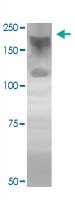
Western Blot (Cell lysate)
Western Blot (Cell lysate) analysis of human HEK-293 cell lysate.
- Specifications
Product Description
Mouse monoclonal antibody raised against full length recombinant human HYOU1.
Immunogen
Recombinant protein corresponding to full length human HYOU1.
Host
Mouse
Reactivity
Human, Mouse, Rat
Specificity
This antibody detects ~170 kDa.
Form
Liquid
Conjugation
APC
Purification
Protein G purification
Isotype
IgG2b
Recommend Usage
Immunocytochemistry (1:100)
Immunofluorescence (1:100)
Western Blot (1:1000)
The optimal working dilution should be determined by the end user.Storage Buffer
In PBS, pH 7.4 (50% glycerol, 0.09% sodium azide).
Storage Instruction
Store at 4°C.
Aliquot to avoid repeated freezing and thawing.Note
Application Data with Unconjugated Antibody.
This product contains sodium azide: a POISONOUS AND HAZARDOUS SUBSTANCE which should be handled by trained staff only. - Applications
Immunofluorescence
Immunofluorescence staining of SK-N-BE. (A) DAPI (blue) nuclear stain. (B) Phalloidin Texas Red F-Actin stain. (C) GRP170 Antibody. (D) Composite.Immunocytochemistry
Western Blot (Tissue lysate)
Western Blot (Tissue lysate) analysis of rat liver.Western Blot (Cell lysate)
Western Blot (Cell lysate) analysis of human HEK-293 cell lysate. - Gene Info — HYOU1
Entrez GeneID
10525Protein Accession#
Q9Y4L1Gene Name
HYOU1
Gene Alias
DKFZp686N08236, FLJ94899, FLJ97572, Grp170, HSP12A, ORP150
Gene Description
hypoxia up-regulated 1
Omim ID
601746Gene Ontology
HyperlinkGene Summary
The protein encoded by this gene belongs to the heat shock protein 70 family. This gene uses alternative transcription start sites. A cis-acting segment found in the 5' UTR is involved in stress-dependent induction, resulting in the accumulation of this protein in the endoplasmic reticulum (ER) under hypoxic conditions. The protein encoded by this gene is thought to play an important role in protein folding and secretion in the ER. Since suppression of the protein is associated with accelerated apoptosis, it is also suggested to have an important cytoprotective role in hypoxia-induced cellular perturbation. This protein has been shown to be up-regulated in tumors, especially in breast tumors, and thus it is associated with tumor invasiveness. This gene also has an alternative translation initiation site, resulting in a protein that lacks the N-terminal signal peptide. This signal peptide-lacking protein, which is only 3 amino acids shorter than the mature protein in the ER, is thought to have a housekeeping function in the cytosol. In rat, this protein localizes to both the ER by a carboxy-terminal peptide sequence and to mitochondria by an amino-terminal targeting signal. [provided by RefSeq
Other Designations
150 kDa oxygen-regulated protein|glucose-regulated protein 170|oxygen regulated protein (150kD)
- Interactomes
- Diseases