


Caspase-3 Activity Assay Kit provides a simple, reproducible, and sensitive tool of measuring Caspase-3 Activity in cell lysates.
Caspase-3 Activity Assay Kit
Caspase-3 Activity Assay Kit (Colorimetric)
Contact Us for Bulk Request
Product Description
Specifications
| Size | 1 Plate Kit, 2 Plate Kit, 5 Plate Kit |
| Compatible Sample Types | Cell Lysates |
| Quantitative/Semi-Quantitative | Quantitative |
| Solid Support | 96-well Microplate |
| Method Of Detection | Colorimetric, Fluorometer |
| Research Area | Apoptosis, Cancer, Necrosis |
| Shipping Type | Blue ice |
| Storage | -20°C |
Related Products
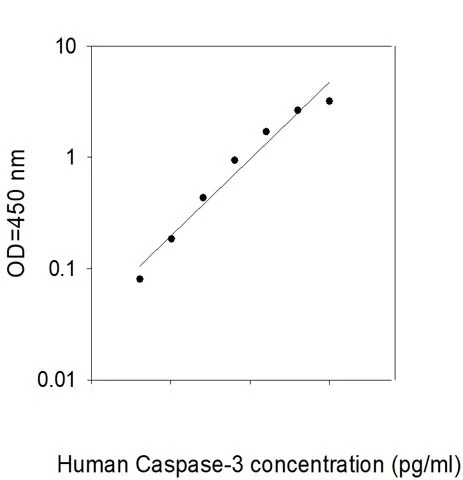
Human Caspase-3 ELISA Kit
As low as
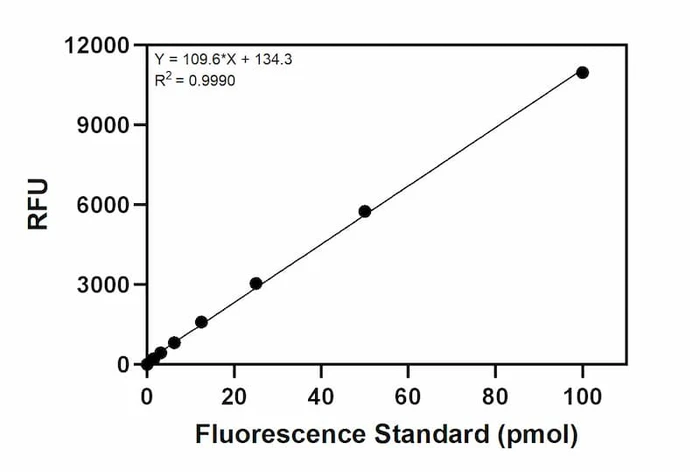
Caspase 1 Activity Assay Kit
As low as
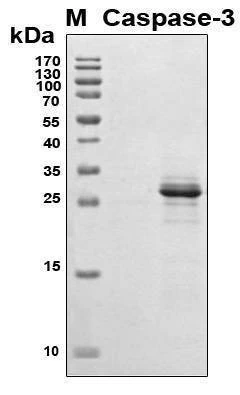
Recombinant Human Caspase-3 Protein, Antigen Grade
As low as
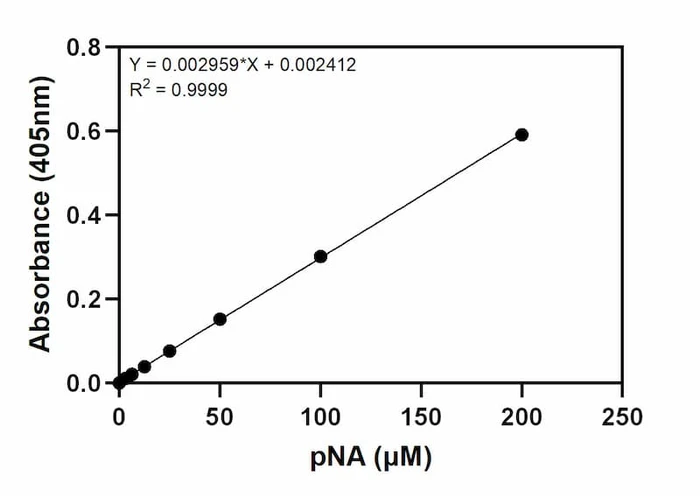
Introduction
Caspases (Cysteine-requiring aspartate protease) are a family of proteases that mediate cell death and are important to the process of apoptosis. Caspase 3 is a member of the CED-3 subfamily of Caspases and is one of the critical enzymes of apoptosis. Caspase 3, which is an effector Caspase, is the most studied of mammalian Caspases. Caspase 3 can process pro-Caspase 2, 6, 7, and 9 and specifically cleave most of the Caspase-related substrates known to date. This cleavage is part of the mechanism leading to cell death. In addition, Caspase 3 plays a central role in mediating nuclear apoptosis, including chromatin condensation and DNA fragmentation, as well as cell blebbing. Caspase 3 activity is tissue, cell type, or death stimulus-specific.
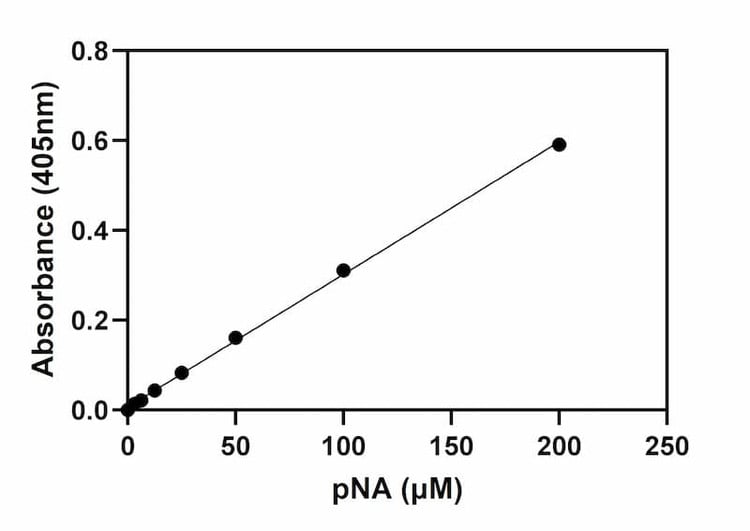
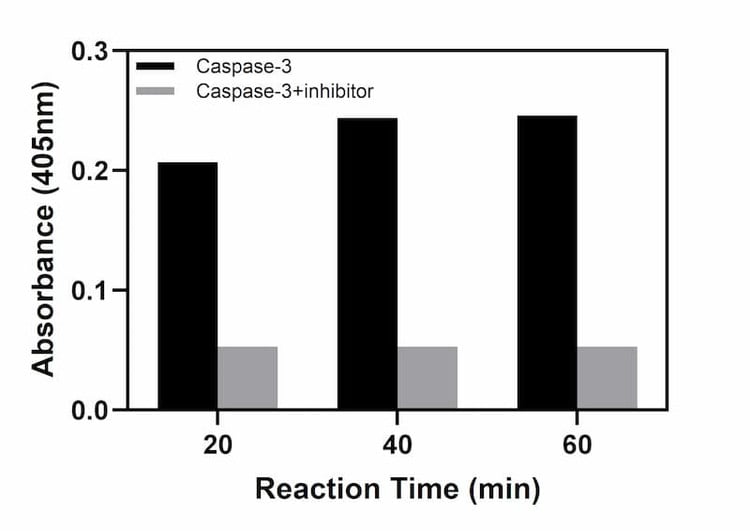
Caspase-3 Activity Assay Kit provides a simple, reproducible, and sensitive tool of measuring Caspase-3 Activity in cell lysates. This assay is based on spectrophotometric detection of the chromophore p-nitroaniline (pNA) after cleavage from the labeled substrate DEVD-pNA. The pNA light emission can be quantified using a spectrophotometer or a microtiter plate reader at 405 nm. The caspase-3 activity can be calculated as nmol of pNA released per minute per milliliter of the sample.
Kit Components
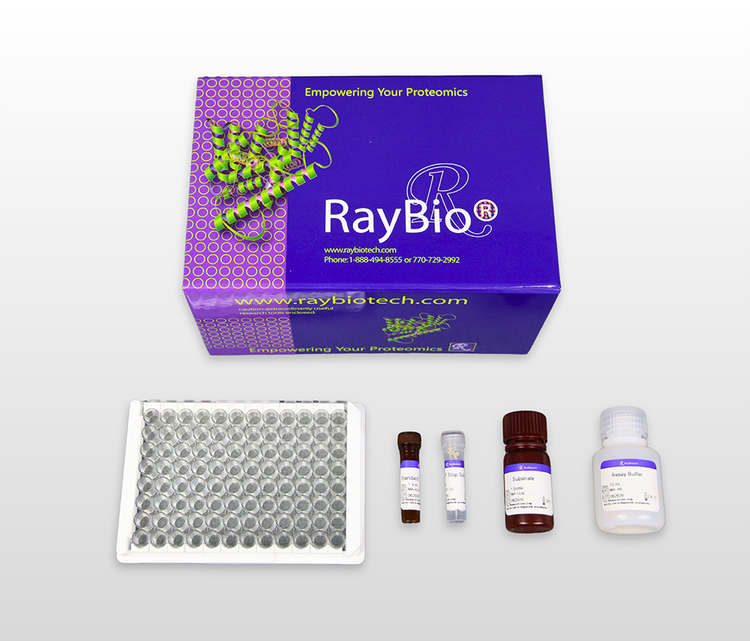
| Component | Size / Description |
|---|---|
| Microplate | A 96-well plate |
| Lysis Buffer | 8 mL |
| Reaction Buffer | 8 mL |
| Dilution Buffer | 10 mL |
| pNA Standard | 1 vial |
| DTT | 1 vial |
| Caspase-3 substrate | 1 vial |
Additional Materials Required
- Microplate reader capable of measuring absorbance at 405 nm
- Precision pipettes to deliver 2 μL to 1 mL volumes
- Tubes to prepare sample dilutions
- Incubator at 37°C
- 15 mL conical tubes
- MilliQ water or another type of double distilled water (ddH2O)
Assay Procedure Summary
- Add 50 µL of samples, controls, and Background to the 96-well microtiter plate.
- Add 50 µL of Reaction buffer with DTT to each well, mix well.
- Add 5 µL of Caspase-3 Substrate solution to each well, mix well.
- Incubate the plate for 1 hour at 37°C with mixing in the dark.
- Measure the absorbance at 405 nm using a plate reader
Storage/Stability
The entire kit should be stored below -20°C for up to 6 months from the date of shipment.
citations
MicroRNA-21 mediates the protective effects of salidroside against hypoxia/reoxygenation-induced myocardial oxidative stress and inflammatory response
- Species:
- Rat
- Sample Type:
- Cell Lysate (H9c2 cell lysates); Tissue Lysate / Homogenate
- Year:
- 2020
- Journal Name:
- Experimental and Therapeutic Medicine
- PubMed ID:
- 32104217