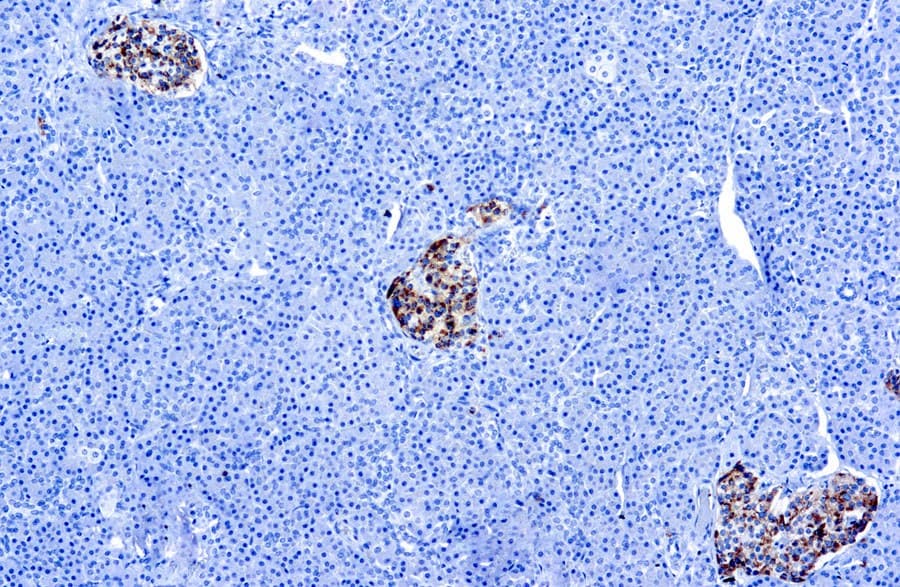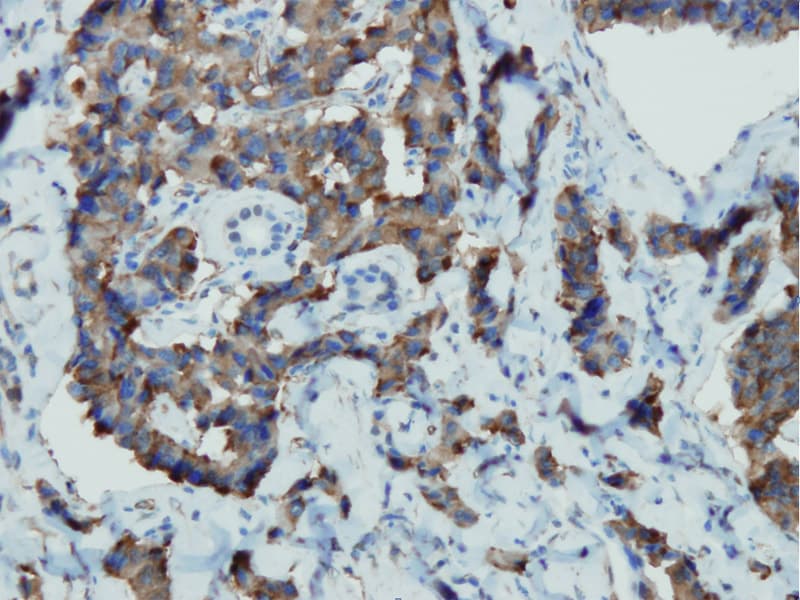


Chromogranin A (CgA) is a highly acidic glycoprotein expressed in the dense-core secretory granules of neuroendocrine cells dispersed throughout the gastrointestinal tract and pancreas. As a member of the granin family of regulated secretory proteins, CgA is co-stored with peptide hormones and biogenic amines in neuroendocrine secretory vesicles and plays a role in secretory granule formation and hormone exocytosis. It is also processed into multiple biologically active peptides with autocrine and paracrine functions within the tumor microenvironment and physiological systems.
Biological Significance of Chromogranin A
In normal gastrointestinal mucosa, CgA is present in endocrine cells and is the major granin protein expressed in many neuroendocrine tissues. Immunohistochemical studies have shown intense CgA staining in endocrine cells from the stomach to the rectum, highlighting its ubiquity among neuroendocrine cell populations in the digestive tract. CgA expression reflects the presence of dense-core granules, which are characteristic of neuroendocrine differentiation. This biological attribute underpins its diagnostic significance: CgA enables the visualization and identification of neuroendocrine lineage cells and tumors within gastrointestinal tissues that might otherwise be indistinguishable on routine histology.
Diagnostic Utility in Gastrointestinal Pathology
In gastrointestinal pathology, CgA immunohistochemistry is an established marker for neuroendocrine differentiation and is routinely included in panels to characterize suspected neuroendocrine neoplasms (NENs). Neuroendocrine tumors (NETs) of the gastroenteropancreatic system often demonstrate robust CgA expression, which aids in distinguishing them from non-neuroendocrine carcinomas. CgA staining is particularly valuable because many NETs secrete CgA irrespective of hormone syndromes, providing sensitivity in detecting both functional and non-functional tumors. However, patterns of CgA expression can vary among tumor subtypes: for example, some rectal carcinoids may show lower CgA immunoreactivity, underscoring the importance of antibody selection and comprehensive marker panels.
Beyond qualitative diagnosis, CgA immunohistochemistry contributes to pathological classification and grading of NETs, informing prognosis and therapeutic strategies. In combination with other markers such as synaptophysin and Ki-67 proliferation index, CgA helps refine tumor subtype characterization and assess tumor differentiation status.
Key Features of Anti-Chromogranin A CE/IVD Antibodies
Anti-Chromogranin A antibodies developed for CE/IVD immunohistochemistry are engineered for high specificity and reproducibility in formalin-fixed, paraffin-embedded (FFPE) tissue sections. These antibodies target epitopes within the CgA protein to visualize intracellular antigen by light microscopy in a clinical diagnostic workflow. High-quality antibodies are rigorously validated across human gastrointestinal tissues to ensure robust staining of CgA-expressing neuroendocrine cells, with minimal background and cross-reactivity.
Monoclonal and polyclonal IHC reagents differ in their epitope recognition: monoclonal antibodies offer defined epitope specificity, enhancing lot-to-lot consistency; polyclonal antibodies can recognize multiple epitopes and may provide stronger signal in certain low-abundance contexts. Many anti-CgA antibodies have been referenced extensively in peer-reviewed studies, demonstrating their reliability in identifying neuroendocrine tumor populations across gastrointestinal biopsies.
CE/IVD-certified anti-CgA IHC antibodies are integral components of diagnostic pathology assays, enabling pathologists and researchers to accurately detect neuroendocrine differentiation, support clinical decision-making, and advance research into gastrointestinal neuroendocrine disease mechanisms.