
Chromoproteins

Chromoproteins

Chromoproteins are colored proteins produced by various marine organisms, including corals and sea anemones. Unlike fluorescent proteins, they intensely absorb visible light, giving them vivid colors without needing excitation by ultraviolet light. These characteristics make chromoproteins promising candidates for various applications in biotechnology and synthetic biology.

Structure and Composition

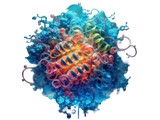
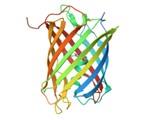
Chromoproteins share a similar structure to fluorescent proteins, such as green fluorescent protein (GFP). They generally consist of eleven beta sheets forming a beta-barrel structure, inside of which lies a chromophore structured in an alpha-helix. This chromophore is often formed by an imidazolidine moiety resulting from the interaction of three specific amino acids.

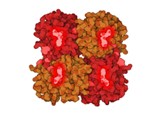
The majority of chromoproteins adopt a tetrameric structure, which can enhance their thermal stability and intracellular longevity, thereby strengthening their photoprotective function against excessive light stress. However, this oligomerization can also lead to aggregation problems when overexpressed in heterologous systems, such as bacteria or mammalian cells, limiting recombinant protein production.

Mechanisms of Action and Biological Roles

Although the exact roles of chromoproteins in their host organisms are not fully understood, it is hypothesized that they play a photoprotective role, helping to protect tissues from damage caused by intense light. Additionally, they could serve as genetic markers in synthetic biology applications, due to their ability to provide visual detection without background fluorescence interference.

Applications in Biotechnology

Chromoproteins have found various applications, including:

  • Genetic markers: Their ability to provide colored signals without background fluorescence makes them useful tools for tracking biological processes in cells.
  • Photoacoustic imaging: As FRET (Förster resonance energy transfer) donors, chromoproteins can be used for advanced imaging applications, allowing better resolution and more precise detection of biological signals.
  • Fusion protein development: Chromoproteins can be fused with other modules, such as carbohydrate-binding modules, to create functional proteins tailored for specific applications, such as textile functionalization.
Frequently Asked Questions (FAQ)

Where can I find chromoproteins products on the Quimigen website?

chromoproteins products are available in this section and can be sorted by product families or sub-categories, such as GFP-like non-fluorescent chromoproteins, GFP-like fluorescent chromoproteins. You can browse the catalogue tree or use the search bar with a product name, catalogue reference, brand or supplier.

What types of products are available in the chromoproteins category?

The chromoproteins category brings together various product references, consumables, reagents, kits, instruments or laboratory solutions, depending on the relevant product family. The GFP-like non-fluorescent chromoproteins, GFP-like fluorescent chromoproteins sub-categories allow you to find the products that meet your needs more quickly.

How can I quickly find a chromoproteins product?

To find a chromoproteins product, use the search function by name, product code, supplier, brand or sub-category. You can also browse the product families listed on the page to identify an available product code, an alternative or an equivalent product.

Does Quimigen stock several product codes in the chromoproteins category?

Yes, Quimigen distributes several product references in the chromoproteins category, sourced from specialist suppliers. Depending on the product family, references may vary in terms of format, packaging, brand, supplier, technical specifications or availability.

Can I request a quote for chromoproteins products?

Yes, you can request a quote for chromoproteins products from the product page or by contacting Quimigen (info@quimigen.pt). To help us process your enquiry, please provide, where possible, the product name, catalogue reference, required quantity, the supplier or brand you are looking for, and the country of delivery.

How can I find out if a chromoproteins product is available to order?

The availability of a chromoproteins product depends on the product code, supplier, packaging and country of delivery. For up-to-date information, please check the product details page or contact Quimigen with the product code or name of the product you are looking for.

What should I do if I cannot find the chromoproteins product I am looking for?

If the chromoproteins product you are looking for does not appear in the catalogue, please contact Quimigen with the available information: product name, reference number, supplier, brand, format or packaging. The team will be able to search for the reference number within its network of suppliers or suggest an available alternative.

Are all chromoproteins products available under the same terms and conditions?

No. Ordering, delivery, storage and documentation conditions may vary depending on the product type, the supplier and the applicable regulations. Certain product codes may require specific approval, specialised transport, a safety data sheet or additional information prior to ordering.