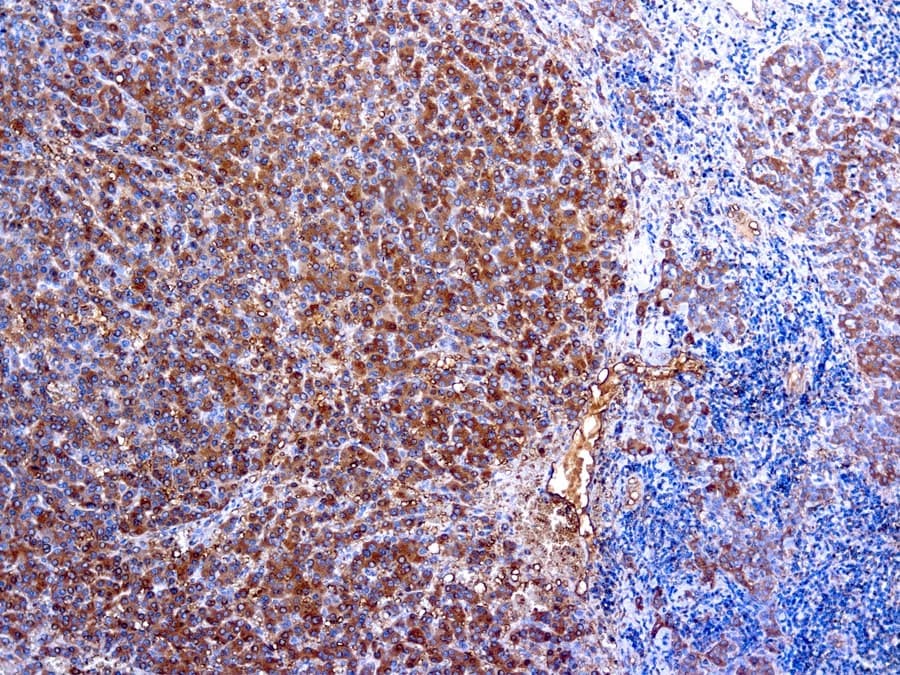

Alpha-1 antitrypsin (A1AT) is a ~52 kDa circulating serpin encoded by SERPINA1, best known as an extracellular inhibitor of neutrophil elastase and a multifunctional acute-phase protein with broader immunomodulatory effects.
Biological significance of Antitrypsin (A1AT)
- Protease control & tissue protection: A1AT is the dominant physiologic antagonist of neutrophil elastase, limiting protease-mediated tissue injury during inflammation.
- Cellular sources relevant to pathology: Although primarily produced by hepatocytes, A1AT can also be synthesized by mononuclear phagocytes/macrophages, supporting detectable protein in histiocytic lineages.
Diagnostic utility of Antitrypsin IHC in hematopathology
- Histiocytic/dendritic neoplasms support: Cytoplasmic A1AT positivity has been reported in histiocytic sarcoma and related histiocytic proliferations and is used as part of a broader IHC panel to support histiocytic differentiation.
- Critical limitation (specificity): Multiple studies emphasize that A1AT is not specific for histiocytic differentiation; interpretation should be cautious and integrated with more lineage-restricted markers (e.g., CD163) and exclusion panels.
Key features of Antitrypsin IHC antibodies
- Expected pattern: Typically cytoplasmic (often granular) staining in A1AT-expressing cells/tumors.
- Best practice in hematopathology: Highest value when used in a multiplexed diagnostic algorithm/panel for histiocytic sarcoma (supportive, not stand-alone).