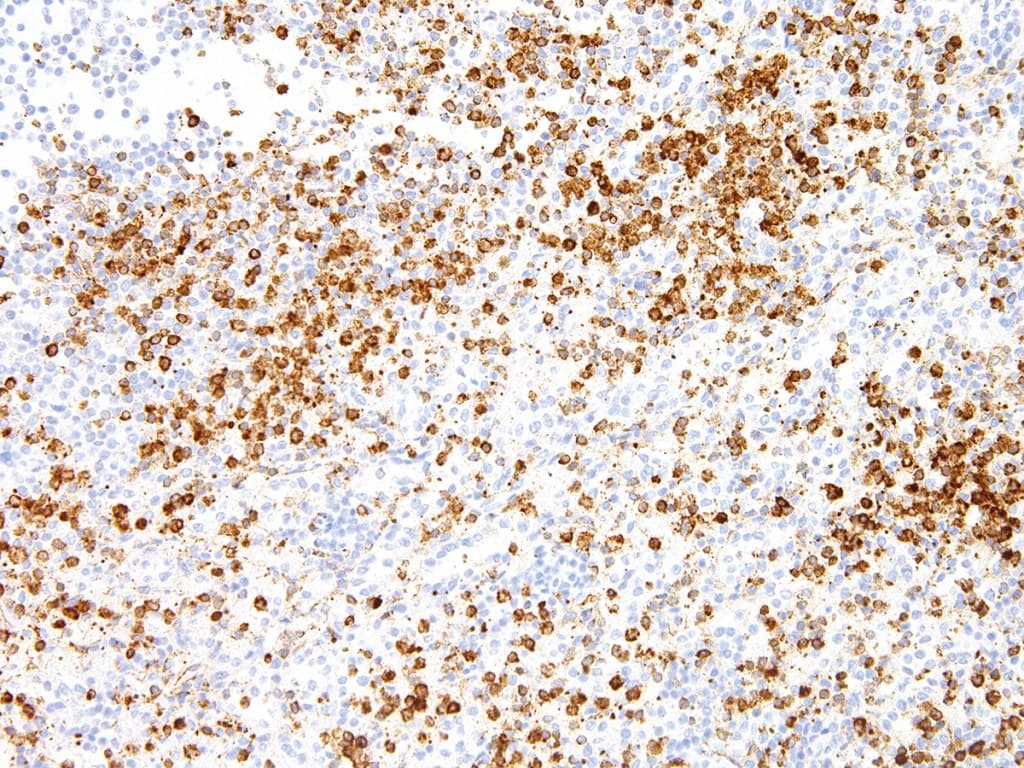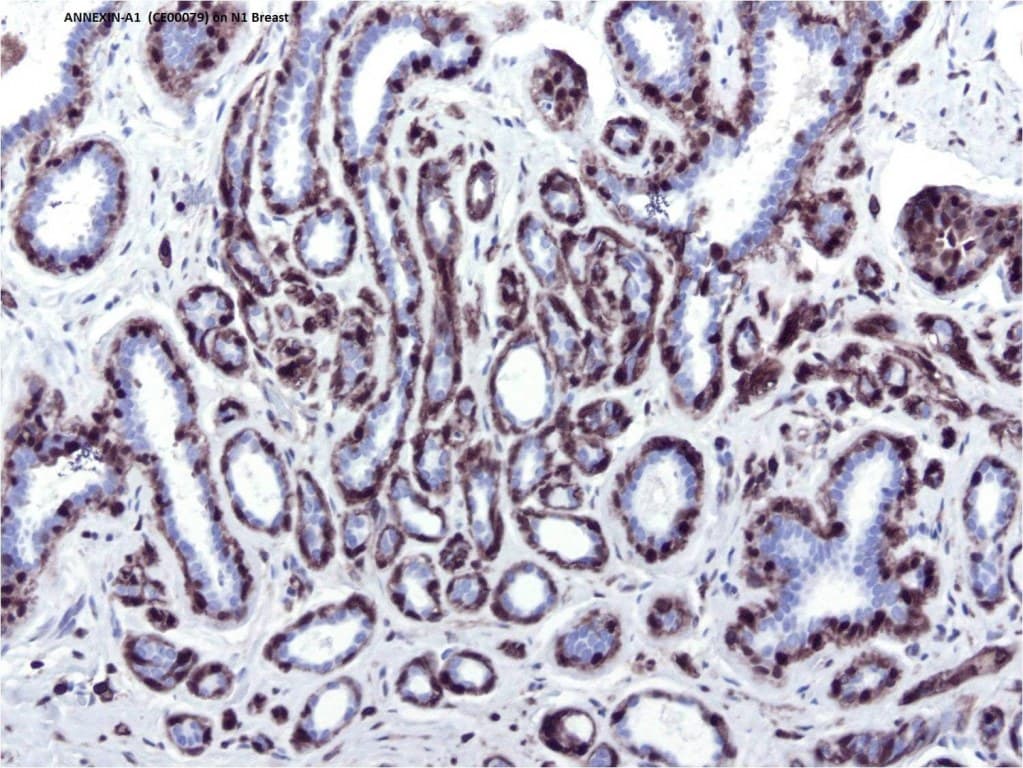


Annexin A1 (ANXA1) is a glucocorticoid-inducible, phospholipid-binding protein that helps terminate inflammation and promote resolution, in part through signaling pathways involving formyl-peptide receptors and effects on leukocyte trafficking and activation. In tissue, ANXA1 is therefore both a biologically meaningful marker of myeloid/immune programs and a diagnostically actionable antigen in select hematologic neoplasms.
Biological significance
- Endogenous pro-resolving mediator: Induced by glucocorticoids; modulates innate immune responses and leukocyte behavior.
- Inflammatory–phenotypic link: Links inflammatory signaling to cellular phenotype, supporting its utility as an immunophenotypic readout in diagnostic IHC.
Diagnostic utility in hematopathology (IHC)
- Hairy cell leukemia (HCL): ANXA1 immunostaining is reported as highly sensitive and highly specific for classic HCL among B-cell neoplasms, enabling confident separation from key mimics.
- Differential diagnosis: Particularly useful to distinguish classic HCL from HCL-variant and other splenic B-cell lymphomas/leukemias, where ANXA1 is often absent or less characteristic.
Key features expected of CE/IVD ANXA1 IHC antibodies
- Standardized clinical performance: Fit-for-purpose IHC performance on clinical specimens, supported by analytic verification/validation practices (controls, precision, and change management).
- Reproducibility focus: External proficiency testing literature highlights the need for robust standardization to reduce inter-laboratory staining variability.
- Workflow relevance: Designed for routine hematopathology immunohistochemistry (e.g., bone marrow/splenic samples) with clear interpretive signal for “Annexin A1 antibody IHC” use cases.