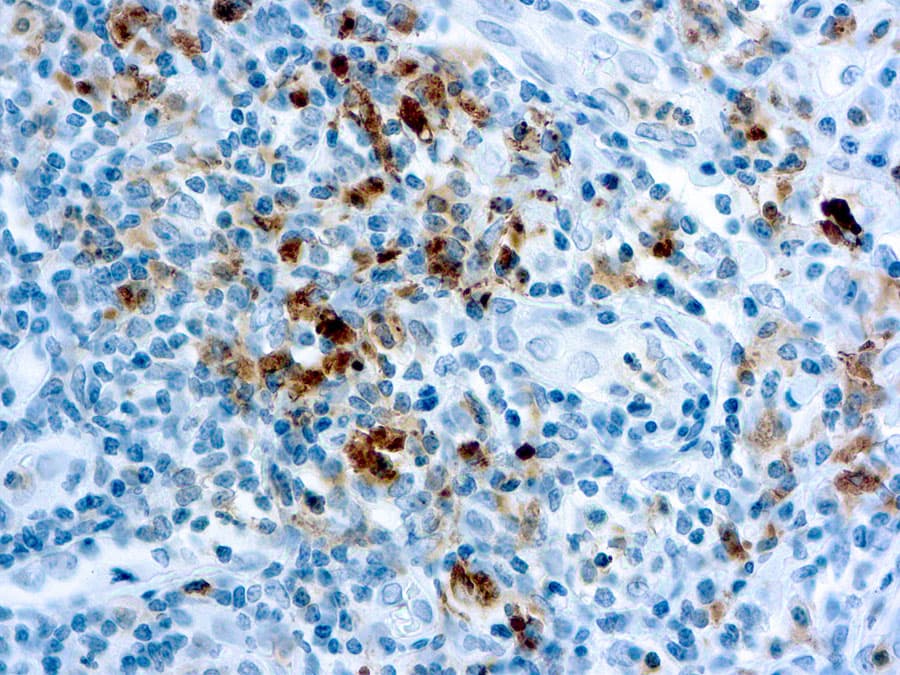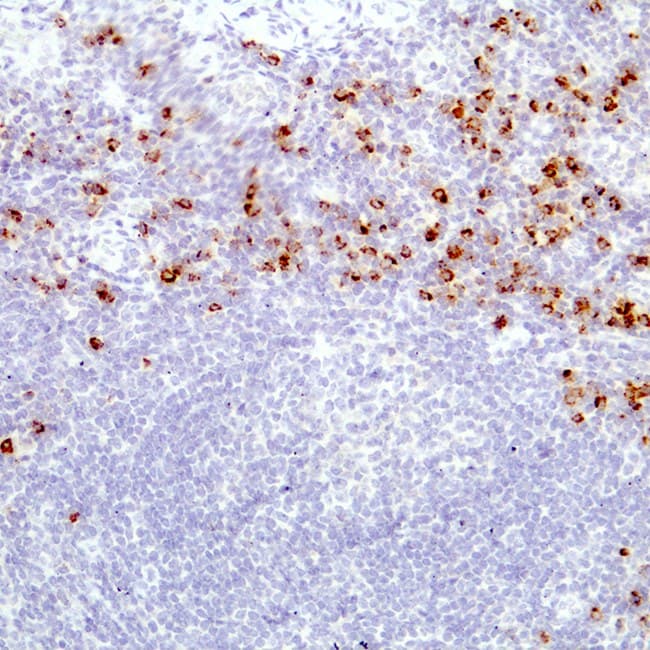

In hematopathology, immunohistochemical detection of Granzyme B is widely used as a cytotoxic marker to help identify and classify T-cell and NK-cell lymphomas in formalin-fixed, paraffin-embedded tissues. Anti-Granzyme B CE/IVD antibodies therefore provide a useful tool for detecting cytotoxic lymphoid populations in diagnostic applications.
Biological Significance of Granzyme B (GzmB)
- Cytotoxic effector protease: Granzyme B is a serine protease localized in cytoplasmic granules of cytotoxic T lymphocytes and natural killer (NK) cells, where it contributes to apoptosis of target cells following perforin-mediated entry and activation of downstream caspase pathways.
- Immune response mediator: Its expression is associated with activated cytotoxic immune cells and reflects functional effector activity in immune responses and in conditions involving cytotoxic lymphocyte activation.
Diagnostic Utility of Granzyme B in Hematopathology
- Lineage and phenotype identification: Granzyme B immunohistochemistry (IHC) is used to identify cytotoxic lymphoid cells and supports recognition of T-cell and NK-cell differentiation in lymphoid neoplasms with a cytotoxic phenotype.
- Lymphoma classification: It is useful in evaluating cytotoxic lymphomas, including extranodal NK/T-cell lymphoma, aggressive NK-cell leukemia, and subsets of peripheral T-cell lymphomas with cytotoxic differentiation, although expression may vary depending on subtype and tumor biology.
- Panel-based interpretation: Granzyme B is commonly assessed alongside markers such as CD3, CD56, and perforin to improve diagnostic accuracy and support lineage assignment in hematopathological evaluation.
Key Features of Anti-Granzyme B CE/IVD Antibodies for IHC
- Regulatory compliance: CE/IVD-labeled reagents are intended for in vitro diagnostic use in clinical laboratory settings under applicable regulatory frameworks.
- Validated for FFPE tissues: Optimized for formalin-fixed, paraffin-embedded specimens used in routine hematopathology workflows.
- High specificity: Designed to detect cytoplasmic Granzyme B with strong signal and low background, supporting reproducible staining.
- Workflow compatibility: Suitable for both automated and manual IHC platforms for consistent laboratory performance.