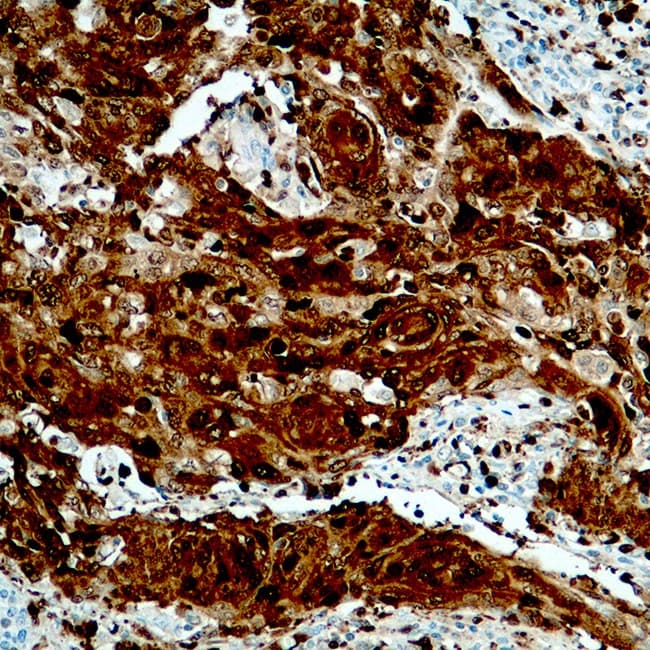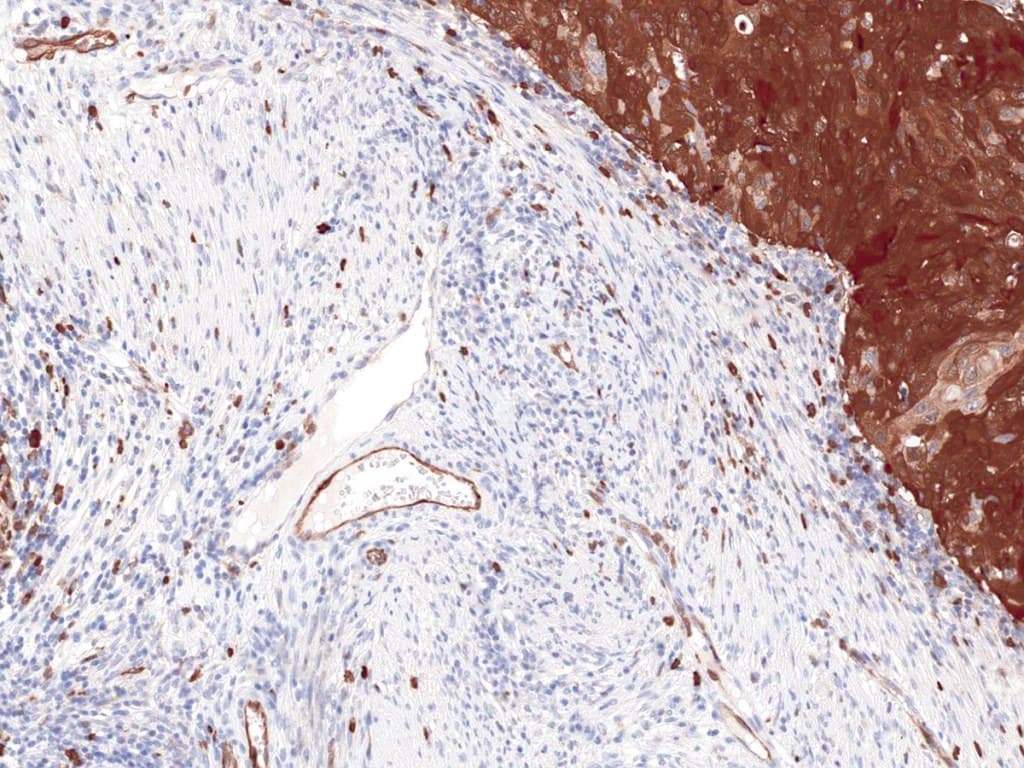

Anti-Stathmin CE/IVD antibodies designed for immunohistochemistry (IHC) are increasingly used in research and clinical laboratory settings within gynecological pathology. Stathmin (STMN1), also known as oncoprotein-18, is a cytosolic phosphoprotein involved in microtubule destabilization and regulation of mitotic progression. Because altered stathmin expression has been associated with tumor proliferation, aggressive biological behavior, and treatment response in several malignancies, antibodies targeting this biomarker enable tissue-based protein detection for investigative and diagnostic applications.
Biological Significance of Stathmin
Stathmin plays an important role in cytoskeletal dynamics and cell-cycle regulation, making it relevant for oncologic research and pathology. Its molecular activity influences mitotic spindle dynamics, cellular motility, and tumor progression.
Key biological mechanisms
- Microtubule dynamics regulation:
Stathmin promotes microtubule destabilization, facilitating spindle remodeling and mitotic progression. - Influence on cell-cycle progression:
Stathmin activity is linked to regulation of mitosis and broader cell-cycle dynamics. In specific tumor contexts, interactions with signaling pathways — including mutant p53-associated mechanisms — have been described, although these interactions are not universal across all cancer types. - Cancer progression and metastasis:
Aberrant expression has been associated with increased proliferation, chromosomal instability, and invasive behavior in multiple malignancies.
From a biomarker perspective, elevated stathmin expression has been reported across diverse tumor entities, supporting its investigation as a proliferation-associated protein detectable by IHC.
Diagnostic Utility of Stathmin in Gynecological Pathology
Peer-reviewed studies indicate growing interest in evaluating stathmin expression in gynecological tissues. Immunohistochemical detection may provide additional molecular context alongside morphologic assessment.
Evidence-based diagnostic relevance
- Endometrial carcinoma:
In advanced endometrial cancer, increased stathmin expression has been associated with shorter progression-free and overall survival, supporting investigation of its prognostic relevance. - Vulvar squamous intraepithelial lesions:
Stathmin IHC has demonstrated high sensitivity, with good specificity for distinguishing high-grade lesions in combination with established markers such as p16 and Ki67. - Ovarian tumors:
Immunohistochemical studies report stathmin expression in certain ovarian tumor types, including sex-cord stromal tumors. However, current evidence suggests that its diagnostic or prognostic value in these tumors remains limited, and further validation is required.
These findings position stathmin as a research-relevant biomarker in gynecological pathology, particularly in studies of tumor proliferation, therapeutic response, and molecular stratification.
Key Features of Anti-Stathmin CE/IVD Antibodies for IHC
Anti-stathmin antibodies labeled for CE/IVD use are intended to support standardized immunohistochemical workflows in laboratories operating under applicable regulatory frameworks. Performance characteristics and validation requirements may vary depending on the manufacturer and assay configuration.
Core considerations for scientific users
- Detection of STMN1 protein in formalin-fixed paraffin-embedded (FFPE) gynecologic tissue sections.
- Compatibility with established IHC staining protocols when validated within individual laboratory workflows.
- Application in clinical research contexts investigating tumor proliferation, microtubule dynamics, and therapeutic response.
- Potential integration into multiparametric panels alongside markers such as Ki67 and p16 for lesion characterization.