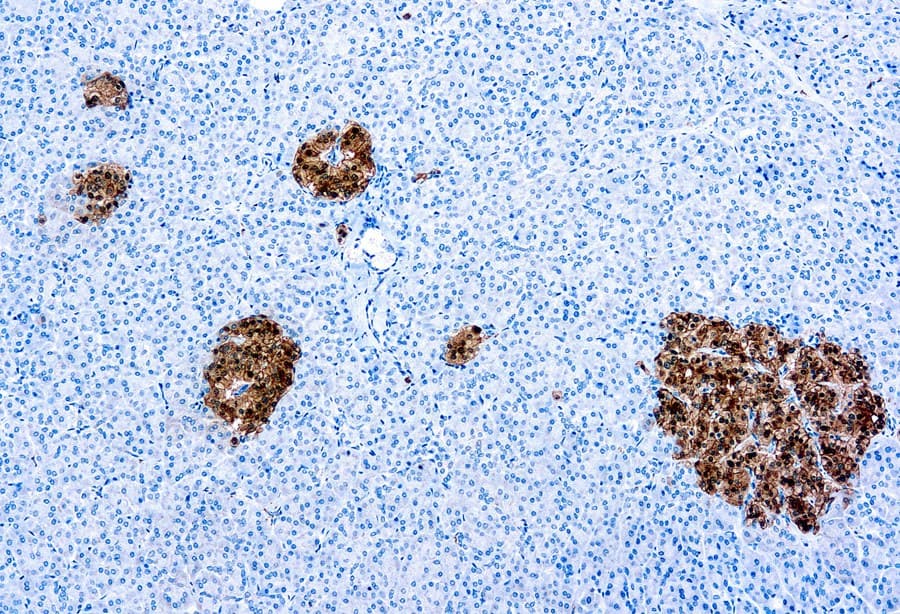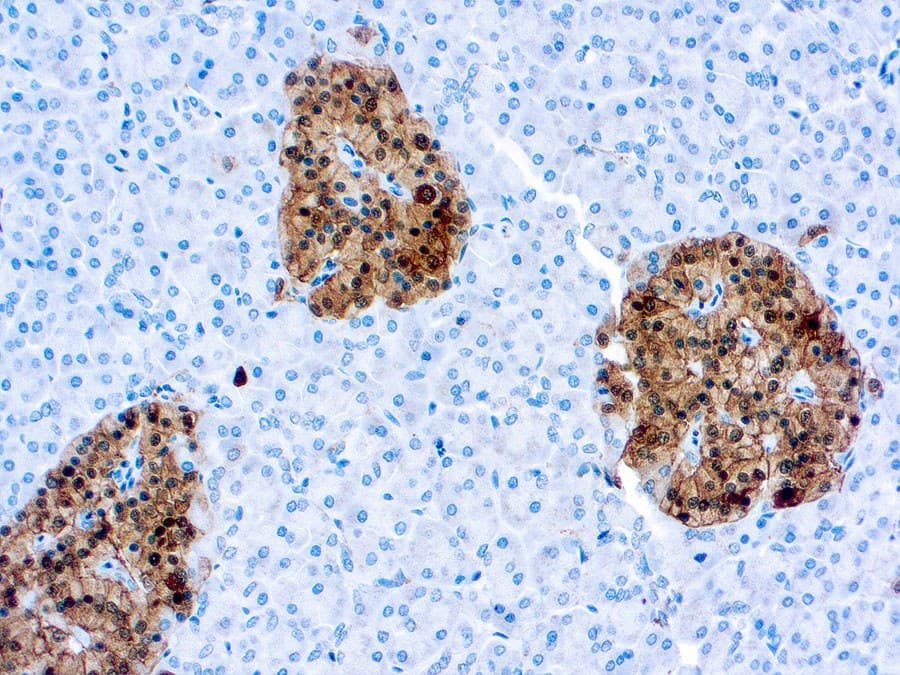

Neuron-Specific Enolase (NSE), encoded by the ENO2 gene, is the γ-enolase isoform of the glycolytic enzyme enolase and is predominantly expressed in mature neurons, neuronal processes, peripheral neurons, and neuroendocrine cells. As a key enzyme involved in cellular energy metabolism, NSE expression increases during neuronal maturation and differentiation, making it a valuable marker of neuronal maturation and neuroendocrine differentiation. Although primarily associated with neuronal and neuroendocrine tissues, NSE expression may also be observed in selected non-neuroendocrine neoplasms and should therefore be interpreted within the appropriate morphological and immunophenotypic context.
Diagnostic Utility of NSE (ENO2) in Neuropathology
Anti-NSE antibodies are widely used in immunohistochemistry (IHC) for the identification and characterization of:
- Neurons and neuronal processes in central and peripheral nervous tissue.
- Neuroendocrine neoplasms and tumors exhibiting neuronal differentiation.
- Small cell and other neuroendocrine carcinomas.
- Poorly differentiated tumors as part of differential diagnostic antibody panels.
- Neuronal preservation and neuronal injury in selected neuropathological and research applications.
NSE is commonly employed as part of a diagnostic antibody panel alongside Synaptophysin and Chromogranin A to improve specificity for neuroendocrine differentiation.
Key Features of CE/IVD Anti-NSE Antibodies
- CE-marked and validated for in vitro diagnostic use.
- Optimized for formalin-fixed paraffin-embedded (FFPE) tissue sections.
- Compatible with automated IHC staining platforms.
- Available predominantly as mouse monoclonal antibodies.
- Produce strong cytoplasmic staining in positive cells.
- Suitable for routine neuropathology and surgical pathology workflows.
- Manufactured with standardized production processes and quality controls to support reproducible diagnostic performance.