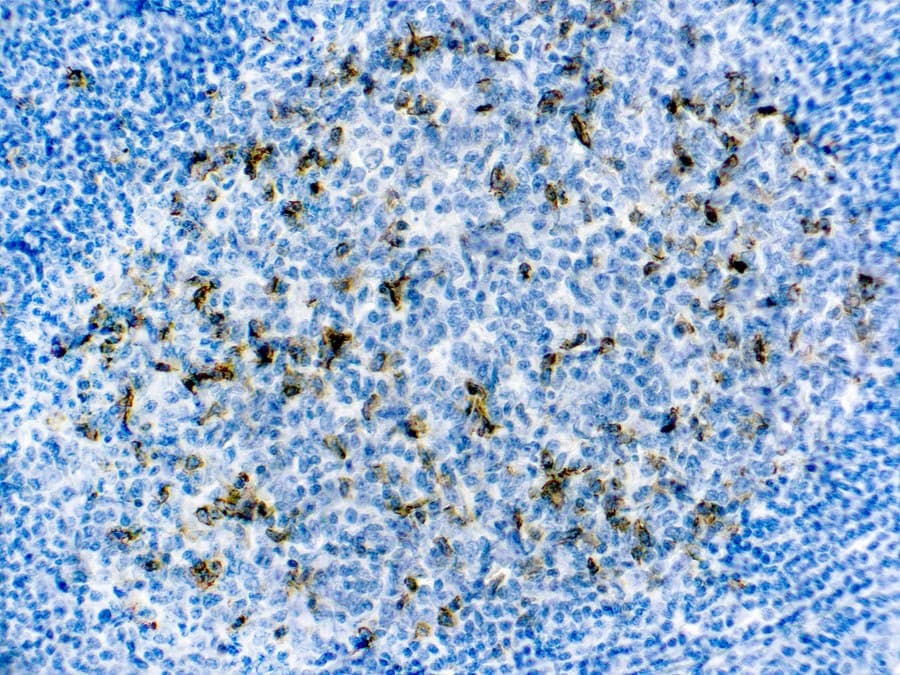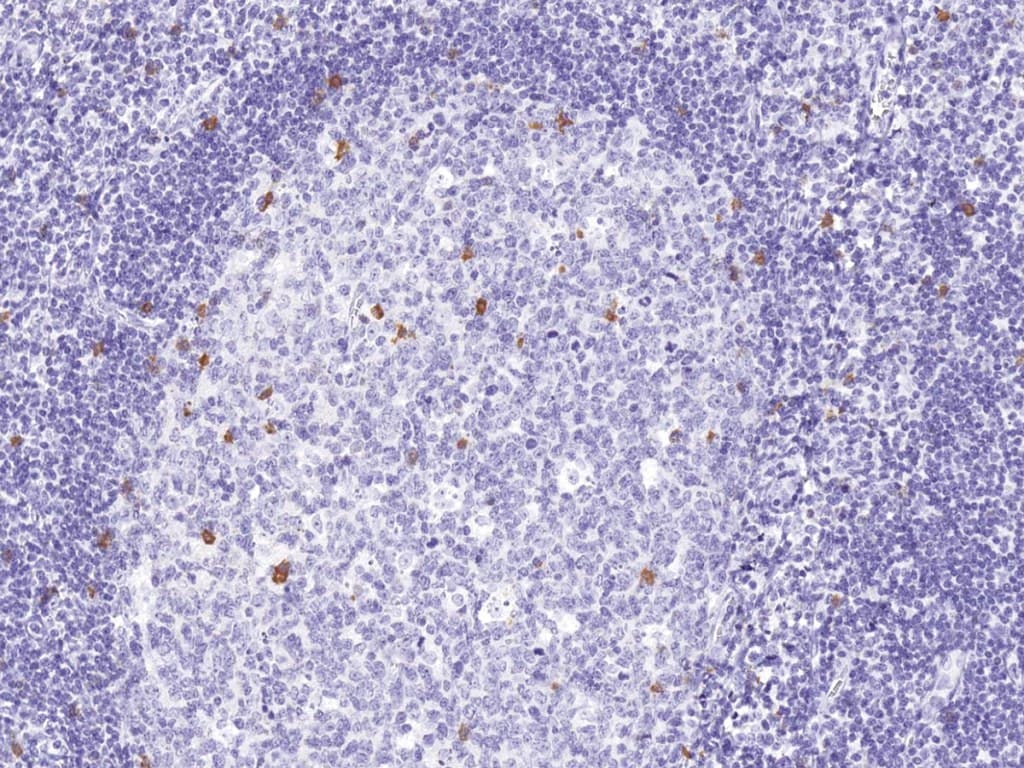

Anti-CD57 (HNK-1/Leu-7) CE/IVD antibodies are established immunohistochemistry (IHC) reagents used to detect terminally differentiated lymphocyte subsets. CD57 is a sulfated carbohydrate epitope associated with immune maturation, making it a valuable adjunct marker in multiparametric immunophenotyping.
Biological Significance
CD57 is expressed on subsets of natural killer (NK) cells and CD8⁺ T lymphocytes:
- Terminal differentiation marker: Identifies late-stage lymphocytes with reduced proliferative capacity.
- High cytotoxic potential: CD57⁺ cells exhibit strong effector function despite limited replication.
- Immunosenescence indicator: Expression increases with aging and chronic antigen exposure (e.g., viral infections).
- Functional specialization: Defines distinct NK and T-cell subsets with specific receptor and cytokine profiles.
CD57 is not lineage-specific and must be interpreted alongside other markers.
Diagnostic Utility
CD57 IHC supports hematopathologic evaluation as an adjunct tool:
- Subset identification: Helps recognize mature NK cells and cytotoxic T-cell subsets in combination with markers such as CD3 and CD56.
- Maturation assessment: Highlights terminally differentiated populations in reactive and neoplastic contexts.
- Tumor microenvironment: CD57⁺ tumor-infiltrating lymphocytes may have context-dependent prognostic relevance.
- Non-hematopoietic expression: Also detected in neural and neuroendocrine tissues, providing supportive—but not definitive—diagnostic information.
Key Features
- Validated for formalin-fixed, paraffin-embedded (FFPE) tissues.
- Specific for the HNK-1 carbohydrate epitope.
- Compatible with automated IHC platforms.
- Ensures reproducible, quality-controlled staining.
- CE/IVD-compliant for regulated diagnostic use.