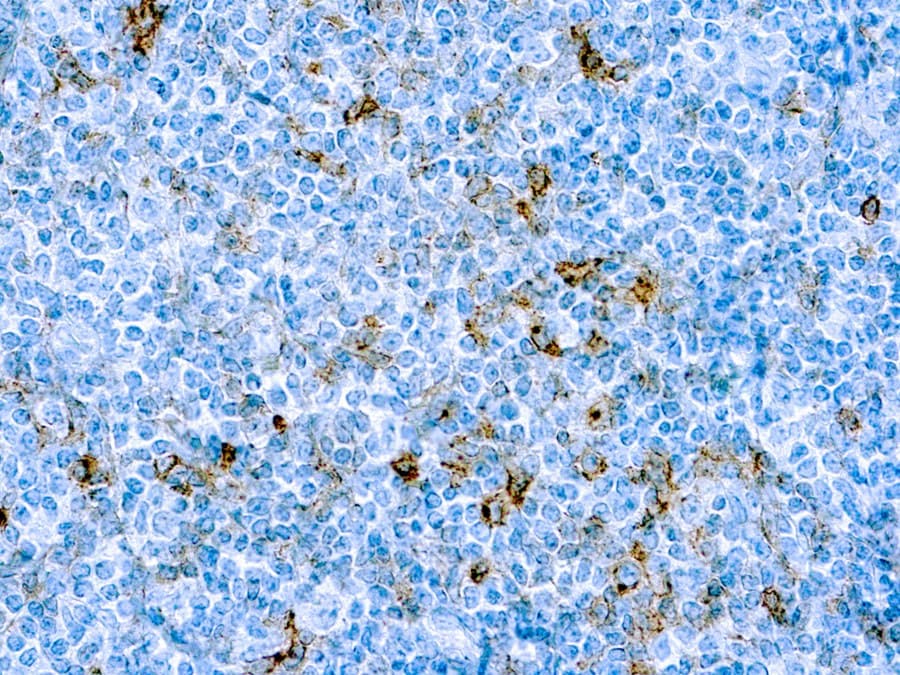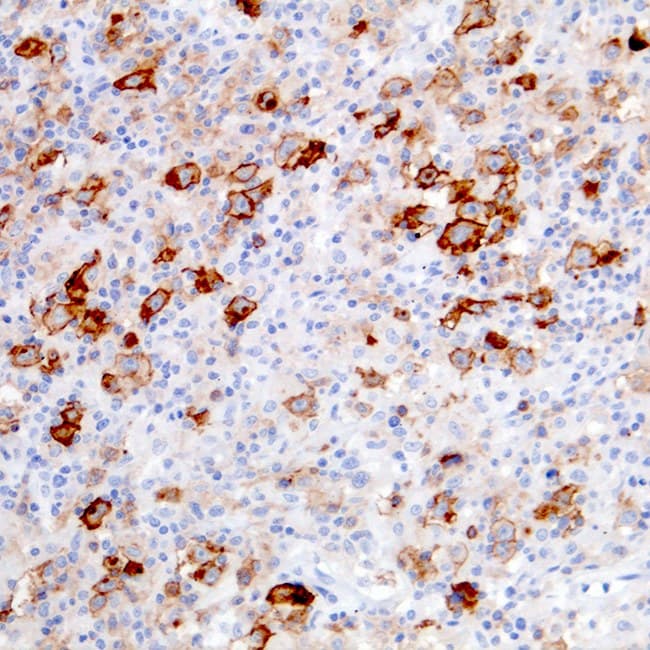

Accurate immunophenotypic profiling is essential for diagnosing and classifying hematologic malignancies. Anti-CD25 CE/IVD antibodies enable reliable detection of the interleukin-2 receptor α chain (IL-2Rα, CD25) in formalin-fixed, paraffin-embedded (FFPE) tissues, supporting identification of activated lymphoid populations, regulatory T cells, and neoplastic cells. CD25 immunostaining is widely applied in hematopathology, lymphoma characterization, and mast cell disease evaluation, providing critical information for research and clinical laboratories.
Biological Significance of CD25
- Immune activation marker: Transiently expressed on activated CD4⁺ and CD8⁺ T cells.
- Regulatory T cells: Constitutively expressed on FOXP3⁺ Tregs, maintaining immune tolerance.
- Leukocyte distribution: Present on activated B cells, NK cells, thymocytes, macrophages, and dendritic cells.
- Soluble CD25: Cleaved receptor generates circulating sCD25, elevated during immune activation.
- Receptor function: CD25 is the α chain of the IL-2 receptor, forming a high-affinity complex with CD122 (β chain) and CD132 (γc) to mediate IL-2 signaling, lymphocyte proliferation, and immune regulation.
Diagnostic Utility in Hematopathology
- Systemic mastocytosis: Aberrant expression on mast cells is a sensitive and specific marker.
- Hairy cell leukemia: Supports diagnosis alongside other B-cell markers.
- Acute leukemias: Expressed on subsets of AML and ALL blasts, with potential prognostic relevance.
- Immune microenvironment profiling: Identifies Treg infiltration influencing tumor immune evasion.
Key Features of CD25 CE/IVD Antibodies for IHC
- Validated for FFPE tissue IHC.
- High specificity for IL-2Rα (CD25).
- Compatible with automated staining platforms and standard antigen-retrieval protocols.
- Clear membranous staining pattern for reliable identification.
- Optimized monoclonal clones for reproducibility.
- CE/IVD certified for clinical diagnostic use.