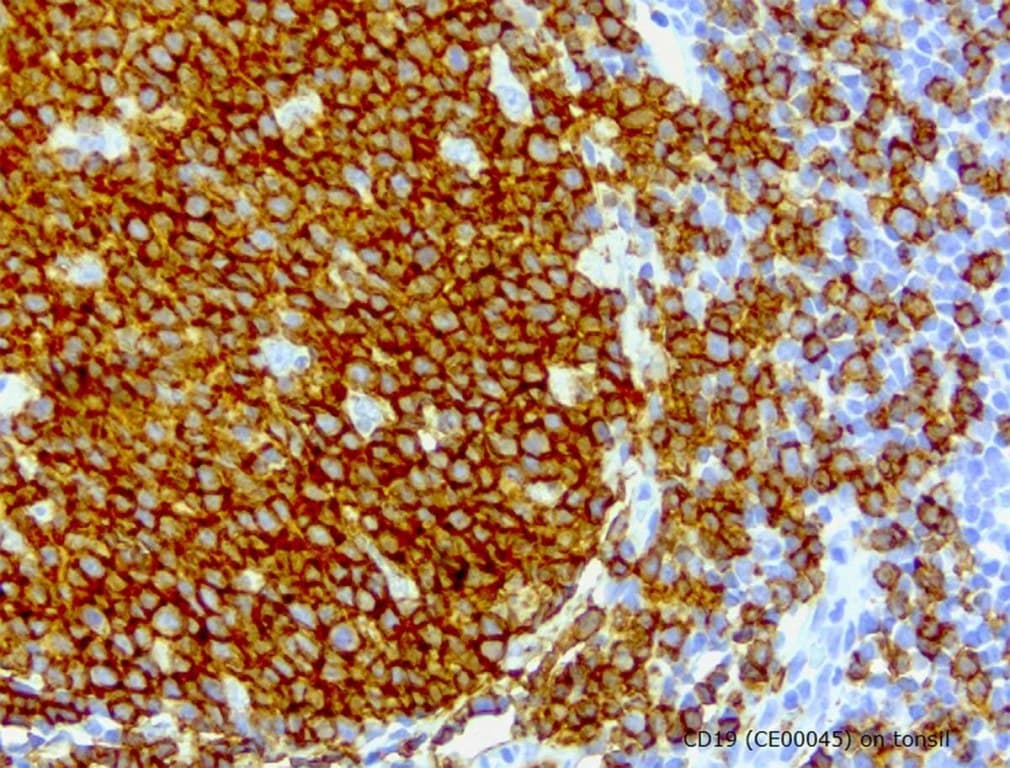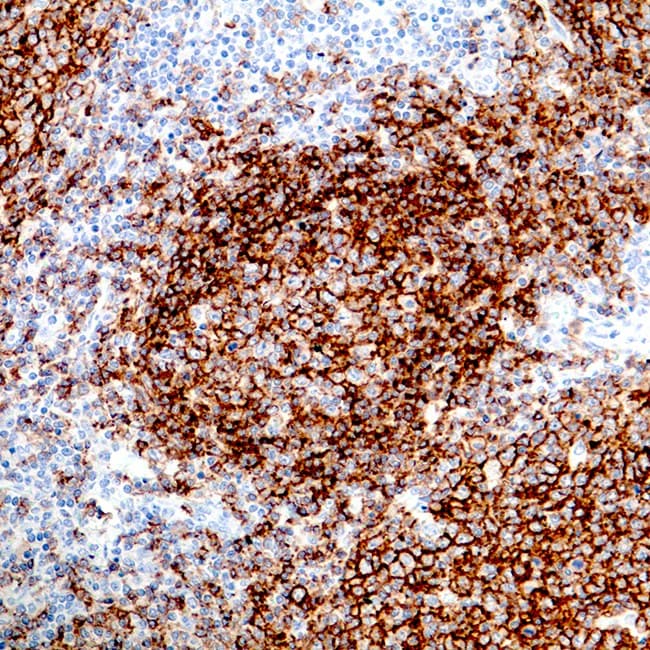


Cluster of Differentiation 19 (CD19) is a critical biomarker for B‑cell lineage identification, expressed from early pro‑B through mature B lymphocytes and downregulated in plasma cells. Detection of CD19 via immunohistochemistry (IHC) enables accurate diagnosis and classification of B‑cell neoplasms in tissue specimens.
Biological Significance of CD19
- Pan‑B cell marker: CD19 is a 95 kDa type I transmembrane glycoprotein expressed throughout most B‑cell development, providing a reliable identifier for B‑lineage cells.
- Co‑receptor function: Forms a complex with CD21 and CD81, amplifying B‑cell receptor signaling, lowering activation thresholds, and supporting B‑cell proliferation and survival.
- Neoplastic relevance: Maintained in most B‑cell leukemias and lymphomas, aiding lineage confirmation in malignancies.
Diagnostic Utility in Hematopathology
- Lineage confirmation: IHC detects B‑cells in FFPE tissues, complementing flow cytometry when fresh samples are unavailable.
- Panel integration: Used alongside CD20, CD79a, and PAX5 for accurate lymphoma subclassification.
- Expression variability: Certain lymphoma subtypes may show reduced CD19 expression, emphasizing multi‑marker evaluation.
Key Features of CE/IVD CD19 Antibodies
- Clinical validation: Optimized for reproducible detection in FFPE human tissues.
- Specificity: High-affinity monoclonal clones target B‑cell–specific extracellular epitopes.
- Morphologic context: Enables simultaneous assessment of CD19 expression and tissue architecture for accurate diagnosis.