

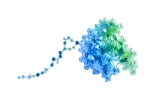
Growth hormone (GH), also known as somatotropin, is a peptide hormone synthesized, stored, and secreted by somatotropic cells within the anterior pituitary gland. Human growth hormone (hGH) is a 22.1 kDa, single, non-glycosylated polypeptide chain containing 191 amino acid residues. It plays a critical role in stimulating growth, cell reproduction, and cell regeneration, and its major role in stimulating body growth is to stimulate the liver and other tissues to secrete IGF-1. GH also stimulates both the differentiation and proliferation of myoblasts, and stimulates amino acid uptake and protein synthesis in muscle and other tissues.
For decades, the production of growth hormone for research and therapeutic use relied on extraction from cadaveric pituitaries or expression in systems supplemented with animal-derived components. Animal-free recombinant growth hormone proteins represent a modern alternative in which the protein is both produced in a defined expression system and manufactured without the use of any animal-derived reagents or components at any stage of the process.
Rationale for Animal-Free Production
The shift toward animal-free recombinant growth hormone is motivated by several scientific and regulatory considerations. The elimination of animal-derived raw materials removes the risk of contamination with adventitious agents, including viruses and prions, which is a critical safety concern for therapeutic and diagnostic applications. Animal-derived components such as fetal bovine serum introduce undefined and variable mixtures of proteins, growth factors, and hormones that can confound experimental results and complicate regulatory filings. Fully defined, animal-free production systems enable greater batch-to-batch reproducibility, facilitate compliance with Good Manufacturing Practice (GMP) requirements, and align with the principles of replacement, reduction, and refinement in animal research.
