
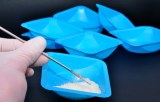
Agarose

Agarose

Agarose is a natural polysaccharide widely used in molecular biology as a matrix for nucleic acid electrophoresis due to its unique physical and chemical properties. Agarose gel electrophoresis enables the separation of DNA and RNA molecules primarily based on size, leveraging the negatively charged phosphate backbone of nucleic acids that migrate towards the anode in an electric field. The agarose molecule itself consists of repeating agarobiose units—alternating D- and L-galactose residues—that form a porous gel matrix upon cooling, creating a sieving structure that differentially restricts nucleic acid mobility according to fragment length.

The porous nature of agarose gels, which increases with lower concentrations (commonly 0.7–2%), allows effective separation of nucleic acid fragments ranging from approximately 100 base pairs up to 25 kilobases or larger. Gel strength and melting/gelation temperatures are important physical characteristics; higher agarose concentrations increase gel strength and gel point, producing more robust gels for handling. Low melting point agarose variants facilitate enzymatic manipulations directly in the gel post-separation.

Electroendosmosis (EEO) and Agarose Properties

A critical factor influencing electrophoretic performance is agarose electroendosmosis (EEO), which arises from negatively charged groups such as sulfate and pyruvate residues on the agarose polymer. These charges induce a counter flow of water during electrophoresis that can retard nucleic acid migration and reduce band resolution. Therefore, low EEO agaroses are preferred for nucleic acid gel electrophoresis to improve band sharpness and reproducibility, and to minimize contamination that could interfere with downstream processes like PCR and ligation.

Nucleic Acid Migration and Visualization

During the electrophoresis process, nucleic acids loaded in wells of the agarose gel migrate through the gel matrix under an applied electric field. Given the uniform charge-to-mass ratio of nucleic acids, this migration rate is inversely proportional to the logarithm of molecular size, allowing size-based separation. Post-separation visualization is commonly achieved with intercalating dyes and UV illumination, enabling qualitative and quantitative analysis of nucleic acid samples.


Agarose gel electrophoresis remains a fundamental technique in molecular biology due to agarose's excellent gel strength, optimal pore structure, low background fluorescence, and controllable EEO properties, facilitating efficient, easy-to-handle separation and analysis of nucleic acids.
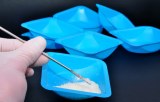

Frequently Asked Questions (FAQ)

Where can I find agarose products on the Quimigen website?

agarose products are available in this section and can be sorted by product families or sub-categories, such as Agarose powder. You can browse the catalogue tree or use the search bar with a product name, catalogue reference, brand or supplier.

What types of products are available in the agarose category?

The agarose category brings together various product references, consumables, reagents, kits, instruments or laboratory solutions, depending on the relevant product family. The Agarose powder sub-categories allow you to find the products that meet your needs more quickly.

How can I quickly find a agarose product?

To find a agarose product, use the search function by name, product code, supplier, brand or sub-category. You can also browse the product families listed on the page to identify an available product code, an alternative or an equivalent product.

Does Quimigen stock several product codes in the agarose category?

Yes, Quimigen distributes several product references in the agarose category, sourced from specialist suppliers. Depending on the product family, references may vary in terms of format, packaging, brand, supplier, technical specifications or availability.

Can I request a quote for agarose products?

Yes, you can request a quote for agarose products from the product page or by contacting Quimigen (info@quimigen.pt). To help us process your enquiry, please provide, where possible, the product name, catalogue reference, required quantity, the supplier or brand you are looking for, and the country of delivery.

How can I find out if a agarose product is available to order?

The availability of a agarose product depends on the product code, supplier, packaging and country of delivery. For up-to-date information, please check the product details page or contact Quimigen with the product code or name of the product you are looking for.

What should I do if I cannot find the agarose product I am looking for?

If the agarose product you are looking for does not appear in the catalogue, please contact Quimigen with the available information: product name, reference number, supplier, brand, format or packaging. The team will be able to search for the reference number within its network of suppliers or suggest an available alternative.

Are all agarose products available under the same terms and conditions?

No. Ordering, delivery, storage and documentation conditions may vary depending on the product type, the supplier and the applicable regulations. Certain product codes may require specific approval, specialised transport, a safety data sheet or additional information prior to ordering.