

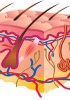
Human paraffin tissue sections of the dermal system, commonly referred to as formalin-fixed paraffin-embedded (FFPE) dermal tissue sections, are among the most widely used materials in histological and molecular research of skin biology and dermatological diseases. This preservation technique stabilizes tissue morphology and cellular architecture, enabling detailed microscopic analysis while maintaining biomolecular integrity suitable for a range of downstream applications.
Importance and Advantages of Paraffin Tissue Sections in Dermal Research
- Preservation of Morphological Detail: FFPE embedding preserves the skin’s complex architecture, including epidermis, dermis, skin appendages, and associated microstructures, essential for precise histopathological examination.
- Long-Term Stability and Accessibility: Paraffin blocks can be stored for years with minimal degradation, making them invaluable for retrospective studies, biobanking, and longitudinal research.
- Compatibility with Diverse Analytical Techniques:
- Immunohistochemistry (IHC) and immunofluorescence (IF) for protein localization and distribution studies.
- In situ hybridization (ISH) for nucleic acid detection.
- Multiplexed spatial profiling and digital pathology, enabling biomarker discovery and disease mapping.
- DNA and RNA extraction despite some molecular fragmentation, supporting genomic and transcriptomic analyses.
- Clinical and Translational Research Utility: FFPE dermal tissues are routinely used in biomarker validation, drug development, diagnostic pathology, and studying disorders including melanoma, psoriasis, and autoimmune skin diseases.