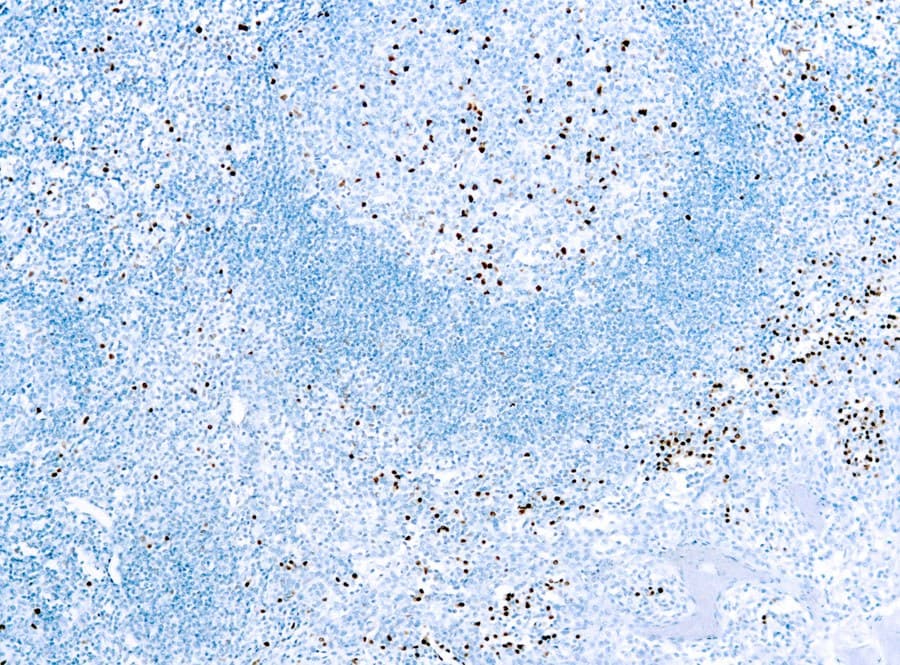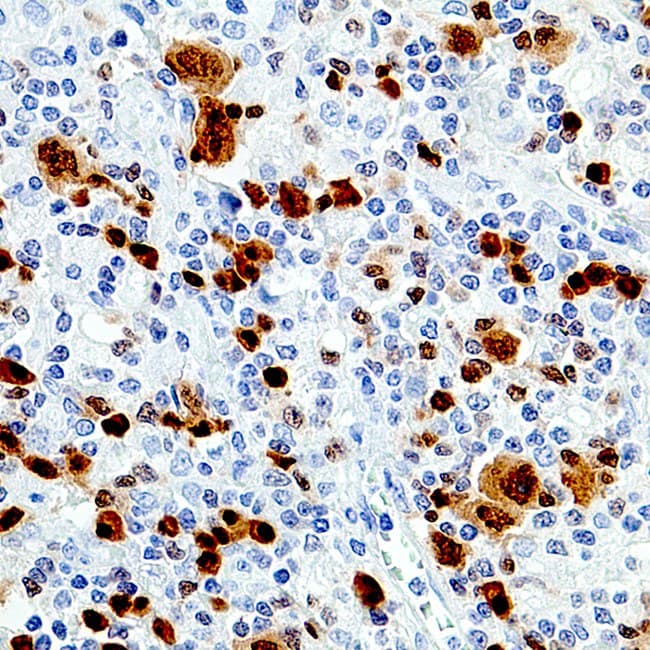


Multiple Myeloma oncogene-1 (MUM1), also known as IRF4, is a transcription factor central to lymphoid differentiation and widely applied in immunohistochemistry (IHC), hematopathology diagnostics, and lymphoma classification. Anti-MUM1 antibodies are key reagents for evaluating plasma cell neoplasms, B-cell maturation stages, and lymphoid malignancies.
Biological Significance of MUM1 (IRF4)
- MUM1/IRF4 is a member of the interferon regulatory factor family that regulates transcription in immune cells.
- It is essential for post–germinal center B-cell differentiation and plasma cell development.
- Expression is induced during late germinal center transition and immune activation, reflecting differentiation status.
- Dysregulated expression contributes to lymphomagenesis and multiple myeloma pathogenesis, where IRF4 functions as a critical transcriptional regulator supporting tumor cell survival.
Diagnostic Utility in Hematopathology
- MUM1 is expressed in plasma cells, activated B cells, a subset of T cells, and various hematolymphoid neoplasms.
- Routinely used in IHC panels for:
- Diffuse large B-cell lymphoma (DLBCL) subclassification (germinal center vs activated B-cell phenotype).
- Identification of plasma cell neoplasms, including multiple myeloma.
- Evaluation of Hodgkin lymphoma and lymphoplasmacytic lymphoma.
- Provides complementary diagnostic value alongside CD10 and BCL6 to improve classification accuracy and prognostic stratification.
- While sensitive for post–germinal center differentiation, MUM1 is not entirely specific, requiring panel-based interpretation.
Key Features of MUM1 Antibodies (IHC)
- Validated for formalin-fixed, paraffin-embedded (FFPE) tissues, including lymph node and bone marrow biopsies.
- Demonstrate predominantly nuclear staining, consistent with transcription factor localization.
- Optimized for use in standardized IHC workflows, supporting reproducibility and reliable diagnostic interpretation when appropriate controls are applied.
- Suitable for integration into multiparametric diagnostic panels in hematopathology.